


New
New
Lesson 2 of 5
Explain the relationship between multiples of three and six
I can explain the relationship between multiples of three and six.

Lesson 2 of 5
New
New
Explain the relationship between multiples of three and six
I can explain the relationship between multiples of three and six.
Lesson details
Key learning points
- All multiples of 6 are multiples of 3
- Not all multiples of 3 are multiples of 6
- Multiples of 6 are double the multiples of 3
- Multiples of 3 are half the multiples of 6
Keywords
Multiple - A multiple is the result of multiplying a number by another whole number.
Double / double - Doubling is the act of becoming twice as many.
Halve / halving - Halving means to divide into two equal parts.
Common misconception
Lack of fluency in the 3s and 6s times tables can lead to pupils being slower to grasp the generalisation about the relationship between the 3 and 6 times tables.
Use arrays and other representations to draw clear comparisons. Multiplication grids could also be provided while pupils become more fluent in recall.
Children to chorally rehearse their 3s and 6s at any given opportunity to support fluency.

Teacher tip

Licence
This content is © Oak National Academy Limited (2025), licensed on Open Government Licence version 3.0 except where otherwise stated. See Oak's terms & conditions (Collection 2).
Lesson video
Loading...
Prior knowledge starter quiz
Download quiz pdf
6 Questions
Q1.Which word or phrase describes multiples of numbers that are next to each other when skip counting?
Which word or phrase describes multiples of numbers that are next to each other when skip counting?
Greater
Product
Factors
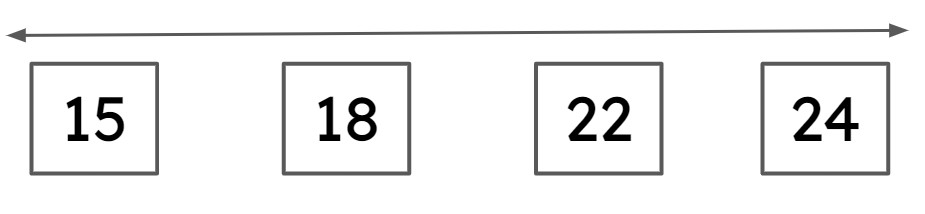
Q2.Which number on this number line is not a multiple of 3?
Which number on this number line is not a multiple of 3?
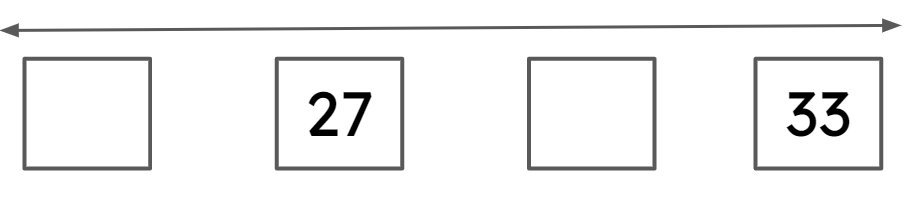
Q3.Which multiples of 3 are adjacent to 27?
Which multiples of 3 are adjacent to 27?
21 and 25
23 and 28
26 and 28
Q4.A multiple of 3 is missing from this list: 15, 18, 21, , 27, 30 How can we use the adjacent multiples in this example?
A multiple of 3 is missing from this list: 15, 18, 21, , 27, 30 How can we use the adjacent multiples in this example?
Count along the number line up to the missing number
Say the number that is one more than 21
Q5.Using your knowledge of groups, order the calculations starting with the smallest product.
Using your knowledge of groups, order the calculations starting with the smallest product.
Q6.Izzy knows that 13 × 3 = 39 She used the known fact of 12 × 3 = 36 and _________ 3
Izzy knows that 13 × 3 = 39 She used the known fact of 12 × 3 = 36 and _________ 3
subtracted
Assessment exit quiz
Download quiz pdf
6 Questions
Q1.Look at the image. Match the size of the group to the number of groups.
Look at the image. Match the size of the group to the number of groups.


6
3
Q2.Which numbers are both multiples of 3 and multiples of 6?
Which numbers are both multiples of 3 and multiples of 6?
3
15
27
Q3.Multiples of 6 are the multiples of 3
Multiples of 6 are the multiples of 3
Q4.Match the groups of 6 to the groups of 3
Match the groups of 6 to the groups of 3
1 group of 6
2 groups of 6
3 groups of 6
6 groups of 4
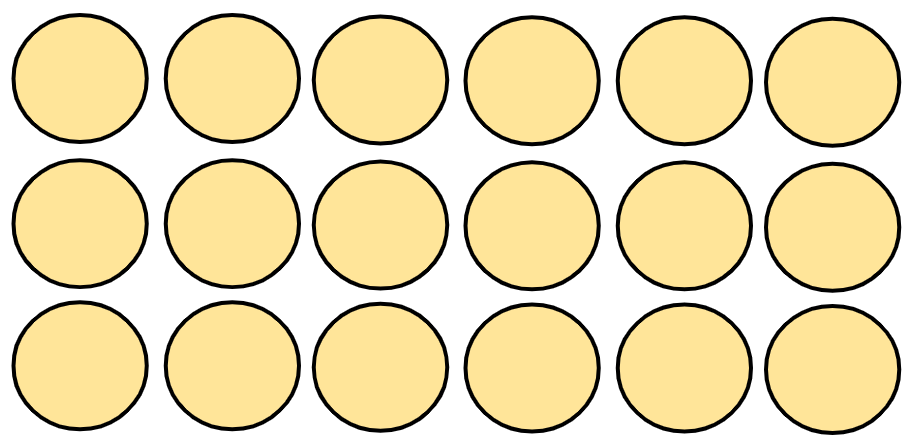
Q5.Look at the array. Match the questions to the correct answers.
Look at the array. Match the questions to the correct answers.
6
3
18
18
Q6.Which of the statements are true?
Which of the statements are true?
If a factor is doubled, the product is halved
All multiples of 3 are multiples of 6