Myths about teaching can hold you back
- Year 6
Use understanding of angles, fractions and percentages to construct pie charts
I can construct pie charts using angles, fractions and percentages.
- Year 6
Use understanding of angles, fractions and percentages to construct pie charts
I can construct pie charts using angles, fractions and percentages.
Lesson details
Key learning points
- A pie chart is another way of presenting data representing parts of a whole.
- Pie charts can be constructed using knowledge of angles and fractions.
- A protractor is used to accurately measure each angle.
Keywords
Pie chart - A pie chart is a circular graph where sectors represent different groups in proportion to each other.
Sector - A sector is a part, or ‘pie-slice’ part, of a pie chart.
Common misconception
Pupils may make mistakes measuring with a protractor, reading the wrong scale to get a measurement.
Encourage pupils to check that each answer is sensible. Is the angle greater or less than a right angle? Have they drawn an angle greater/less than a right angle? Do all the angles add up to a sum of 360°?
To help you plan your year 6 maths lesson on: Use understanding of angles, fractions and percentages to construct pie charts, download all teaching resources for free and adapt to suit your pupils' needs...
To help you plan your year 6 maths lesson on: Use understanding of angles, fractions and percentages to construct pie charts, download all teaching resources for free and adapt to suit your pupils' needs.
The starter quiz will activate and check your pupils' prior knowledge, with versions available both with and without answers in PDF format.
We use learning cycles to break down learning into key concepts or ideas linked to the learning outcome. Each learning cycle features explanations with checks for understanding and practice tasks with feedback. All of this is found in our slide decks, ready for you to download and edit. The practice tasks are also available as printable worksheets and some lessons have additional materials with extra material you might need for teaching the lesson.
The assessment exit quiz will test your pupils' understanding of the key learning points.
Our video is a tool for planning, showing how other teachers might teach the lesson, offering helpful tips, modelled explanations and inspiration for your own delivery in the classroom. Plus, you can set it as homework or revision for pupils and keep their learning on track by sharing an online pupil version of this lesson.
Explore more key stage 2 maths lessons from the Statistics unit, dive into the full primary maths curriculum, or learn more about lesson planning.
Licence
Lesson video
Loading...
Prior knowledge starter quiz
6 Questions
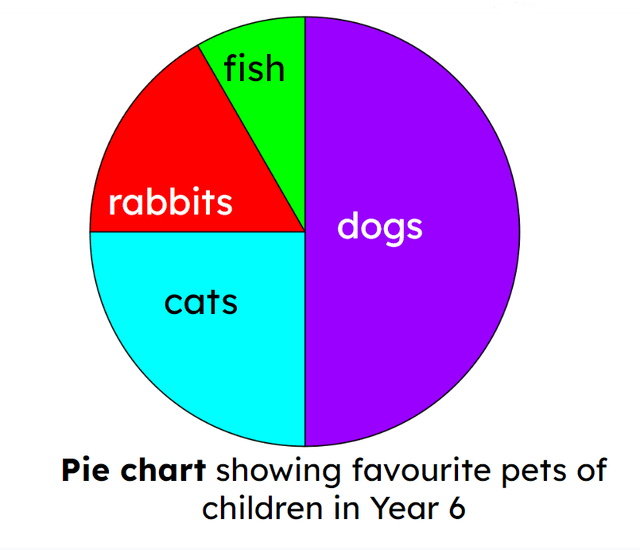
Q1.The pie chart shows the favourite pets of 24 Year 6 children. Which of the following is true?

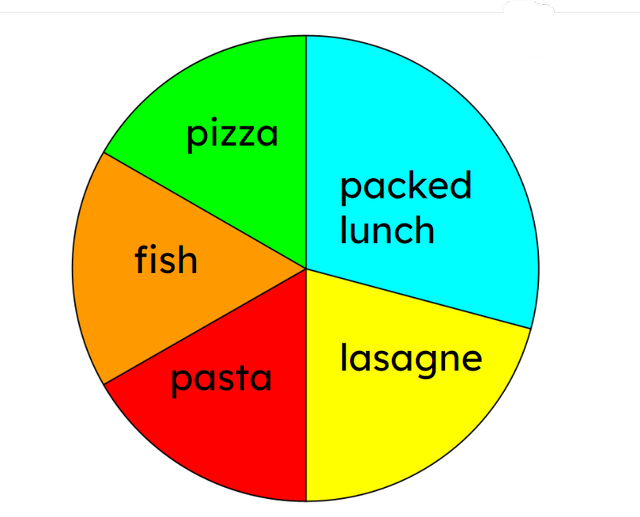
Q2.This pie chart shows the lunch choices made by the Year 6 children last week. An equal number of children chose pizza, pasta and fish. How many degrees is the sector for pizza?

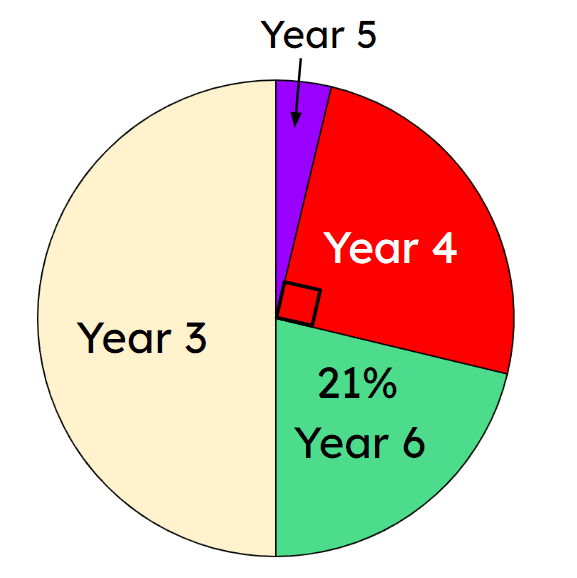
Q3.The pie chart represents the number of children from different year groups in Art class. What percentage of children were from Year 5? %

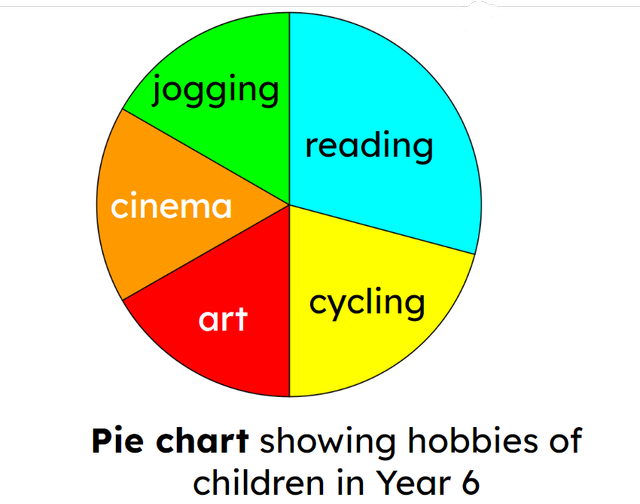
Q4.The pie chart shows the hobbies of 48 children. An equal number chose jogging, cinema and art. 2 more children preferred reading to cycling. Match the activity to the correct number of children.

Cinema -
8
Cycling -
11
Reading -
13
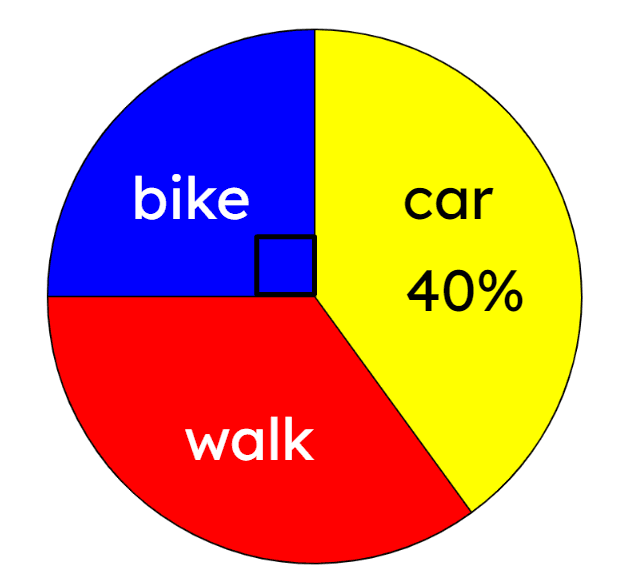
Q5.The pie chart represents the travel of 60 Year 5 children last week. How many children walked to school?

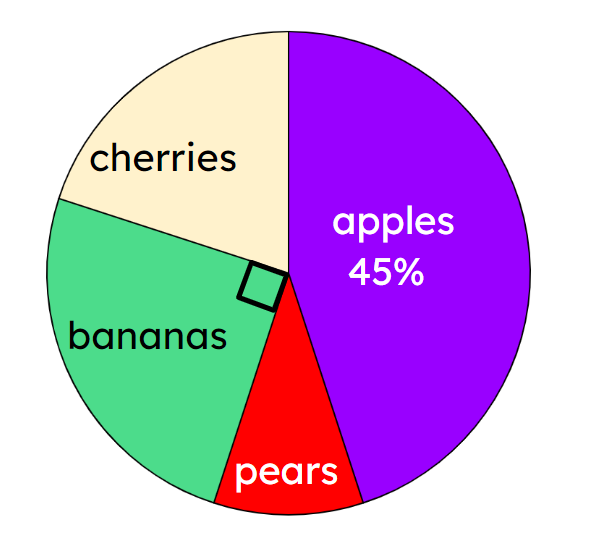
Q6.The pie chart represents the favourite fruit of the 120 children in Key Stage 1 at Oak Academy. 10% more children chose cherries than chose pears. What percentage of children chose cherries? %

Assessment exit quiz
6 Questions
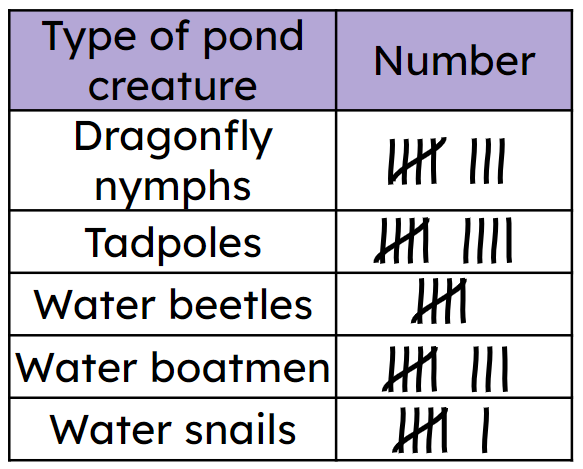
Q1.Izzy goes pond dipping and collects 36 creatures. She draws a pie chart to show her data. How many degrees will the sector to show the tadpoles be? °