



Categories

Curriculum planning
13 May 2026Updated RSHE guidance – get ready for September

Geoff Wells
Citizenship and RSHE Subject Lead
As teachers and school leaders prepare for September, one key item on the to-do list will be ensuring that Relationships, Sex and Health Education (RSHE) is fully aligned with the updated statutory guidance.
At Oak, we’ve worked closely with our curriculum partner, Life Lessons, to ensure our resources reflect these changes and support schools and teachers to implement them with confidence in time for when the changes need to come into effect in September 2026.
Below I outline some of the changes outlined in the updated guidance and signpost lesson resources to support you with making the change. If you’d like to discuss implementation in your school or have any questions, get in touch with me.
RSHE lessons often involve sensitive topics and complex conversations. Our new resources are designed to help you feel secure and supported when delivering them. Our lesson resources include ground rules, signposting and practical teacher tips. Where appropriate, lessons include built-in safeguarding guidance and content warnings.
Explore our updated curriculum:
Teaching new and sensitive topics in primary RSHE with confidence
One significant addition to the primary RSHE curriculum is teaching that ‘change and loss, including bereavement, can provoke a range of feelings; that grief is a natural response; and that everyone grieves differently’. We’ve worked with experts to ensure this content is delivered sensitively, providing you with clear explanations for your pupils and signposting to appropriate support organisations.
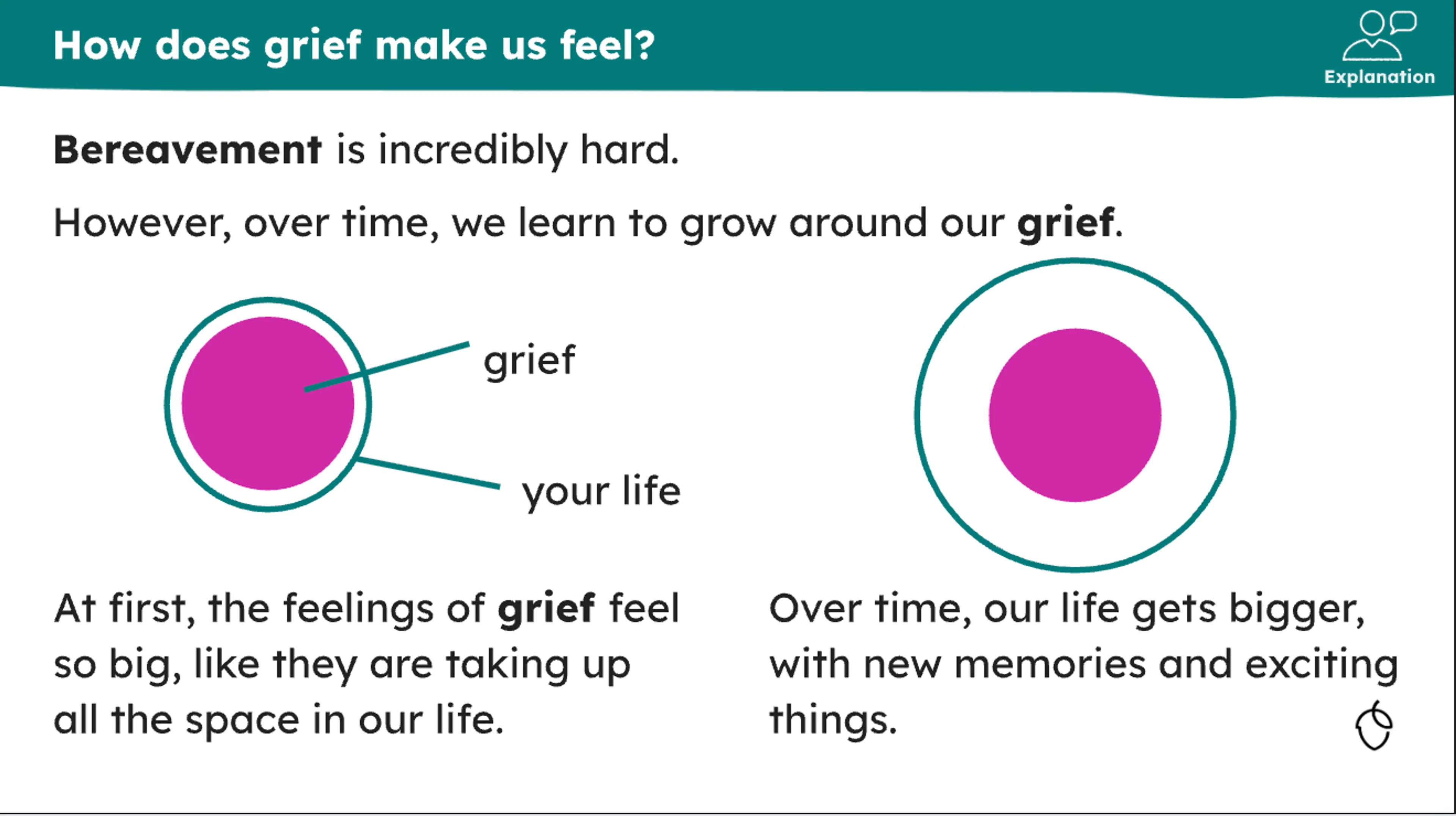
From the lesson ‘Coping with grief’ in the year 4 unit ‘Healthy relationships: Do all families look the same?’
Another key update reflects the increasing role of digital life in children’s experiences. Pupils are now expected to learn ‘why social media, apps, computer games and online gaming (including gambling sites) are age-restricted’. Our lessons address this directly, such as the year 6 lesson ‘Deciding what to share online’, so you can help your pupils understand both the reasons behind restrictions and the risks of engaging too early.
There is also a stronger emphasis on pupils seeking help. Pupils should know ‘how to ask for advice or help for themselves or others – and to keep trying until they are heard’. Across our curriculum, we reinforce this message consistently, encouraging children to persist in seeking support, even if their first attempt is not successful.
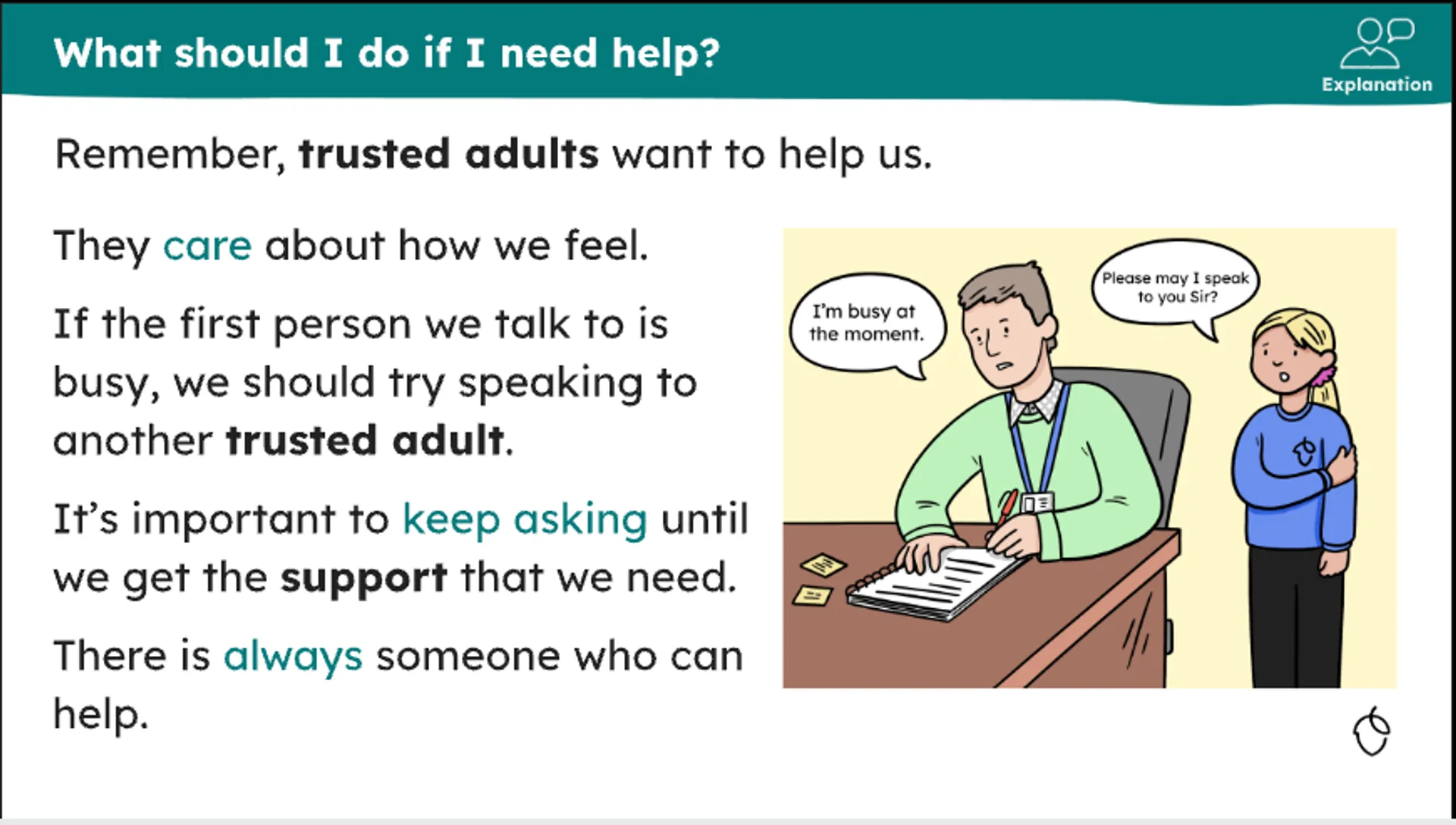
From the year 3 lesson resources Asking for help, from the unit Healthy relationships: How can I help my family?
The updated guidance also introduces teaching about vaping. Pupils should understand ‘the risks of nicotine addiction, including from products such as nicotine pouches’. We’ve worked with the Department of Health and Social Care to ensure this messaging is accurate and balanced. A key principle underpinning our approach is clarity: children should not start vaping, while recognising that adult use of vapes as a tool to quit smoking can be a positive public health outcome. This distinction helps avoid stigma and helps you to support your pupils in making sense of what they may see at home.
Addressing real-world risks and emerging issues in secondary RSHE
At secondary, the updated guidance places a stronger emphasis on the realities of online life.
Pupils are now expected to understand that ‘social media can lead to escalations in conflict’, alongside strategies to manage and de-escalate these situations. Our updated lesson resources help you to explore with your pupils how they can take responsibility for their online behaviour, recognise when situations are becoming harmful, and know when to step away and seek support.
Another important addition reflects the growing presence of artificial intelligence in young people’s lives. From September, schools are required to teach about AI chatbots and how they ‘can pose risks, including creating false intimacy or offering harmful advice’. Our curriculum helps your pupils critically engage with these technologies and understand their limitations.
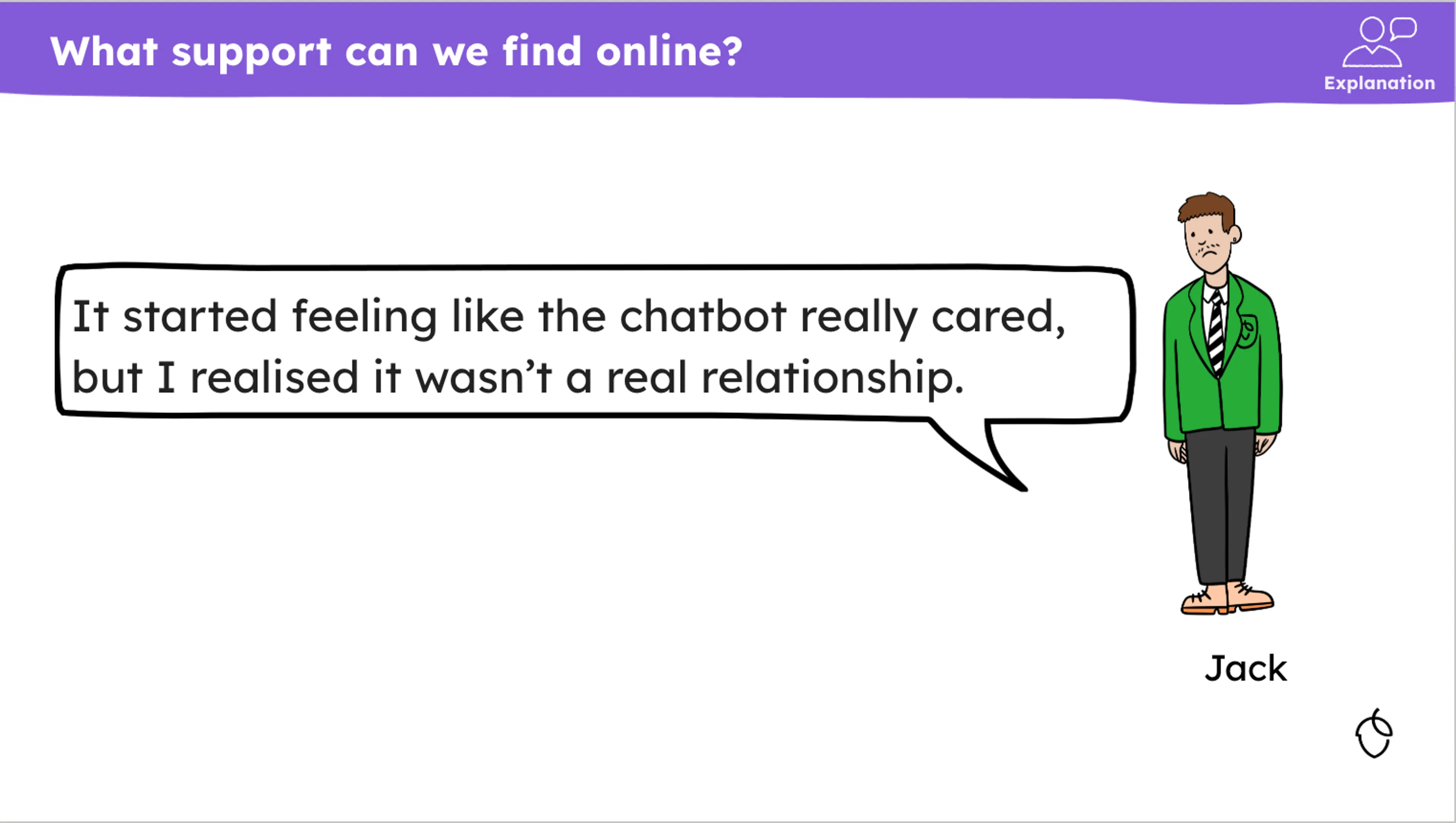
Image from the year 10 lesson ‘Seeking support online’ in the unit ‘Media influence: Is the internet a good influence in our lives?’
Keeping pupils safe remains central to RSHE. The updated guidance includes teaching ‘how to increase personal safety in public spaces, including when socialising with friends’. Our lessons cover a range of real-life scenarios: from travelling home safely to staying safe around water, and ensure your pupils know where and how to seek help when needed – such as our year 8 lesson Keeping safe in our community and our year 10 lesson Support in our community.
The updated guidance also includes new content on women’s health. Pupils should learn about ‘menstrual and gynaecological health’, including:
- what an average period looks like
- common issues such as PMS and heavy menstrual bleeding
- conditions such as endometriosis and PCOS
- when to seek support from a healthcare professional.
We’ve worked with healthcare experts, including leading gynaecologists, to ensure this content is accurate, clear and supports you to deliver it with confidence. You can see an example of this in our year 9 unit Our changing bodies: When might I need to seek support?
Find out more about our updated RSHE curriculum and resources
If you’d like to find out more about how Oak’s RSHE curriculum aligns with the updated guidance, or to discuss implementation in your school, you can get in touch with me.
Explore our updated curriculum: