


New
New
Change and continuity in Ancient Egypt
I can describe how much things stayed the same across 3,000 years of Ancient Egyptian history.


Lesson 6 of 6
New
New
- Year 3
Change and continuity in Ancient Egypt
I can describe how much things stayed the same across 3,000 years of Ancient Egyptian history.
Lesson details
Key learning points
- The River Nile remained the heart of the civilisation and was always highly important for the fertility it brought.
- The pharaohs ruled throughout this time, but where and how they were buried changed over time.
- While beliefs about the afterlife stayed the same, the methods of preserving bodies became very advanced over time.
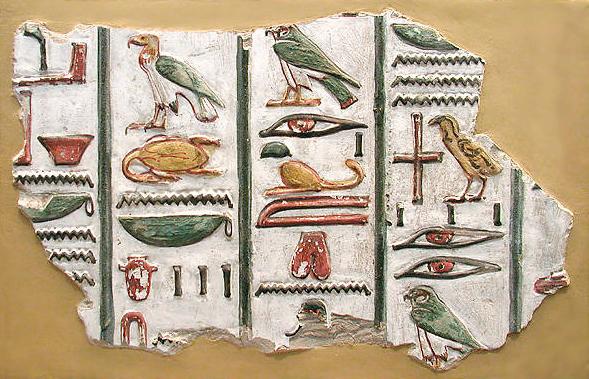
- Detailed hieroglyphs were used throughout, but gradually were used less and usually just for religious writings.
- A good description of how much things stayed the same will use knowledge from throughout this unit.
Keywords
Continuity - continuity is when things stay the same over a long period of time
Common misconception
It can be difficult for young learners to grasp how long 3000 years actually is and therefore appreciate just how long standing and important the Ancient Egyptian civilisation was.
Draw a timeline with 1AD in the middle, 2086 BCE on the left end and 2024 on the right end. Use this to demonstrate that the Ancient Egyptians existed for even longer than the time that has passed since 1 AD to today.
Change and continuity is part of everyday life, it happens in different places in many different ways. Ask pupils to think about or discuss what has changed and what has stayed the same in their lives in the last year, e.g. they've moved class, they have the same friends, they have a new teacher.

Teacher tip

Equipment

Content guidance
- Depiction or discussion of sensitive content

Supervision
Adult supervision recommended

Licence
This content is © Oak National Academy Limited (2026), licensed on Open Government Licence version 3.0 except where otherwise stated. See Oak's terms & conditions (Collection 2).
Lesson video
Loading...
Prior knowledge starter quiz
6 Questions
Q1.Rearrange the letters to make the name of a river in Egypt.
Rearrange the letters to make the name of a river in Egypt.
Q2.What title was given to the rulers of Ancient Egypt?
What title was given to the rulers of Ancient Egypt?
kings
emperors
sultans
Q3.What did Ancient Egyptians believe happened to the soul after death?
What did Ancient Egyptians believe happened to the soul after death?
It stayed in the body and prevented the body from decay
It was reincarnated in a new body
Q4.What name was given to the process used in Ancient Egypt to protect dead bodies from decay?
What name was given to the process used in Ancient Egypt to protect dead bodies from decay?
preservation
entombing
burying
Q5.Match the words to the definitions.
Match the words to the definitions.

Q6.What is the name of the Ancient Egyptian writing that used pictures and symbols?
What is the name of the Ancient Egyptian writing that used pictures and symbols?
Assessment exit quiz
6 Questions
Q1.What does continuity refer to?
What does continuity refer to?
things that change over a long period of time
things that decay over a long period of time
things that develop over a long period of time
Q2.How did hieroglyphs change across 3000 years of Ancient Egyptian civilisation?
How did hieroglyphs change across 3000 years of Ancient Egyptian civilisation?
They became more detailed.
More hieroglyphs were added.
Some hieroglyphs were removed.
Q3.In the Kingdom of Ancient Egypt, pharaohs were buried in pyramids; in the New Kingdom they were buried in the Valley of the Kings.
In the Kingdom of Ancient Egypt, pharaohs were buried in pyramids; in the New Kingdom they were buried in the Valley of the Kings.
Q4.For how long approximately did the Ancient Egyptian civilisation exist?
For how long approximately did the Ancient Egyptian civilisation exist?
3 years
30 years
300 years
Q5.Why did the River Nile continue to be important in Ancient Egypt?
Why did the River Nile continue to be important in Ancient Egypt?
It was good for washing clothes.
It was good for swimming.
Q6.Across the 3000 years civilisation, Ancient Egyptians believed that the pharaohs were the human forms of their .
Across the 3000 years civilisation, Ancient Egyptians believed that the pharaohs were the human forms of their .
