Choose exam board for KS4 Computer Science (GCSE)
Choose exam board for KS4 English
Choose exam board for KS4 French
Choose exam board for KS4 Geography
Choose exam board for KS4 German
Choose exam board for KS4 History
Choose tier for KS4 Maths
Choose exam board for KS4 Music
Choose exam board for KS4 Physical education (GCSE)
Choose exam board for KS4 Religious education (GCSE)
Choose exam board for KS4 Spanish
      New
      New

      Classification keys

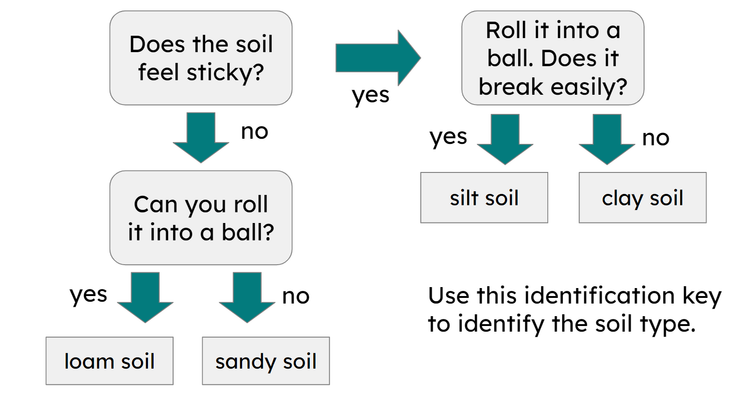
      I can use a classification key to group and identify objects.

      Lesson 5 of 19
      New
      New
      • Year 4

      Classification keys

      I can use a classification key to group and identify objects.

      Lesson details

      Key learning points

      1. Objects can be classified based on their similarities and differences.
      2. You can use a classification key to help decide which group something belongs to.
      3. The questions on a classification key are layered, each answer leads to a new question.
      4. Scientists use observable characteristics to identify unknown objects through a series of yes/no questions.
      5. Scientists use classification keys based on observable characteristics.

      Keywords

      • Group - To group things is to put similar things together.

      • Classification key - Classification keys are diagrams which help us identify objects using yes/no questions.

      • Identify - To identify something is to be able to name it correctly.

      • Yes/no questions - A yes/no question is a type of sentence that asks something and is answered with only yes or no.

      • Observable characteristics - An observable characteristic is a feature or property of something that we can see or use our other senses to observe.

      Common misconception

      Children may ask questions that don't have a yes or no answer.

      Keep reminding the children that their questions need to have a yes/no answer and that this is how a classification key works to help us to group and identify unknown objects.

      Give the children some real unknown objects to sort themselves as moving objects through a classification key helps them to understand the layers more easily.
      Teacher tip

      Equipment

      Worksheet and your own objects if you chose to do some more classification keys of your own.

      Content guidance

      • Exploration of objects

      Supervision

      Adult supervision recommended

      Licence

      This content is © Oak National Academy Limited (2026), licensed on Open Government Licence version 3.0 except where otherwise stated. See Oak's terms & conditions (Collection 2).

      Lesson video

      Loading...

      Prior knowledge starter quiz

      6 Questions

      Q1.
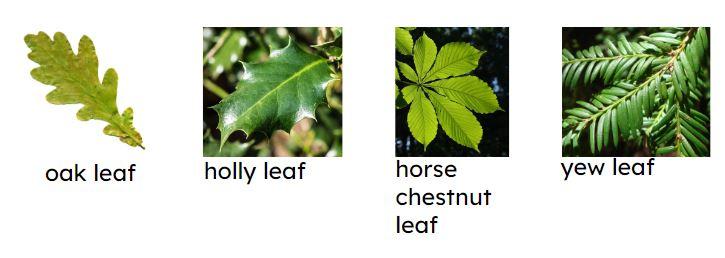
      Which features do these living things have in common?
      An image in a quiz
      They are all animals.
      Correct answer: They are all green.
      They are all mammals.
      Correct answer: They are all parts of plants.
      Correct answer: They are all types of leaves.

      Q2.
      In which groups can a lizard, a swan and a deer belong to?

      birds
      non-living things
      Correct answer: living things
      plants
      Correct answer: animals

      Q3.
      Match the animals to the correct animal group.

      Correct Answer:mammal,cow

      cow

      Correct Answer:amphibian,frog

      frog

      Correct Answer:reptile,snake

      snake

      Correct Answer:fish,shark

      shark

      Correct Answer:bird,penguin

      penguin

      Q4.
      Which of these are observable characteristics of a tree?

      Correct answer: How big it is.
      What it needs to grow.
      How old it is.
      Correct answer: The colour of its leaves.
      Correct answer: The shape of its leaves.

      Q5.
      What is it called when we sort objects or living things into groups?

      multiplication
      naming
      mixing
      identifying
      Correct answer: classification

      Q6.
      How might a scientist record objects they have classified?

      A list of equipment.
      Correct answer: A Venn diagram.
      A prediction.
      Correct answer: A Carroll diagram.

      Assessment exit quiz

      6 Questions

      Q1.
      Which groups could the object in the image below belong to?

      An image in a quiz
      Correct answer: cars
      Correct answer: has wheels
      bicycles
      Correct answer: red
      opaque windows

      Q2.
      Objects can be classified based on their similarities and .

      Correct Answer: differences., differences, different

      Q3.
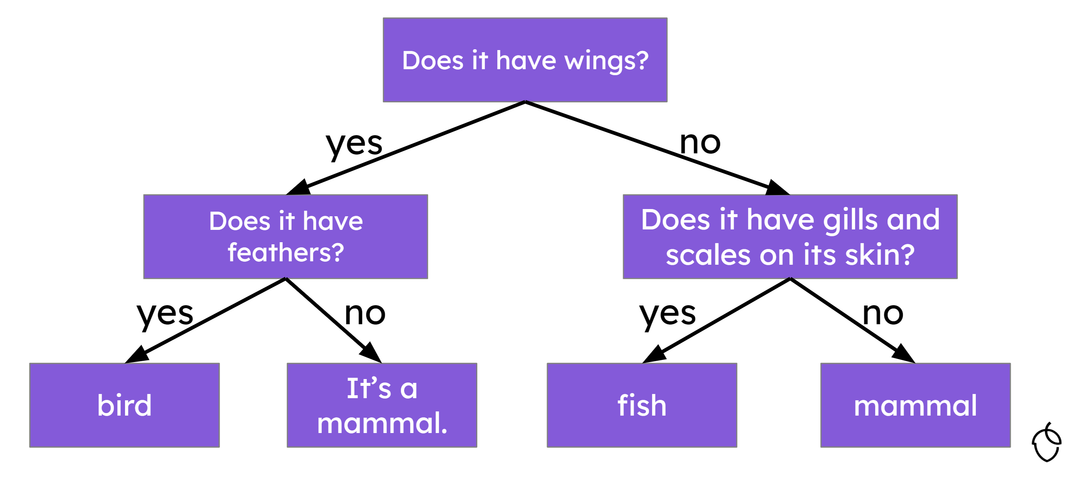
      What kind of diagram is this?

      An image in a quiz
      Venn diagram
      sorting hoop
      Correct answer: classification key
      Carroll diagram

      Q4.
      The yes/no questions in a classification key are layered, each answer leads to a new .
      An image in a quiz
      Correct Answer: question, yes/no question

      Q5.
      Scientists use classification keys based on an object's characteristics.

      Correct Answer: observable

      Q6.
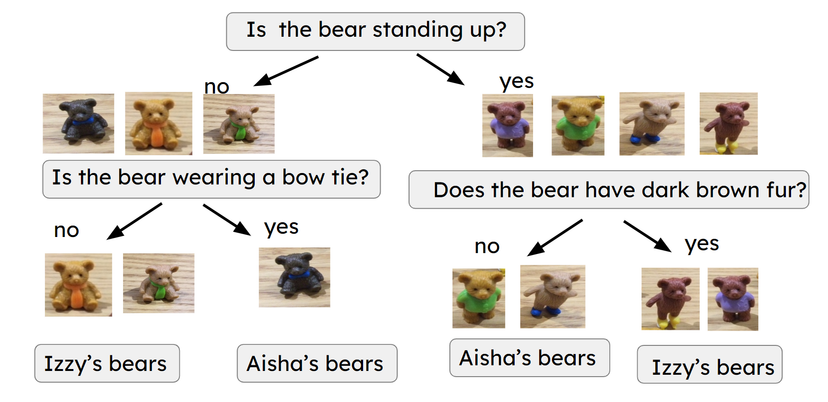
      Look at the classification key, which group does a teddy bear standing up, that has dark brown fur, belong to?
      An image in a quiz
      Correct answer: Izzy's bears
      Aisha's bears
      Neither group

      Lesson appears in

      UnitScience / Living things and the environment

      Science