New
New
Lesson 13 of 16

Graphing direct proportion

I can recognise direct proportion graphically and be able to identify features of the graph.

Lesson 13 of 16
New
New

Graphing direct proportion

I can recognise direct proportion graphically and be able to identify features of the graph.

Lesson details

Key learning points

  1. Direct proportion can be recognised graphically.
  2. A direct proportion graph is always a straight line.
  3. The origin is always a point on a direct proportion graph.
  4. The gradient tells us the constant of proportionality.
  5. Using these features it is possible to identify direct proportion graphs.

Keywords

  • Direct proportion - Two variables are in direct proportion if they have a constant multiplicative relationship.

Common misconception

Assuming that any graph with a constant positive gradient represents variables that are in direct proportion.

Encourage the useful check of reading a pairs of values from the graph, doubling one of them and checking the graph to see if the other variable has doubled. If it has it shows a directly proportional relationship if not it doesn't.

Using mini-whiteboards, for example, ask students to sketch their own examples and non-examples of graphs showing direct proportion.
Teacher tip

Licence

This content is © Oak National Academy Limited (2025), licensed on Open Government Licence version 3.0 except where otherwise stated. See Oak's terms & conditions (Collection 2).

Lesson video

Loading...
Prior knowledge starter quiz

Download quiz pdf

6 Questions

Q1.
Two variables are in direct if they have a constant multiplicative relationship.

Correct Answer: proportion

Q2.
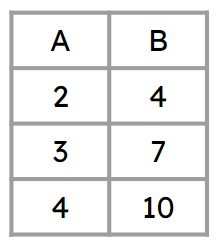
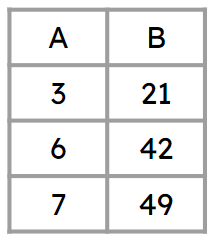
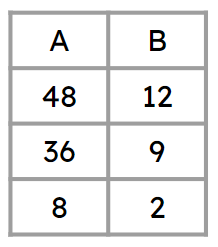
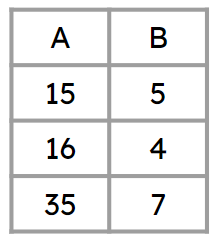
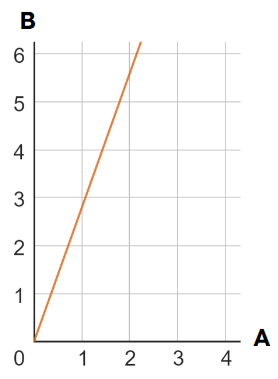
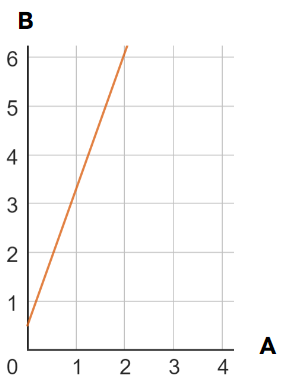
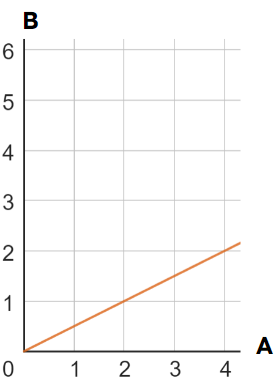
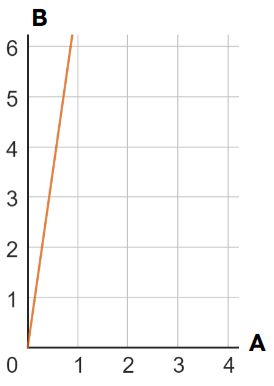
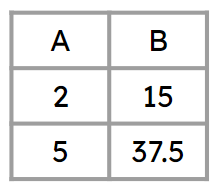
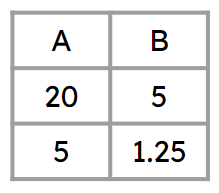
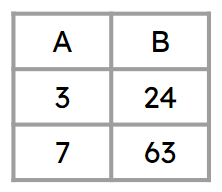
Which of the following show a directly proportional relationship between A and B?

An image in a quiz
Correct Answer: An image in a quiz
An image in a quiz
Correct Answer: An image in a quiz
An image in a quiz
An image in a quiz

Q3.
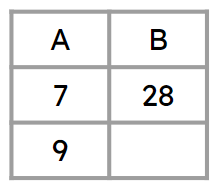
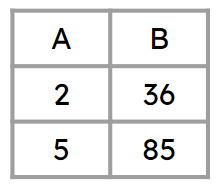
A and B are directly proportional. The missing value of B is .

An image in a quiz
Correct Answer: 36

Q4.
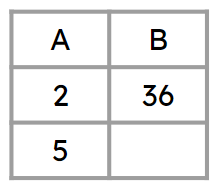
A and B are directly proportional. The missing value of B is .

An image in a quiz
Correct Answer: 90

Q5.
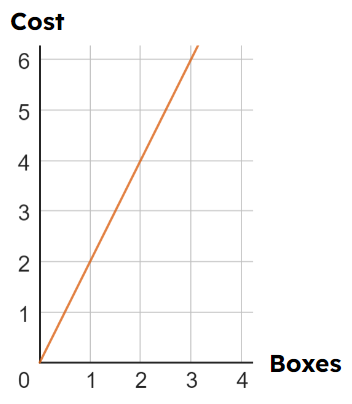
The graph shows the relationship between cost and number of boxes bought. Can you spend exactly £5 on boxes?

An image in a quiz
Correct answer: No, reading off the graph at £5 shows you can buy between 2 and 3 boxes.
Yes, reading off the graph at £5 shows you can buy exactly 3 boxes.

Q6.
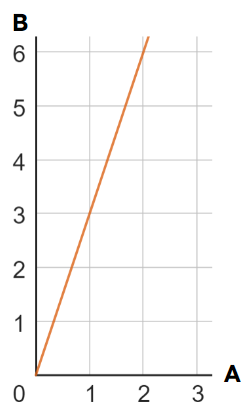
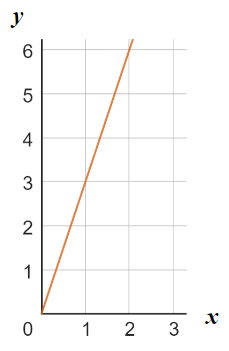
This graph shows that A and B are in direct proportion. The proportional relationship between A and B is B = A × .

An image in a quiz
Correct Answer: 3

Assessment exit quiz

Download quiz pdf

6 Questions

Q1.
Graphs showing direct proportion have a positive gradient with an of 0.

Correct Answer: intercept

Q2.
Which of the following graphs does NOT show direct proportion?

An image in a quiz
Correct Answer: An image in a quiz
An image in a quiz
An image in a quiz
An image in a quiz

Q3.
Which tables show that A and B are in direct proportion?

An image in a quiz
Correct Answer: An image in a quiz
An image in a quiz
Correct Answer: An image in a quiz
An image in a quiz
An image in a quiz

Q4.
The constant of proportionality represented by this graph is .

An image in a quiz
Correct Answer: 4, four

Q5.
Which of the following is NOT true of this graph?

An image in a quiz
The constant of proportionality is $$3$$.
Correct answer: The equation of the line is $$x = 3y$$.
The gradient of the line is $$3$$.
The graph has an intercept of zero.
Correct answer: The graph does not show a directly proportional relationship.

Q6.
What are the key features of a graph showing direct proportion?

It has a negative gradient.
Correct answer: It has an intercept of zero.
Correct answer: It has a constant positive gradient.
The intercept can be 0.1
It has a gradient of 0

Lesson appears in

UnitMaths / Understanding multiplicative relationships: percentages and proportionality