


Microscopy of human blood cells and blood vessels


Lesson details
Learning outcome
I can use a light microscope to observe blood cells and blood vessels.
Key learning points
- The parts of a light microscope and their functions, and the sequence of steps for setting up a light microscope.
- A light microscope can be used to observe blood cells on a prepared slide.
- Observations from a light microscope can be recorded in a labelled scientific line drawing with an indication of scale.
- A light microscope can be used to observe sections of blood vessels and differences in the structures of their walls.
- Explaining observations from microscopy of differences in the walls of different blood vessels.
Keywords
Light microscope - An instrument that uses visible light and lenses to magnify viewed objects.
Lens - Glass or plastic disc that refracts light to increase magnification.
Focus - To make an image sharper and clearer.
Magnification - The number of times greater in size the viewed object is compared to its actual size.
Red blood cell - A cell that transports oxygen around the body.
Common misconception
Scientific drawings made using a microscope are difficult to do and often sketched like an artwork. The requirements are clear and precise and require practise to get right.
The expectations for scientific drawings are clearly stated and shown visually. Opportunities to practise drawing different structures are included throughout the lesson.
Teacher tip
Give students plenty of time to make their scientific drawings. Drawing whilst looking down a microscope is really hard to do, so students may be more successful if they draw from a picture displayed on the board or a sheet instead, rather than having to contend with the microscope as well.

Equipment
Light microscope, slides of human blood smears and blood vessels.

Content guidance
Risk assessment required - equipment

Supervision
Adult supervision required

Licence

Lesson video
Loading...
Prior knowledge starter quiz
6 Questions
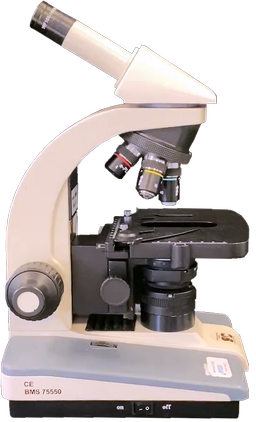
Q1.The photograph shows a piece of apparatus called a light ...
Q2.We are made up of tiny living building blocks called ...
Q3.Who is correct?



Q4.True or false? Most cells are large enough to see with the unaided eye.
Q5.Match each structure to its function in the human circulatory system.

Q6.Various substances are transported around the human body in the blood. Match each substance to its correct description.
Assessment exit quiz
6 Questions
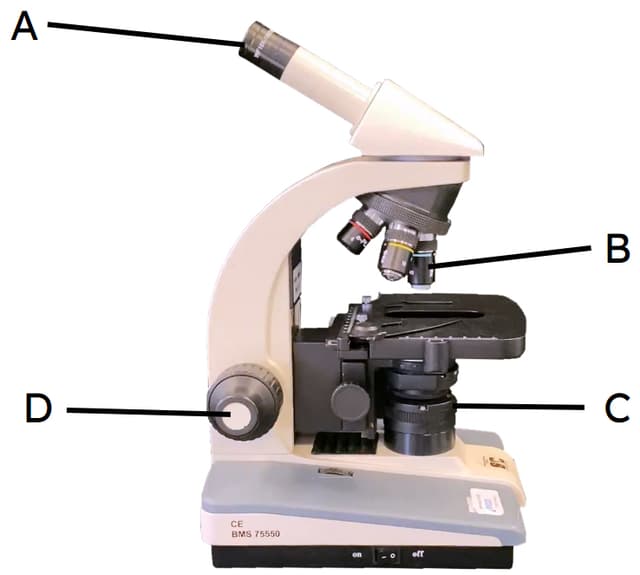
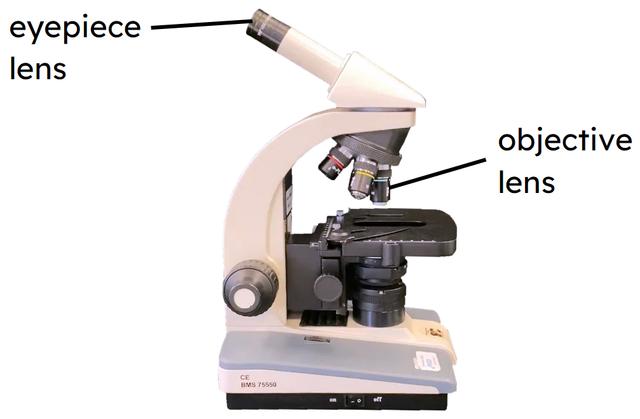
Q1.Match each part of the microscope to its name.
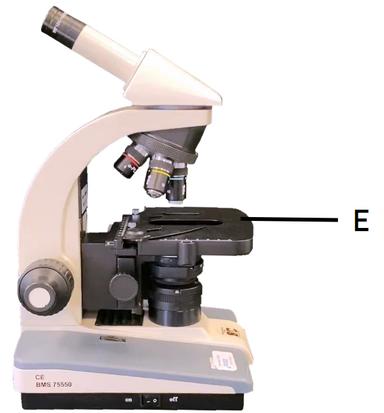
Q2.Part E is called the ...
Q3.On this microscope, the eyepiece lens has a magnification of x10, and the objective lens has a magnification of x40. What is the total magnification?
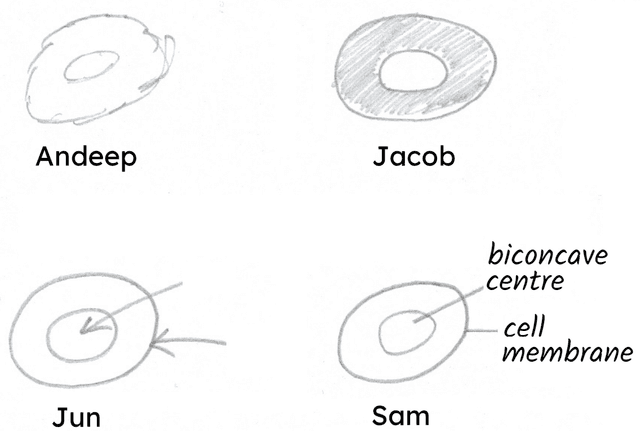
Q4.Four students have used a microscope to observe blood cells. Each person has drawn their observations of a red blood cell. Who has produced the best scientific drawing?
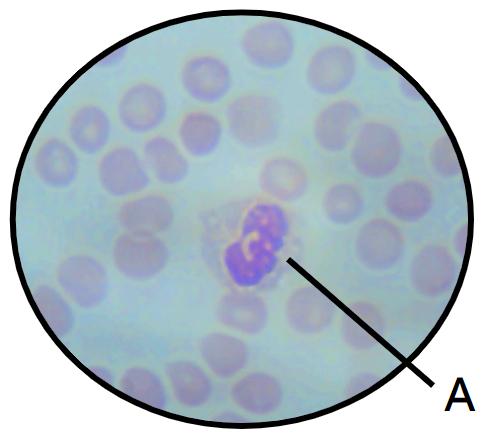
Q5.A student observed a sample of blood using a light microscope. The structure labelled A is …
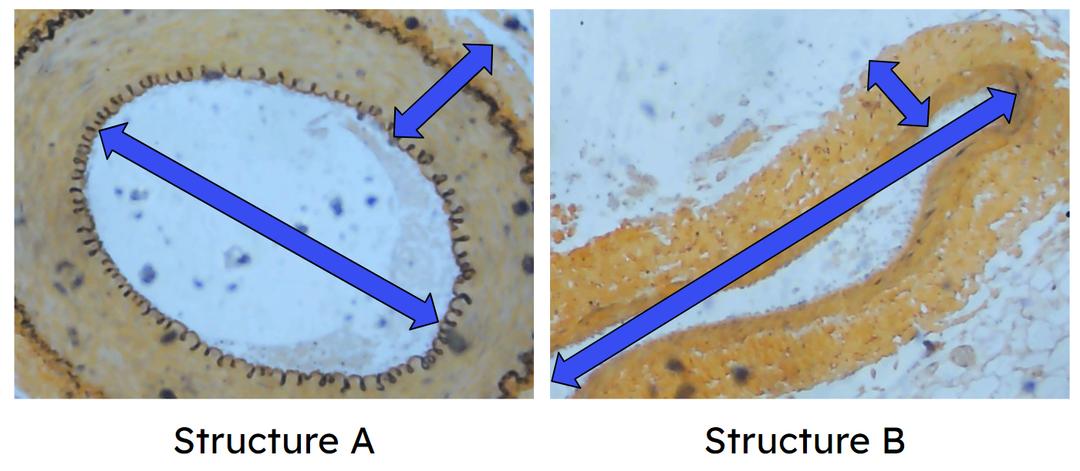
Q6.These structures observed using a light microscope are an artery and a vein. Which statements explain why structure B is a vein?
To help you plan your 10 biology lesson on: Microscopy of human blood cells and blood vessels, download all teaching resources for free and adapt to suit your pupils' needs...
To help you plan your 10 biology lesson on: Microscopy of human blood cells and blood vessels, download all teaching resources for free and adapt to suit your pupils' needs.
The starter quiz will activate and check your pupils' prior knowledge, with versions available both with and without answers in PDF format.
We use learning cycles to break down learning into key concepts or ideas linked to the learning outcome. Each learning cycle features explanations with checks for understanding and practice tasks with feedback. All of this is found in our slide decks, ready for you to download and edit. The practice tasks are also available as printable worksheets and some lessons have additional materials with extra material you might need for teaching the lesson.
The assessment exit quiz will test your pupils' understanding of the key learning points.
Our video is a tool for planning, showing how other teachers might teach the lesson, offering helpful tips, modelled explanations and inspiration for your own delivery in the classroom. Plus, you can set it as homework or revision for pupils and keep their learning on track by sharing an online pupil version of this lesson.
Explore more key stage 4 biology lessons from the Transport and exchange surfaces in humans unit, dive into the full secondary biology curriculum, or learn more about lesson planning.