


Plant roots are adapted to absorb water and mineral ions


Lesson details
Learning outcome
I can explain how water and mineral ions are absorbed into specialised root hair cells that are adapted to maximise absorption.
Key learning points
- Plants need water for support (to remain turgid) because they don’t have bones, and for photosynthesis in cells.
- Plants need mineral ions for growth and repair, including nitrate ions as a source of nitrogen to make proteins.
- Particles of water are absorbed by osmosis, a type of diffusion, into plant root hair cells.
- Nitrate ions are absorbed into plant root hair cells by active transport, which requires energy.
- Root hair cells are adapted to increase the surface area of membrane for osmosis and active transport.
Keywords
Osmosis - the net movement of water molecules through a selectively-permeable membrane from high to low concentration of water molecules
Net movement - the overall movement of particles
Active transport - the net movement of particles against a concentration gradient using energy
Concentration gradient - a difference in the concentration of particles from one area to another
Root hair cell - a specialised plant cell found in the roots that absorb water and nutrients into the plant
Common misconception
Some students do not realise the significance of the shape of the root hair cell and do not explain this in terms of increasing its surface area.
The idea of surface area as the significant adaptation of root hair cells is clearly introduced, checked, and reinforced with specific tasks that explicitly enquire about this adaptation.
Teacher tip
Use a hand lens to observe roots grown in water, and show how adding a 'hair' to a box 'cell' greatly increases the surface area - do this by wrapping it with paper and comparing the amount of paper required to wrap it with and without the 'hair'.

Equipment
None required.

Licence

Lesson video
Loading...
Prior knowledge starter quiz
6 Questions
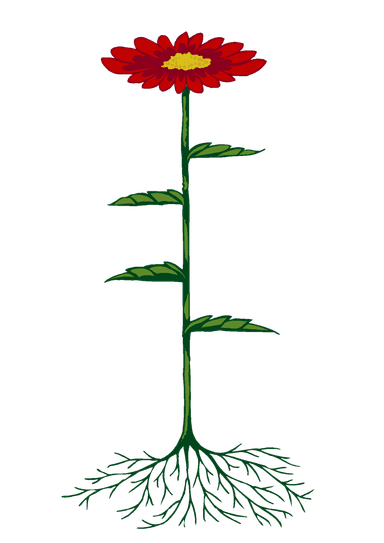
Q1.Water is needed by plants for photosynthesis. Where do plants get this water from?
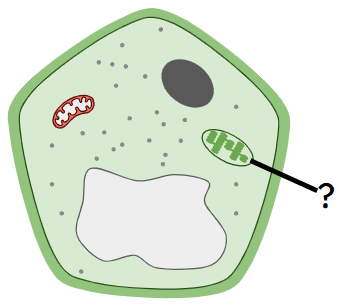
Q2.Which subcellular structure in plant cells is the site of photosynthesis?
Q3.Which gas in air is needed for photosynthesis?
Q4.Which gas made by photosynthesis is excreted by leaves during daylight?
Q5.Match each word to its correct meaning.

Q6.During active transport, a protein in the cell membrane changes shape to transport particles through the membrane against a concentration gradient.
Assessment exit quiz
6 Questions
Q1.Which is the correct word summary for photosynthesis?
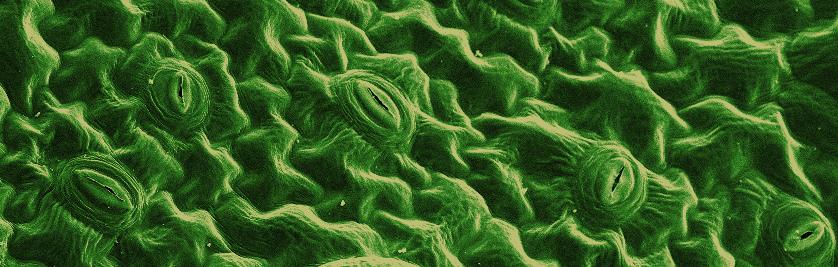
Q2.Water can leave the plant via pores in the leaves called .
Q3.Match each mineral to how it is used by plants.
Q4.Match each substance to how it is absorbed by plants.
Q5.The ‘hair’ of a root hair cells is what distinguishes it from other root cells. How does the hair adapt a root hair cell for its function?
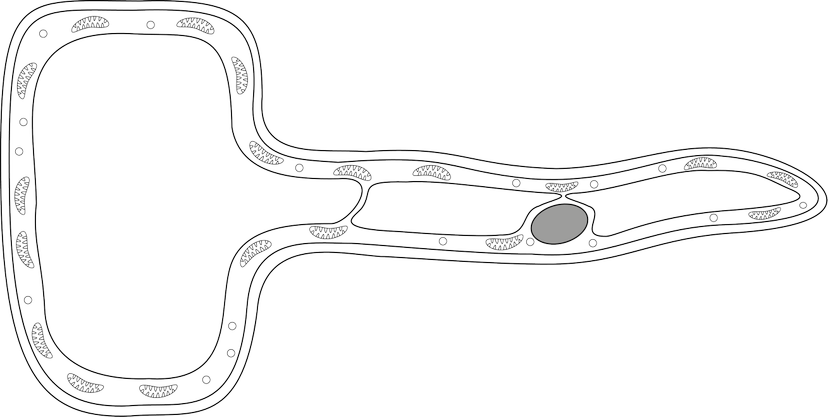
Q6.The diagram shows a root hair cell with many mitochondria. What is the function of mitochondria?
To help you plan your 11 biology lesson on: Plant roots are adapted to absorb water and mineral ions, download all teaching resources for free and adapt to suit your pupils' needs...
To help you plan your 11 biology lesson on: Plant roots are adapted to absorb water and mineral ions, download all teaching resources for free and adapt to suit your pupils' needs.
The starter quiz will activate and check your pupils' prior knowledge, with versions available both with and without answers in PDF format.
We use learning cycles to break down learning into key concepts or ideas linked to the learning outcome. Each learning cycle features explanations with checks for understanding and practice tasks with feedback. All of this is found in our slide decks, ready for you to download and edit. The practice tasks are also available as printable worksheets and some lessons have additional materials with extra material you might need for teaching the lesson.
The assessment exit quiz will test your pupils' understanding of the key learning points.
Our video is a tool for planning, showing how other teachers might teach the lesson, offering helpful tips, modelled explanations and inspiration for your own delivery in the classroom. Plus, you can set it as homework or revision for pupils and keep their learning on track by sharing an online pupil version of this lesson.
Explore more key stage 4 biology lessons from the Transport and exchange surfaces in plants unit, dive into the full secondary biology curriculum, or learn more about lesson planning.