


Solutions


Lesson details
Learning outcome
I can explain how solutions are formed and how to use state symbols in equations.
Key learning points
- A solution is a type of mixture made of a solvent and a solute.
- Solutions form due to a solute dissolving in the solvent.
- Solubility is a measure of how well a chemical dissolves (soluble/insoluble).
- Many substances can act as a solvent; however, water is the most common.
- State symbols are used to identify the three states of matter and aqueous solutions in chemical equations.
Keywords
Solute - A solute is a substance that has dissolved into a solvent.
Solvent - A solvent is a liquid into which a solute dissolves.
Soluble - When a substance dissolves in a solvent, it is described as soluble in that solvent.
Insoluble - A substance that does not dissolve in a particular solvent is described as insoluble.
State symbol - A state symbol is used in chemical equations to indicate the physical state of a substance.
Common misconception
Some think that because a solute can no longer be seen, or that a solvent becomes coloured when a solute dissolves, that the creation of a solution is a chemical change.
Create a salt solution, then evaporate the water (leaving salt crystals) to demonstrate that the salt and water have not chemically combined and therefore dissolving (to create a solution) is a physical change.
Teacher tip
Create a circus of stations in which pupils create solutions of various solid and liquid solutes and various solvents. Challenge pupils to describe the solution in an equation format, using state symbols.

Licence

Lesson video
Loading...
Prior knowledge starter quiz
6 Questions
Q1.Which picture shows an insoluble substance?
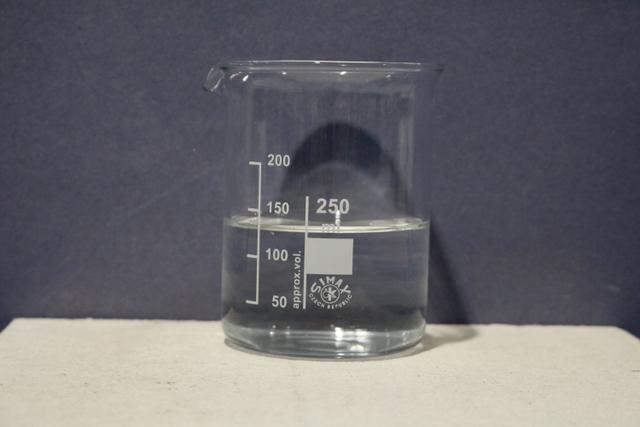

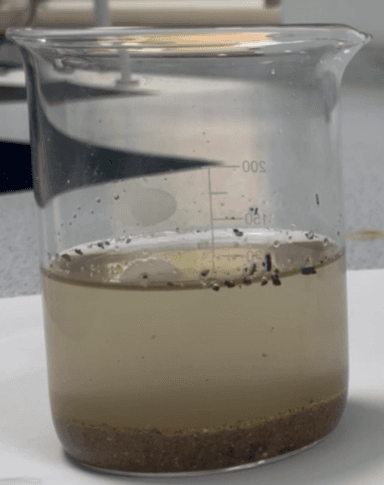
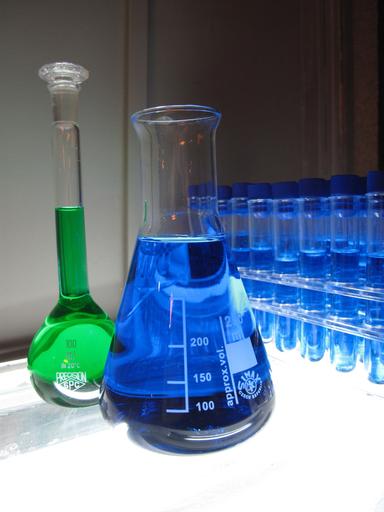
Q2.Mass is measured in ...
Q3.Sugar dissolves in water, so sugar can be described as a solid.
Q4.A is a material formed from two or more substances which can be physically separated.
Q5.Some students have been asked to describe this diagram using key terms. Who has used their key words correctly?





Q6.Melting is a reversible, physical change. Which of the following statements is also true about melting?
Assessment exit quiz
6 Questions
Q1.What happens when a solute dissolves in a solvent?
Q2.What is a solvent in a solution?
Q3.Which term describes a substance that does not dissolve in a solvent?
Q4.Match the state symbol to its meaning.

Q5.If a substance is highly soluble (has a high solubility) in water, it means it can easily in water.
Q6.Not everything is soluble in water. We can try and use a different (e.g. ethanol) to dissolve substances if they are not water soluble.
To help you plan your 10 chemistry lesson on: Solutions, download all teaching resources for free and adapt to suit your pupils' needs...
To help you plan your 10 chemistry lesson on: Solutions, download all teaching resources for free and adapt to suit your pupils' needs.
The starter quiz will activate and check your pupils' prior knowledge, with versions available both with and without answers in PDF format.
We use learning cycles to break down learning into key concepts or ideas linked to the learning outcome. Each learning cycle features explanations with checks for understanding and practice tasks with feedback. All of this is found in our slide decks, ready for you to download and edit. The practice tasks are also available as printable worksheets and some lessons have additional materials with extra material you might need for teaching the lesson.
The assessment exit quiz will test your pupils' understanding of the key learning points.
Our video is a tool for planning, showing how other teachers might teach the lesson, offering helpful tips, modelled explanations and inspiration for your own delivery in the classroom. Plus, you can set it as homework or revision for pupils and keep their learning on track by sharing an online pupil version of this lesson.
Explore more key stage 4 chemistry lessons from the Separating substances unit, dive into the full secondary chemistry curriculum, or learn more about lesson planning.