


Distillation: separating a mixture of inks


Lesson details
Learning outcome
I can describe how to successfully separate the components of ink.
Key learning points
- Appropriate equipment should be used to separate substances in a mixture of inks.
- Inks are a mixture of substances that can be separated using distillation.
- Care should be taken when heating substances to their boiling points.
- Simple distillation completed in the school lab has limitations.
Keywords
Component - a part of something, e.g. a tyre on a car
Distillation - a separation technique that uses boiling and condensation to remove and isolate a liquid component of a mixture
Delivery tube - a thin tube used to transfer (i.e. "deliver") a substance (usually in the gas state) from one container to another
Condenser - a piece of apparatus composed of a tube surrounded by a cold layer, usually cold water
Distillate - the liquid that is condensed from the gas state during distillation
Common misconception
Heating a mixture strongly will cause distillation to occur more quickly.
Heating a mixture strongly could cause multiple components to enter a condenser (or delivery tube), resulting in a contaminated distillate. Careful, gentle heating of the mixture to ensure no bubbles near the condenser will reduce contamination.
Teacher tip
Pupils can sometimes struggle with the setup, particularly clamping glassware. Demonstrating how to do this efficiently - with hints/tips for pupils - will save setup time. Also, practice this practical beforehand to ensure an appropriate volume of inky mixture is used for your equipment.

Equipment
Per group: conical flask, delivery tube, test tube, ice, beaker, inky water sample, heatproof mat, Bunsen burner, tripod, gauze

Content guidance
Risk assessment required - equipment

Supervision
Adult supervision required

Licence

Lesson video
Loading...
Prior knowledge starter quiz
6 Questions
Q1.Which process occurs when a substance changes from the gas state to the liquid state?
Q2.What happens to the boiling point of water when salt is added?
Q3.Distillation is a technique that can separate liquids from each other.
Q4.Distillation relies upon substances in a mixture having different points.
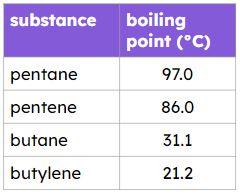
Q5.When heated, which substance listed in the table below would boil first?
Q6.Put the statements into the correct order to describe how distillation occurs.
Assessment exit quiz
6 Questions
Q1.Water soluble liquid ink is found to boil at 105°C-131°C, suggesting it is a mixture of different substances. How might we collect a sample of pure water?
Q2. is a technique used to separate water from an water-soluble ink solution.
Q3.The component collected at the end of distillation is known as the ...
Q4.The equipment needed for distillation is lettered on the diagram below. Match each letter to the correct label.
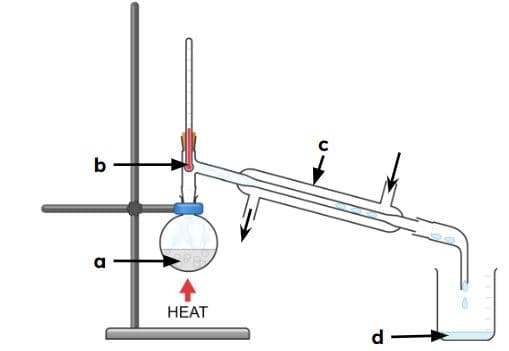

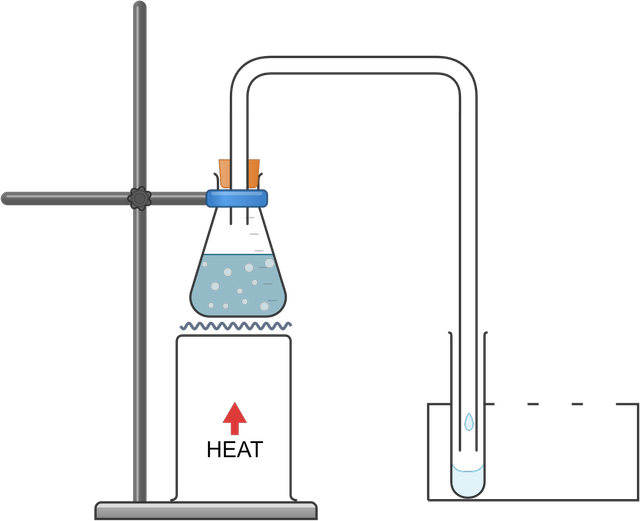
Q5.What are the limitations of using a simple setup (as shown below) for distillation?
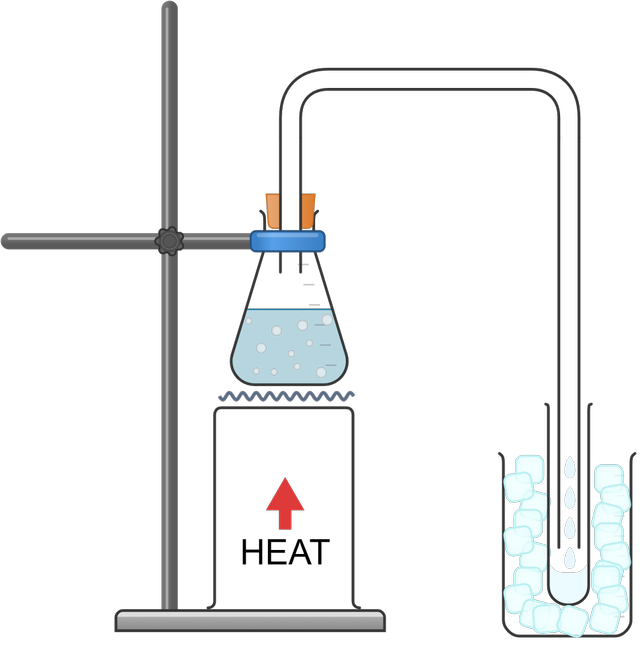
Q6.Some students used the distillation set-up shown. Collection of the distillate could be improved by ...
To help you plan your 10 chemistry lesson on: Distillation: separating a mixture of inks, download all teaching resources for free and adapt to suit your pupils' needs...
To help you plan your 10 chemistry lesson on: Distillation: separating a mixture of inks, download all teaching resources for free and adapt to suit your pupils' needs.
The starter quiz will activate and check your pupils' prior knowledge, with versions available both with and without answers in PDF format.
We use learning cycles to break down learning into key concepts or ideas linked to the learning outcome. Each learning cycle features explanations with checks for understanding and practice tasks with feedback. All of this is found in our slide decks, ready for you to download and edit. The practice tasks are also available as printable worksheets and some lessons have additional materials with extra material you might need for teaching the lesson.
The assessment exit quiz will test your pupils' understanding of the key learning points.
Our video is a tool for planning, showing how other teachers might teach the lesson, offering helpful tips, modelled explanations and inspiration for your own delivery in the classroom. Plus, you can set it as homework or revision for pupils and keep their learning on track by sharing an online pupil version of this lesson.
Explore more key stage 4 chemistry lessons from the Separating substances unit, dive into the full secondary chemistry curriculum, or learn more about lesson planning.