


Ozone layer: a story of global success


Lesson details
Learning outcome
I can describe why the ozone layer was nearly destroyed, but through a global community and international resolution it was saved.
Key learning points
- The ozone layer protects life from harmful ultraviolet (UV) radiation from the Sun.
- Chlorofluorocarbons (CFCs) were once used, and when they entered our atmosphere reacted with ozone (O₃).
- Ozone levels decreased, but scientific communication led to action being taken to prevent further loss of ozone.
- The work of analytical scientists suggests the ozone layer is now reforming.
Keywords
Ozone - Ozone is made up of oxygen atoms. It has the molecular formula O₃.
Ozone layer - The ozone layer refers to an area in the stratosphere where there is a high concentration of ozone.
Ultraviolet (UV) radiation - Ultraviolet (UV) radiation is a type of electromagnetic radiation which is emitted from the Sun.
Chlorofluorocarbons - Chlorofluorocarbons are compounds consisting of chlorine, fluorine and carbon atoms only.
Analytical scientists - Analytical scientists use a range of scientific techniques to study the chemical composition of substances.
Common misconception
Ozone layer and climate change are linked/the same thing.
Ozone layer depletion was caused by human activity, but not through use of burning fossil fuels/greenhouse gas emissions. Both are atmospheric issues, but not the same issue.
Teacher tip
NASA have ozone map images from each month. Students might also like to compare the difference in ozone levels over the northern and southern hemisphere.

Licence

Lesson video
Loading...
Prior knowledge starter quiz
6 Questions
Q1.What is the molecular formula for an oxygen molecule?
Q2.Which of the following are an impact of increased levels of greenhouse gases in the atmosphere?
Q3.Why do humans wear sunscreen and sunglasses?
Q4.Which of the following is not a type of electromagnetic radiation?
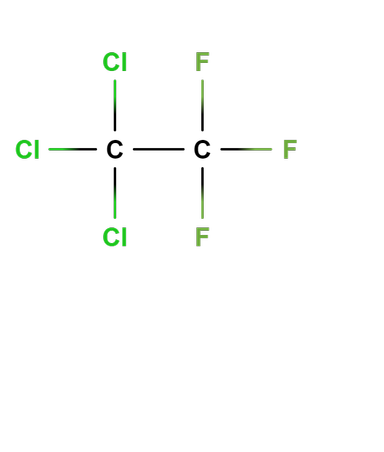
Q5.Which elements does the molecule in the image contain?
Q6.Match the key term with the correct definition.

Assessment exit quiz
6 Questions
Q1.Which of the following caused a 'hole' in the ozone layer?
Q2.What does CFCs stand for?
Q3.CFCs were once used in which items?
Q4.Why is the ozone layer important for life on Earth?
Q5.Which of the following are risks associated with ultraviolet radiation?
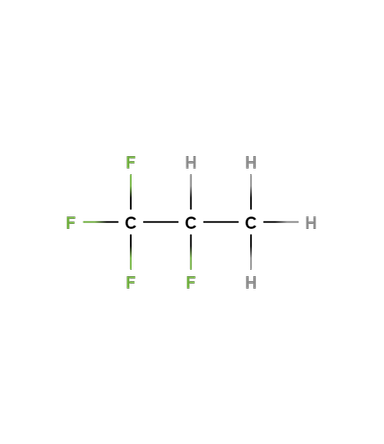
Q6.Look at the image and identify the group of compounds it belongs to.
To help you plan your 11 chemistry lesson on: Ozone layer: a story of global success, download all teaching resources for free and adapt to suit your pupils' needs...
To help you plan your 11 chemistry lesson on: Ozone layer: a story of global success, download all teaching resources for free and adapt to suit your pupils' needs.
The starter quiz will activate and check your pupils' prior knowledge, with versions available both with and without answers in PDF format.
We use learning cycles to break down learning into key concepts or ideas linked to the learning outcome. Each learning cycle features explanations with checks for understanding and practice tasks with feedback. All of this is found in our slide decks, ready for you to download and edit. The practice tasks are also available as printable worksheets and some lessons have additional materials with extra material you might need for teaching the lesson.
The assessment exit quiz will test your pupils' understanding of the key learning points.
Our video is a tool for planning, showing how other teachers might teach the lesson, offering helpful tips, modelled explanations and inspiration for your own delivery in the classroom. Plus, you can set it as homework or revision for pupils and keep their learning on track by sharing an online pupil version of this lesson.
Explore more key stage 4 chemistry lessons from the Atmosphere and changing climate unit, dive into the full secondary chemistry curriculum, or learn more about lesson planning.