


Diffusion and surface area to volume ratio


Lesson details
Learning outcome
I can calculate the surface area, volume and surface area to volume ratio of different sized cubes and observe how long it takes for a liquid to diffuse into them.
Key learning points
- The concepts of surface area, volume, and surface area to volume ratio.
- Calculation of the surface areas, volumes and surface area to volume ratios of cubes of different sizes.
- Use of coloured agar cubes of different sizes to observe time taken for acid to diffuse to the centre of each cube.
- Interpretation of results and explanation using ideas about surface area to volume ratio and diffusion.
Keywords
Surface area - The total area of the surface of an object.
Volume - The total space of an object.
Surface area to volume ratio - The relationship between the surface area and the volume of a shape.
Diffusion - Diffusion is the net movement of particles from an area of higher concentration to an area of lower concentration.
Common misconception
Mistakes with the calculations of surface area or volume are common. The concepts of surface area, volume and their ratio, with the effect that changing these have on diffusion, are difficult.
Plenty of practise on how to calculate surface area and volume, and compare these as a ratio, some simplified, is included. The experiment results are used to show the impact of changing surface area, volume and width on diffusion.
Teacher tip
You could run the agar cubes as a demo on the side during the lesson to see their progress in real time.

Equipment
Beakers; cubes of agar containing phenolphthalein indicator and 0.5M sodium carbonate; 0.1M hydrochloric acid; timer

Content guidance
Risk assessment required - equipment

Supervision
Adult supervision required

Licence

Lesson video
Loading...
Prior knowledge starter quiz
6 Questions
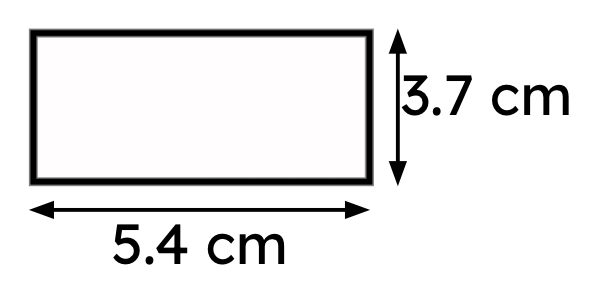
Q1.The area of this object is cm².

Q2.True or false? Diffusion is a passive process.
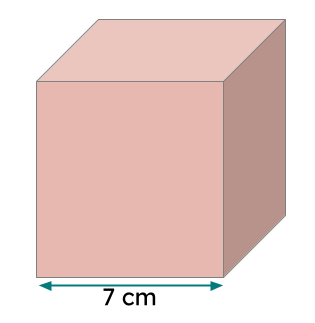
Q3.What is the volume of this cube?
Q4.How many mm are in 4 m?
Q5.What is the correct description of diffusion?
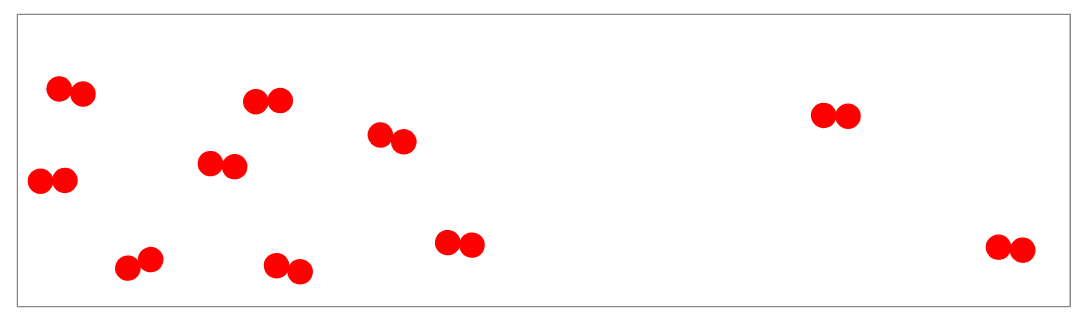
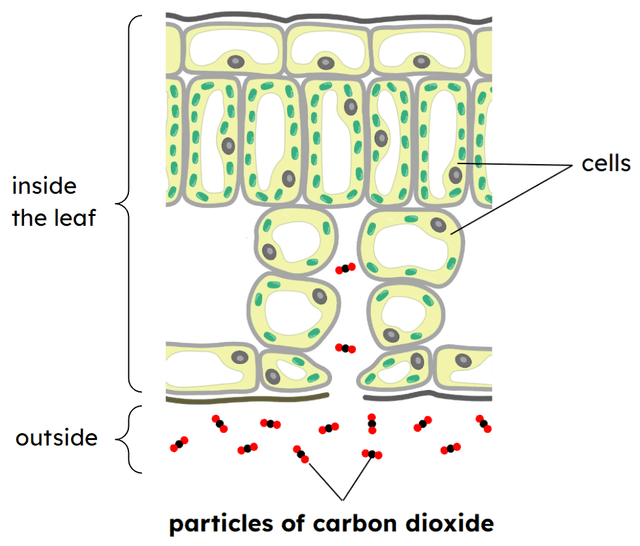
Q6.What will happen to the particles of carbon dioxide?
Assessment exit quiz
6 Questions
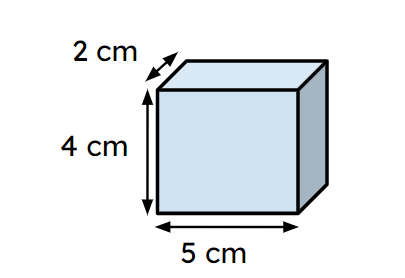
Q1.The volume of this shape is cm³.
Q2.A 4 cm wide cube takes 60 minutes to fully discolour. If we cut the cube into 4 new cubes each 2 cm wide, how long would each cube take to discolour?
Q3.What is the SA : V of this cube?
Q4.What is the relationship between the width of a cube and the surface area to volume ratio?
Q5.As the SA : V increases, the time taken for a substance to diffuse will ...
Q6.Which organism has the smallest SA : V?
To help you plan your 10 combined science lesson on: Diffusion and surface area to volume ratio, download all teaching resources for free and adapt to suit your pupils' needs...
To help you plan your 10 combined science lesson on: Diffusion and surface area to volume ratio, download all teaching resources for free and adapt to suit your pupils' needs.
The starter quiz will activate and check your pupils' prior knowledge, with versions available both with and without answers in PDF format.
We use learning cycles to break down learning into key concepts or ideas linked to the learning outcome. Each learning cycle features explanations with checks for understanding and practice tasks with feedback. All of this is found in our slide decks, ready for you to download and edit. The practice tasks are also available as printable worksheets and some lessons have additional materials with extra material you might need for teaching the lesson.
The assessment exit quiz will test your pupils' understanding of the key learning points.
Our video is a tool for planning, showing how other teachers might teach the lesson, offering helpful tips, modelled explanations and inspiration for your own delivery in the classroom. Plus, you can set it as homework or revision for pupils and keep their learning on track by sharing an online pupil version of this lesson.
Explore more key stage 4 combined science lessons from the Transport and exchange surfaces in humans unit, dive into the full secondary combined science curriculum, or learn more about lesson planning.