


Alternative methods of extracting metals: phytomining and bioleaching


Lesson details
Learning outcome
I can describe how metals are extracted by phytomining and bioleaching and compare different methods of metal extraction.
Key learning points
- In phytomining, metal is extracted from a crop of plants that absorb metal ions through their roots.
- In bioleaching, metal is extracted from bacteria that extract metal from an ore.
- Electrolysis is a process used to separate metals from their compounds.
- There are advantages and disadvantages associated with each method of extracting metals.
Keywords
Low-grade ore - An ore is a rock that contains metals or metal compounds. A low-grade ore contains a lower percentage of metal or metal compound than a high-grade ore.
Phytomining - Phytomining is a method of extracting metals by growing plants in soil containing low-grade ore.
Displacement - Displacement is where a more reactive element takes the place of a less reactive element in a compound.
Electrolysis - Electrolysis is a process that uses electricity to break down a compound.
Bioleaching - Bioleaching is a method of extracting metals by growing bacteria on low-grade ores to produce a leachate.
Common misconception
Students struggle to distinguish between phytomining and bioleaching.
Reinforce that the term 'phyto' is a combining form meaning 'plant'.
Teacher tip
This lesson provides a good opportunity to discuss the importance of reusing and recycling products to reduce the amount of metal we need to extract from ores.

Equipment
None required.

Licence

Lesson video
Loading...
Prior knowledge starter quiz
6 Questions
Q1.What is meant by the term 'finite resource'?

Q2.Which of the following are examples of finite resources?
Q3.Why can iron be used to extract copper from a copper compound?
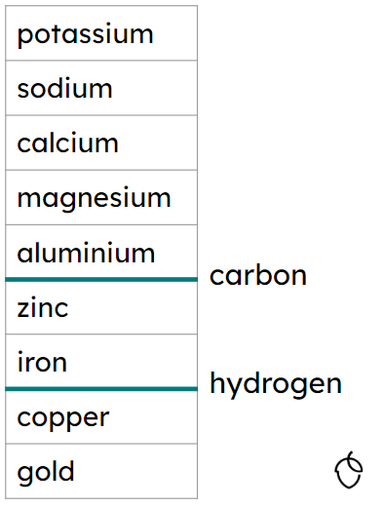
Q4.What scientific term is used to describe a reaction where a more reactive element takes the place of a less reactive element in a compound?
Q5.Which of the following are disadvantages of traditional mining?
Q6.What is the name of the process that uses electricity to break down a compound?
Assessment exit quiz
6 Questions
Q1.What is the name of the method of extracting metals by growing bacteria on low–grade ores?
Q2.Which of the following are advantages of bioleaching?
Q3.Which of the following steps are part of the method for phytomining?
Q4.How can a metal, such as copper, be extracted from a leachate?
Q5.Which of the following are disadvantages of phytomining?
Q6.Which of the following statements about copper ores are correct?
To help you plan your 11 combined science lesson on: Alternative methods of extracting metals: phytomining and bioleaching, download all teaching resources for free and adapt to suit your pupils' needs...
To help you plan your 11 combined science lesson on: Alternative methods of extracting metals: phytomining and bioleaching, download all teaching resources for free and adapt to suit your pupils' needs.
The starter quiz will activate and check your pupils' prior knowledge, with versions available both with and without answers in PDF format.
We use learning cycles to break down learning into key concepts or ideas linked to the learning outcome. Each learning cycle features explanations with checks for understanding and practice tasks with feedback. All of this is found in our slide decks, ready for you to download and edit. The practice tasks are also available as printable worksheets and some lessons have additional materials with extra material you might need for teaching the lesson.
The assessment exit quiz will test your pupils' understanding of the key learning points.
Our video is a tool for planning, showing how other teachers might teach the lesson, offering helpful tips, modelled explanations and inspiration for your own delivery in the classroom. Plus, you can set it as homework or revision for pupils and keep their learning on track by sharing an online pupil version of this lesson.
Explore more key stage 4 combined science lessons from the Using Earth's resources unit, dive into the full secondary combined science curriculum, or learn more about lesson planning.