


Errors in cell division and cancer: beyond the basics


Lesson details
Learning outcome
You can describe cancer including benign and malignant tumours and explain how mutations can cause cancer.
Key learning points
- Cancer is caused by uncontrolled cell growth and division which can lead to the formation of tumours.
- Benign tumours are usually contained within one area and do not invade surrounding tissues.
- Malignant tumours are cancerous, they invade surrounding tissues and can cause secondary tumours.
- Scientists have identified lifestyle and genetic factors that can increase the risk of developing cancer.
- Mutations can cause changes in DNA; this alters the nucleotide sequence and genetic code
Keywords
Mutation - A change in the nucleotide sequence of DNA that can cause mutated genes.
Genes - Short sections of DNA that code for a specific characteristic or protein.
Tumour - A mass of cells that has been produced through uncontrolled cell division.
Benign - A tumour that is non-cancerous and contained to one area.
Malignant - A tumour that is cancerous and can spread.
Common misconception
All tumours are cancerous and dangerous.
Students are given very clear examples of the difference between benign and malignant tumours. The difference between the two is covered in the slide deck, check for understanding questions and practice tasks.
Teacher tip
To help make the link between sequence of nucleotides and genes you could model some mutations within the lesson to physically see how the gene changes.

Content guidance
Depiction or discussion of sensitive content
Depiction or discussion of sensitive content
Depiction or discussion of mental health issues
Depiction or discussion of sexual content

Supervision
Adult supervision required

Licence

Lesson video
Loading...
Prior knowledge starter quiz
6 Questions
Q1.What is a gene?
Q2.What process is used to create new cells for growth and repair in multicellular organisms?
Q3.What does obese mean?
Q4.Which of the following is not a lifestyle factor?
Q5.If smoking is a risk factor for developing lung cancer, which statement is true.
Q6. is a chemical substance that carries the genetic information.
Assessment exit quiz
6 Questions
Q1.What are tumours and cancer caused by?
Q2.Which statements are usually true for benign tumours?
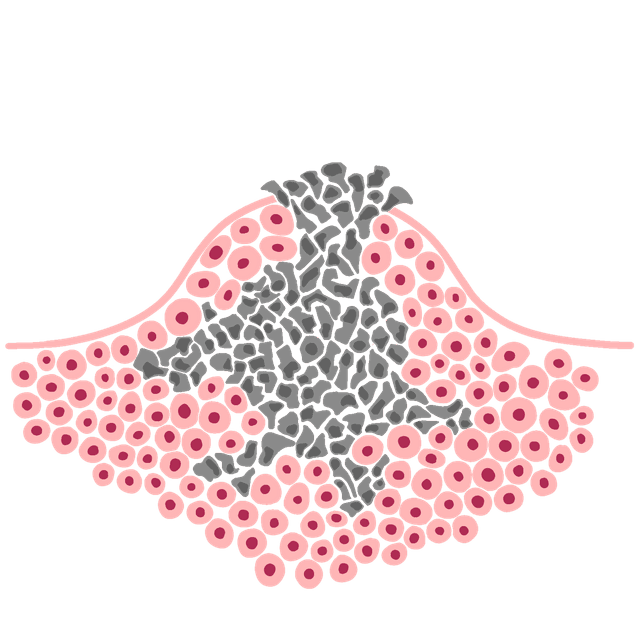
Q3.Which type of tumour is shown below?
Q4.Match the lifestyle risk factor to the type of cancer it is linked to.

Q5.Put these statements in order to show how a tumour can form.
Q6.What are the three types of mutation?
To help you plan your 10 combined science lesson on: Errors in cell division and cancer: beyond the basics, download all teaching resources for free and adapt to suit your pupils' needs...
To help you plan your 10 combined science lesson on: Errors in cell division and cancer: beyond the basics, download all teaching resources for free and adapt to suit your pupils' needs.
The starter quiz will activate and check your pupils' prior knowledge, with versions available both with and without answers in PDF format.
We use learning cycles to break down learning into key concepts or ideas linked to the learning outcome. Each learning cycle features explanations with checks for understanding and practice tasks with feedback. All of this is found in our slide decks, ready for you to download and edit. The practice tasks are also available as printable worksheets and some lessons have additional materials with extra material you might need for teaching the lesson.
The assessment exit quiz will test your pupils' understanding of the key learning points.
Our video is a tool for planning, showing how other teachers might teach the lesson, offering helpful tips, modelled explanations and inspiration for your own delivery in the classroom. Plus, you can set it as homework or revision for pupils and keep their learning on track by sharing an online pupil version of this lesson.
Explore more key stage 4 combined science lessons from the Cell division: mitosis and meiosis unit, dive into the full secondary combined science curriculum, or learn more about lesson planning.