


The requirements and products of photosynthesis: practical


Lesson details
Learning outcome
I can predict and investigate the presence of starch in the leaves of living plants kept in different conditions, and can explain my predictions and observations.
Key learning points
- Some of the glucose made by photosynthesis is converted into starch and stored in starch grains in leaf cells.
- Iodine solution can be used to test plant leaf tissue for the presence of starch.
- A scientific prediction is a testable statement about a possible outcome, which can be tested in an experiment.
- Predicting the iodine test result for destarched leaves kept in various conditions, and explaining the predictions.
- Observing the iodine test result for destarched leaves kept in various conditions, and explaining the observations.
Keywords
Photosynthesis - the process used by producers to make their own food via a series of chemical reactions
Glucose - a type of sugar, which is a simple carbohydrate
Starch - a complex carbohydrate, made of many glucose molecules joined together to form a polymer
Iodine solution - a reagent that can be used to test for the presence of starch
Prediction - a scientific prediction is a testable statement about a possible outcome, which could be tested in an experiment
Common misconception
Mixing up a prediction, an observation and an explanation.
This practical lesson explores predictions, observations and explanations in the context of using iodine solution to test leaves for starch.
Teacher tip
For part 2, plants will need to be set up by the technician several days before the lesson; firstly to destarch them for 2 days in the dark, then to allow them to photosynthesise for 2 days in the light in various conditions.

Equipment
Geranium, kettle, large beakers, heat-proof mats, boiling tubes, glass rods, forceps, ethanol, Petri dishes, white tiles, iodine solution, droppers, foil, bell jars, soda lime, marble chips, acid.

Content guidance
Risk assessment required - equipment

Supervision
Adult supervision required

Licence

Lesson video
Loading...
Prior knowledge starter quiz
6 Questions
Q1.Cells in the leaves of plants have chloroplasts that contain a green pigment called .

Q2.The energy required for photosynthesis is transferred to chlorophyll by ...
Q3.What is the correct word summary for photosynthesis?
Q4.Some of the glucose made by photosynthesis is stored as starch. Which reagent can be used to test for the presence of starch?
Q5.Iodine solution changes colour in the presence of starch. What colour would you expect the iodine solution to be when starch is present?
Q6.Who correctly predicts what would happen if there was no carbon dioxide available for a plant during the day?



Assessment exit quiz
6 Questions
Q1.Some of the glucose made by photosynthesis is used to make a larger carbohydrate called , which is stored in grains in plant cells.
Q2.The reagent called solution is used to test for the presence of starch.
Q3.True or false? The iodine test result for this leaf shows that it contains starch.
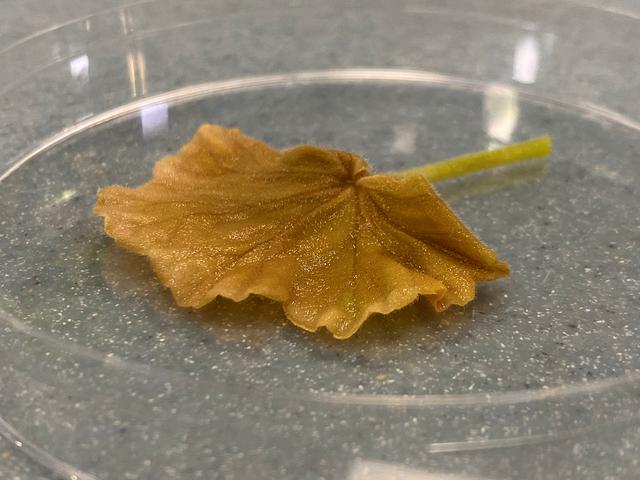
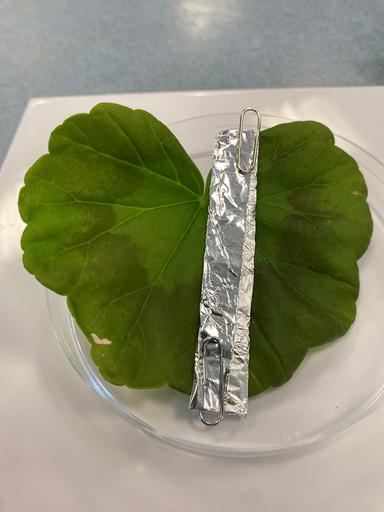
Q4.Foil was attached to this leaf to block out the ...
Q5.Why is a leaf placed in hot ethanol when testing for the presence of starch?
Q6.The photographs show the same leaf before and after the iodine method was used to test it for starch. Which statement explains why area A turned a darker colour during the test?

To help you plan your 10 combined science lesson on: The requirements and products of photosynthesis: practical, download all teaching resources for free and adapt to suit your pupils' needs...
To help you plan your 10 combined science lesson on: The requirements and products of photosynthesis: practical, download all teaching resources for free and adapt to suit your pupils' needs.
The starter quiz will activate and check your pupils' prior knowledge, with versions available both with and without answers in PDF format.
We use learning cycles to break down learning into key concepts or ideas linked to the learning outcome. Each learning cycle features explanations with checks for understanding and practice tasks with feedback. All of this is found in our slide decks, ready for you to download and edit. The practice tasks are also available as printable worksheets and some lessons have additional materials with extra material you might need for teaching the lesson.
The assessment exit quiz will test your pupils' understanding of the key learning points.
Our video is a tool for planning, showing how other teachers might teach the lesson, offering helpful tips, modelled explanations and inspiration for your own delivery in the classroom. Plus, you can set it as homework or revision for pupils and keep their learning on track by sharing an online pupil version of this lesson.
Explore more key stage 4 combined science lessons from the Photosynthesis: requirements and products unit, dive into the full secondary combined science curriculum, or learn more about lesson planning.