


Save, spend or borrow?


Lesson details
Learning outcome
I understand the difference between saving, spending and borrowing.
Key learning points
- Money that isn’t spent is saved – it doesn’t disappear and can be spent later.
- By saving money over time, you can afford more expensive things.
- Borrowing money is a way of getting money earlier than expected but it must be paid back.
- There are times when borrowing money is the right thing to do.
Keywords
Save - To save is to keep money instead of spending it, especially in order to buy a particular thing.
Spend - To spend is to give money to pay for goods and services.
Borrow - Borrow means to use someone else's money. It will be paid back later.
Common misconception
Pupils might believe that borrowing is always wrong.
Make it explicitly clear that borrowing money is not inherently wrong provided there is a clear plan to be able to repay it and it is within means. If it is appropriate, discuss the need for adults to borrow money when setting up a business.
Teacher tip
Ensure that you have a good understanding of the cultural perspectives and attitudes towards borrowing money within your class and be open to discussing and celebrating such differences if it helps the learning. Take time to discuss the different currencies that children in your class may use.

Content guidance
Depiction or discussion of sensitive content

Supervision
Adult supervision recommended

Licence

Lesson video
Loading...
Prior knowledge starter quiz
6 Questions
Q1.Tick the individual items that can be afforded with the money shown in the picture.
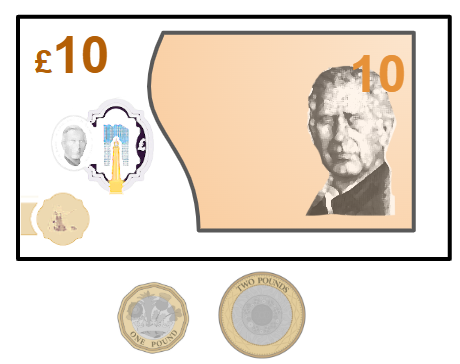

Q2.Sticker packs are £0.50 each. If you’ve £3 then how many sticker packs can you afford?
Q3.Which of these is the priority for a day at the beach on a very hot and sunny day?
Q4.Izzy is going shopping. If Izzy’s priority is her dad’s birthday present, which of these lists is written from most important to least important?
Q5.Your school has cricket and tennis matches coming up soon and a budget of £240 equipment. Tick the items your school should prioritise to buy.
Q6.Your school has sports day and a basketball tournament soon and a budget of £160. Tick the items your school should choose to buy to spend all the money.
Assessment exit quiz
6 Questions
Q1.What does borrow mean?
Q2.What do you need to be sure of when you borrow money from somebody?
Q3.Alex needs £3 to be able to buy a new football. Is it okay to borrow this from his dad?
Q4.Why shouldn’t you borrow money from lots of different people at once?
Q5.True or false? It’s okay to borrow money as long as you agree when to pay it back.
Q6.True or false? Every time you want something quickly you should borrow as much as you need because then you get what you want quicker.
To help you plan your 4 financial education lesson on: Save, spend or borrow?, download all teaching resources for free and adapt to suit your pupils' needs...
To help you plan your 4 financial education lesson on: Save, spend or borrow?, download all teaching resources for free and adapt to suit your pupils' needs.
The starter quiz will activate and check your pupils' prior knowledge, with versions available both with and without answers in PDF format.
We use learning cycles to break down learning into key concepts or ideas linked to the learning outcome. Each learning cycle features explanations with checks for understanding and practice tasks with feedback. All of this is found in our slide decks, ready for you to download and edit. The practice tasks are also available as printable worksheets and some lessons have additional materials with extra material you might need for teaching the lesson.
The assessment exit quiz will test your pupils' understanding of the key learning points.
Our video is a tool for planning, showing how other teachers might teach the lesson, offering helpful tips, modelled explanations and inspiration for your own delivery in the classroom. Plus, you can set it as homework or revision for pupils and keep their learning on track by sharing an online pupil version of this lesson.
Explore more key stage 2 financial education lessons from the Making money decisions unit, dive into the full primary financial education curriculum, or learn more about lesson planning.