


Global atmospheric circulation model, pressure belts and surface winds


Lesson details
Learning outcome
I can explain that the atmosphere operates as a global system, determining pressure, winds and rainfall patterns.
Key learning points
- The atmosphere operates as a global system.
- The atmospheric circulation and ocean currents transfer heat around the Earth.
- The atmospheric circulation determines the location of global pressure belts.
- Global pressure belts affect surface winds and patterns of rainfall.
Keywords
Latitude - this describes how far north or south of the Equator a place is
Atmospheric pressure - the pressure of a column of air at a point on the Earth'ssurface, creating relatively high or low pressure
Surface winds - the movement of air from place to place, generally from an area of high pressure to an area of low pressure
Coriolis effect - deflection of winds and ocean currents caused by Earth's rotation
Common misconception
The global atmospheric circulation systems controls the temperature of different climate zones.
Global circulation system redistributes heat received at the Equator, but latitude controls temperature of each climate zone. The amount of solar radiation received at each latitude is due to the curvature of the Earth.
Teacher tip
Show satellite or climate maps of rainfall and temperature to connect circulation cells with real-world climates.

Licence

Lesson video
Loading...
Prior knowledge starter quiz
6 Questions
Q1.What shape is the Earth?
Q2.Which of these correctly names the seven continents?
Q3.What is the atmosphere?
Q4.What are the horizontal lines shown on this map called?
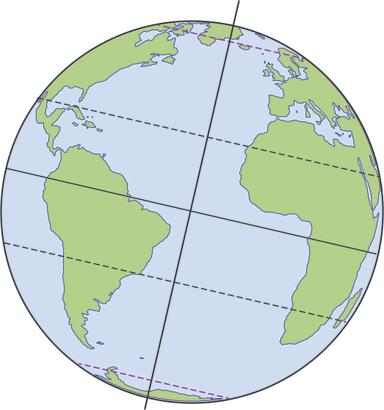
Q5.Why do different parts of the Earth receive varying amounts of solar radiation?
Q6.What is the difference between weather and climate?
Assessment exit quiz
6 Questions
Q1.Match the terms with their correct definition.

Q2.What does the global atmospheric circulation system do?
Q3.What climatic conditions are expected in a high pressure zone?
Q4.Why is rainfall expected in a belt of low atmospheric pressure?
Q5.Which atmospheric circulation cells influence the formation of deserts?
Q6.Which atmospheric circulation cells influence the formation of temperate climates?
To help you plan your 10 geography lesson on: Global atmospheric circulation model, pressure belts and surface winds, download all teaching resources for free and adapt to suit your pupils' needs...
To help you plan your 10 geography lesson on: Global atmospheric circulation model, pressure belts and surface winds, download all teaching resources for free and adapt to suit your pupils' needs.
The starter quiz will activate and check your pupils' prior knowledge, with versions available both with and without answers in PDF format.
We use learning cycles to break down learning into key concepts or ideas linked to the learning outcome. Each learning cycle features explanations with checks for understanding and practice tasks with feedback. All of this is found in our slide decks, ready for you to download and edit. The practice tasks are also available as printable worksheets and some lessons have additional materials with extra material you might need for teaching the lesson.
The assessment exit quiz will test your pupils' understanding of the key learning points.
Our video is a tool for planning, showing how other teachers might teach the lesson, offering helpful tips, modelled explanations and inspiration for your own delivery in the classroom. Plus, you can set it as homework or revision for pupils and keep their learning on track by sharing an online pupil version of this lesson.
Explore more key stage 4 geography lessons from the Climate change and weather hazards unit, dive into the full secondary geography curriculum, or learn more about lesson planning.