


The Trojan War and 'The Iliad'


Lesson details
Learning outcome
I can describe the key events of The Trojan War myth and describe *The Iliad’s* influence.
Key learning points
- The Trojan War was a mythical conflict between the Ancient Greeks and Troy, a city most likely in modern day Turkey.
- The war began when a Trojan, Paris, kidnapped Helen from the Greek King Menelaus.
- The Greeks defeated the Trojans but their greatest warrior, Achilles, was killed.
- This myth was first written down as an epic poem called *The Iliad* by the Greek poet, Homer.
- *The Iliad* not only became a major part of Ancient Greek identity, but influenced literature and art through the ages.
Keywords
Troy - Troy is a mythical city, believed to have been located in modern-day Turkey
Trojans - people from Troy were called Trojans
Achilles - Achilles is a mythical hero who fought in the Trojan War, he was celebrated as a great warrior that no one could defeat
Homer - Homer was a Greek poet, who is thought to have lived around the 700s BCE
*The Iliad* - The Iliad is an ancient Greek poem, telling the story of the Trojan War, believed to be written by Homer
Common misconception
Pupils may think that Troy was a real place and that the Trojan War was a real conflict.
The story of the Trojan War is from Greek mythology. Myths are stories that people have told by word of mouth for thousands of years, some people do claim that myths are true but they are in fact fictional stories - they did not happen in real life.
Teacher tip
In this lesson, pupils see three photographs of busts of figures from Ancient Greece. Combine History and Art by asking pupils to make busts from modelling clay of someone they think is important in the world today. Ask them to explain why they have chosen that person.

Content guidance
Depiction or discussion of violence or suffering
Depiction or discussion of violence or suffering

Supervision
Adult supervision recommended

Licence

Lesson video
Loading...
Prior knowledge starter quiz
6 Questions
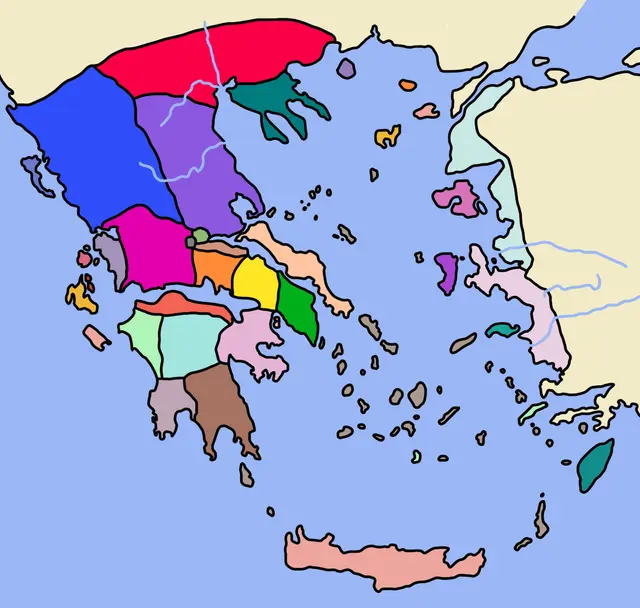
Q1.Look at the map of Ancient Greece. What were the separate areas Ancient Greece was divided into called?
Q2.What are Greek myths?
Q3.Match the words to the descriptions.

Q4.Who won the Peloponnesian War?
Q5.According to Greek mythology, what was the underworld?
Q6.Who was king of the underworld?
Assessment exit quiz
6 Questions
Q1.Who wrote The Iliad?
Q2.Who captured Helen and took her to Troy?
Q3.After 10 years of fighting, the won the Trojan War.
Q4.Match the names to the descriptions.
Q5.Put the events of the Trojan War in the correct order.
Q6.The Iliad is an poem written by Homer that tells the story of the Trojan War myth.
To help you plan your 4 history lesson on: The Trojan War and 'The Iliad', download all teaching resources for free and adapt to suit your pupils' needs...
To help you plan your 4 history lesson on: The Trojan War and 'The Iliad', download all teaching resources for free and adapt to suit your pupils' needs.
The starter quiz will activate and check your pupils' prior knowledge, with versions available both with and without answers in PDF format.
We use learning cycles to break down learning into key concepts or ideas linked to the learning outcome. Each learning cycle features explanations with checks for understanding and practice tasks with feedback. All of this is found in our slide decks, ready for you to download and edit. The practice tasks are also available as printable worksheets and some lessons have additional materials with extra material you might need for teaching the lesson.
The assessment exit quiz will test your pupils' understanding of the key learning points.
Our video is a tool for planning, showing how other teachers might teach the lesson, offering helpful tips, modelled explanations and inspiration for your own delivery in the classroom. Plus, you can set it as homework or revision for pupils and keep their learning on track by sharing an online pupil version of this lesson.
Explore more key stage 2 history lessons from the Ancient Greek civilisation: what is its most significant legacy? unit, dive into the full primary history curriculum, or learn more about lesson planning.