Myths about teaching can hold you back
- Year 10•
- Higher
The effect of enlargement on the perimeter of a shape
I can understand the effect of an enlargement on the perimeter of a shape.
- Year 10•
- Higher
The effect of enlargement on the perimeter of a shape
I can understand the effect of an enlargement on the perimeter of a shape.
These resources were made for remote use during the pandemic, not classroom teaching.
Switch to our new teaching resources now - designed by teachers and leading subject experts, and tested in classrooms.
Lesson details
Key learning points
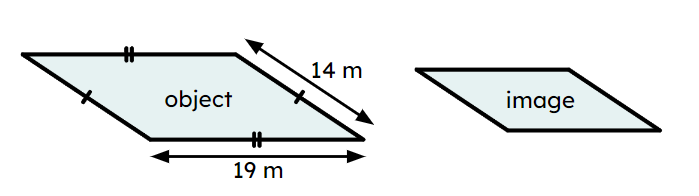
- An enlargement means the object and image are similar.
- All lengths in the object have been multiplied by the scale factor.
- By the distributive law, this means the perimeter has been multiplied by the scale factor.
Keywords
Similar - Two shapes are similar if the only difference between them is their size. Their side lengths are in the same proportions.
Invariant - A property of a shape is invariant if that property has not changed after the shape is transformed.
Enlargement - Enlargement is a transformation that causes a change of size.
Scale factor - A scale factor is the multiplier between similar shapes that describes how large one shape is compared to the other.
Common misconception
"I will get different linear scale factors if a measure corresponding lengths in cm vs inches."
Scale factors do not have dimensions, and aren't linked to specific units. If one length is 23 cm (9 inches), and a corresponding length is 69 cm (27 inches), then the scale factor between them is 3, regardless of whether we measured in cm or inches.
To help you plan your year 10 maths lesson on: The effect of enlargement on the perimeter of a shape, download all teaching resources for free and adapt to suit your pupils' needs...
To help you plan your year 10 maths lesson on: The effect of enlargement on the perimeter of a shape, download all teaching resources for free and adapt to suit your pupils' needs.
The starter quiz will activate and check your pupils' prior knowledge, with versions available both with and without answers in PDF format.
We use learning cycles to break down learning into key concepts or ideas linked to the learning outcome. Each learning cycle features explanations with checks for understanding and practice tasks with feedback. All of this is found in our slide decks, ready for you to download and edit. The practice tasks are also available as printable worksheets and some lessons have additional materials with extra material you might need for teaching the lesson.
The assessment exit quiz will test your pupils' understanding of the key learning points.
Our video is a tool for planning, showing how other teachers might teach the lesson, offering helpful tips, modelled explanations and inspiration for your own delivery in the classroom. Plus, you can set it as homework or revision for pupils and keep their learning on track by sharing an online pupil version of this lesson.
Explore more key stage 4 maths lessons from the Similarity unit, dive into the full secondary maths curriculum, or learn more about lesson planning.
Licence
Prior knowledge starter quiz
6 Questions
Q1.Two variables are in direct proportion if they have a constant relationship.
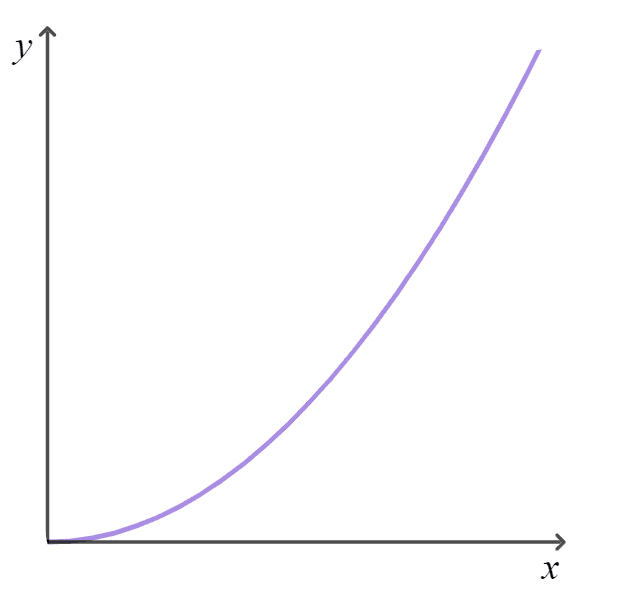
Q2.Some Oak pupils are discussing this graph. Which pupils are correct?

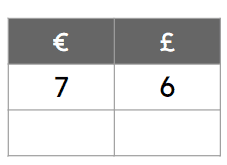
Q3.The ratio table shows the conversion €7 (Euros) = £6 (Pounds Sterling). €350 = £

Q4.The perimeter of an octagon is 88 800 cm. Which calculation shows its perimeter in metres?
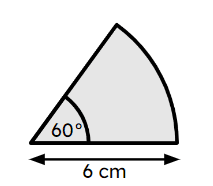
Q5.A circular sector with an angle of 60° has radius = 6 cm, arc length = 2π cm and area = 6π cm². The radius of the sector is increased to 18 cm. Find the arc length and area of the new sector.

Q6.The area of a triangle is 3400 cm². The area of the triangle in metres squared is m².
Assessment exit quiz
6 Questions
Q1.A factor is the multiplier between similar shapes that describes how large one shape is compared to the other.
Q2.This sector is enlarged by scale factor 2. The angle in the image is °.

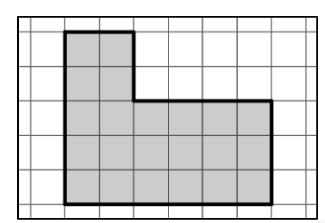
Q3.Each square on this coordinate grid is 1 unit long. This object is enlarged by a scale factor of 3 to make its image. Calculate the perimeter of the image.

Q4.A pentagon has a perimeter of 60 cm. The pentagon is enlarged by scale factor 4. The perimeter of the image is cm.
Q5.The object is enlarged by a scale factor of $$\frac{1}{3}$$ to make the image. What is the perimeter of the image?