The rhythm section and bass lines in pop songs


Copyrighted materials: to view and download resources from this lesson, you’ll need to be in the UK and
Lesson details
Learning outcome
I can compose an idiomatic bass line for a pop song.
Key learning points
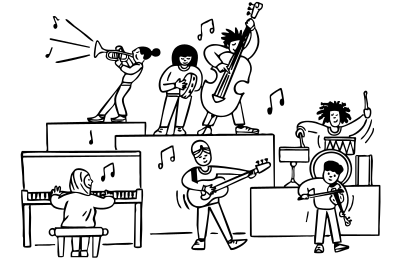
- The rhythm section is the name given to the group of accompanying instruments in a pop ensemble.
- They support the singer with rhythm and harmony.
- The guitar/keyboard plays chords and the drummer plays a steady drum groove.
- The bass player supports the harmony by playing the root notes of each chord.
- Interest is created in the bass line by using passing notes and octave leaps, and syncopated rhythms.
Keywords
Rhythm section - the group of instruments supporting the singer in a band and includes the guitar/piano, bass and drum kit
Passing note - a non-chord note that provides a melodic link between two chord notes
Octave - the interval of 8 notes; middle C to the next C on a keyboard is an octave
Common misconception
The rhythm section 'plays the rhythm'. Rhythm sections are a fixed group of instruments.
Highlight the roles of the band and how they 'support' the singer and don't just provide rhythm for the song. There is some flexibility in the rhythm section. Not all the instruments have to be present in the music all of the time.
Teacher tip
Encourage pupils to start with a simple bass line first underlining the importance of using root notes and outlining the harmony of the chords. The notation is used in the slides as a way of helping teachers to articulate patterns in the music that can be heard in the aural examples.

Equipment
Keyboard, DAW or other suitable instrument as a composing tool.
Licence

Sign in to continue
Our content remains 100% free, but to access certain copyrighted materials, you'll need to sign in. This ensures we’re both staying within the rules.
P.S. Signing in also gives you more ways to make the most of Oak like unit downloads!