


Fundamentals of melody




Lesson details
Learning outcome
I can describe basic features of melodies and different common methods of melodic development.
Key learning points
- Melodies can be analysed by looking at melodic shape, intervals, repetition and contrast, motifs and phrases.
- Most composers develop melodies to create a balance between repetition and contrast.
- Adding notes and changing rhythms are simple ways to develop a melody.
- Augmentation, diminution and sequences are also common methods for melodic development.
Keywords
Motif - a short musical idea that is heard multiple times in a piece of music
Phrase - a section of a melody, usually lasting for 1, 2 or 4 bars
Augmentation - the process of lengthening all of the notes in a melody by the same proportion
Diminution - the process of shortening all of the notes in a melody by the same proportion
Sequence - a melodic device in which a melodic idea is repeated at least three times, either rising or falling in pitch each time
Common misconception
If the notes of a melody are changed, that just makes it a new melody.
Changing the notes of a melody does create a new melody, but if it is still recognisable as related to the original, we can consider it a developed version of the melody. If it is unrecognisable, then it is not a development but a totally new melody.
Teacher tip
The listening tasks in this lesson are limited in scope, but illustrate key principles. If possible, create further opportunities for pupils to listen to and analyse melodies, using the analytical steps from this lesson as a starting point.

Licence

Lesson video
Loading...
Prior knowledge starter quiz
6 Questions
Q1.If a melody moves by leap we call it a melody.

Q2.If a melody moves by step we call it a melody.
Q3.What is a motif?
Q4.Which of these is not a melodic feature?
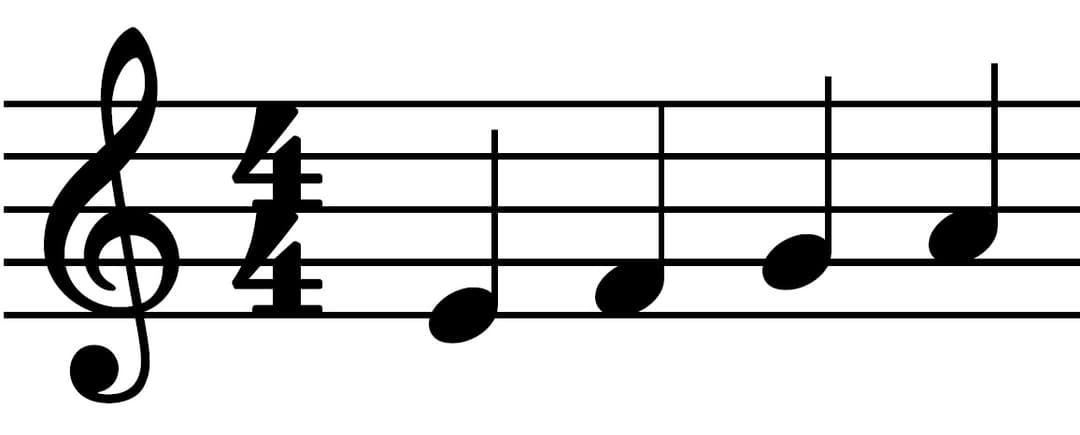
Q5.Which two words describe this melody?
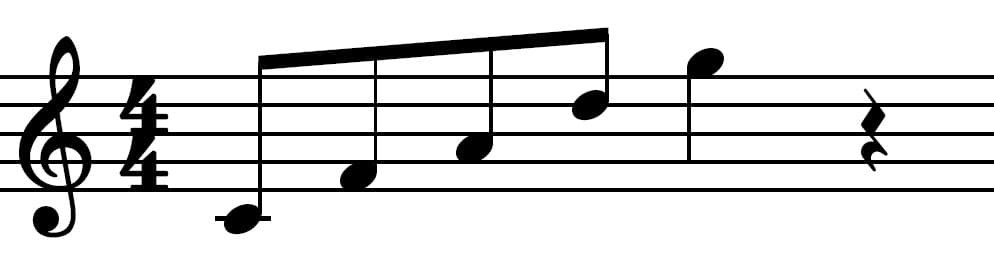
Q6.Which two words describe this melody?
Assessment exit quiz
6 Questions
Q1.When we proportionally lengthen all of the notes in a melody, this is called .
Q2.When we proportionally shorten all of the notes in a melody, this is called .
Q3.Why is this not a sequence?

Q4.What is ‘question and answer’ phrasing?
Q5.Which of these is not a common phrase length?
Q6.If a melody uses a segment of a scale, we call it a melody.
To help you plan your 11 music lesson on: Fundamentals of melody, download all teaching resources for free and adapt to suit your pupils' needs...
To help you plan your 11 music lesson on: Fundamentals of melody, download all teaching resources for free and adapt to suit your pupils' needs.
The starter quiz will activate and check your pupils' prior knowledge, with versions available both with and without answers in PDF format.
We use learning cycles to break down learning into key concepts or ideas linked to the learning outcome. Each learning cycle features explanations with checks for understanding and practice tasks with feedback. All of this is found in our slide decks, ready for you to download and edit. The practice tasks are also available as printable worksheets and some lessons have additional materials with extra material you might need for teaching the lesson.
The assessment exit quiz will test your pupils' understanding of the key learning points.
Our video is a tool for planning, showing how other teachers might teach the lesson, offering helpful tips, modelled explanations and inspiration for your own delivery in the classroom. Plus, you can set it as homework or revision for pupils and keep their learning on track by sharing an online pupil version of this lesson.
Explore more key stage 4 music lessons from the Understanding melody and harmony unit, dive into the full secondary music curriculum, or learn more about lesson planning.