


New
New
Add and subtract to and from a 3-digit number bridging 100
I can add and subtract to and from a 3-digit number bridging 100.


Lesson 12 of 15
New
New
- Year 3
Add and subtract to and from a 3-digit number bridging 100
I can add and subtract to and from a 3-digit number bridging 100.
Lesson details
Key learning points
- Addition and subtraction calculations can represent counting on and back over the 100s boundary.
- When you count on in tens, sometimes the 10s digit only changes and sometimes the 100s digit changes.
- When you count back in tens, sometimes the 10s digit only changes and sometimes the 100s digit changes.
Keywords
Bridging - A mental strategy which uses addition or subtraction to cross a number boundary.
Partition - Splitting an object or value down into smaller parts.
100s boundary - The point at which numbers change into 100s numbers, or from one set of hundreds to another.
Common misconception
Pupils may partition numbers incorrectly when adding or subtracting across a 100s boundary.
Encourage pupils to add or subtract to first the 100s number, using number pairs that total 10 or 100.
Pupils may find base ten blocks or interlocking cubes helpful in representing the calculations and partitioning numbers. Encourage them to use number lines alongside these manipulatives so that they develop confidence in representing their thinking.

Teacher tip

Licence
This content is © Oak National Academy Limited (2025), licensed on Open Government Licence version 3.0 except where otherwise stated. See Oak's terms & conditions (Collection 2).
Lesson video
Loading...
Prior knowledge starter quiz
6 Questions
Q1.40 can be partitioned into 30 and
40 can be partitioned into 30 and

20
30
Q2.How can 60 be partitioned into two parts?
How can 60 be partitioned into two parts?
20 and 30
Q3.95 + = 100
95 + = 100
Q4.150 + = 200
150 + = 200
Q5.300 − 6 =
300 − 6 =
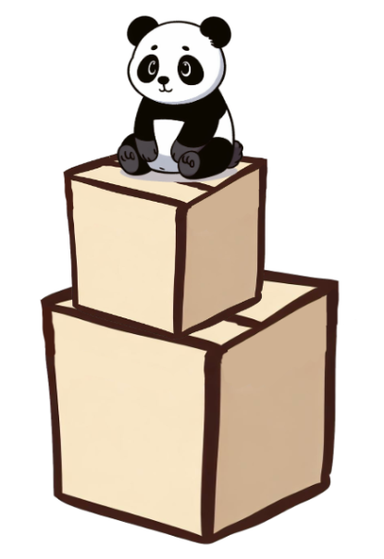
Q6.The total height of Peter and the boxes is 300 cm. Peter is 80 cm tall. How high are the boxes?
The total height of Peter and the boxes is 300 cm. Peter is 80 cm tall. How high are the boxes?
120 cm
280 cm
292 cm
Assessment exit quiz
6 Questions
Q1.How would you partition 6 to calculate 97 + 6 efficiently?
How would you partition 6 to calculate 97 + 6 efficiently?
add 2 then add 4
add 1 then add 5
Q2.How would you partition 7 to calculate 105 − 7?
How would you partition 7 to calculate 105 − 7?
subtract 2 then subtract 5
subtract 3 then subtract 4
subtract 4 then subtract 3
Q3.Which calculations cross a 100s boundary?
Which calculations cross a 100s boundary?
120 + 30
190 − 20
Q4.220 − 30 =
220 − 30 =
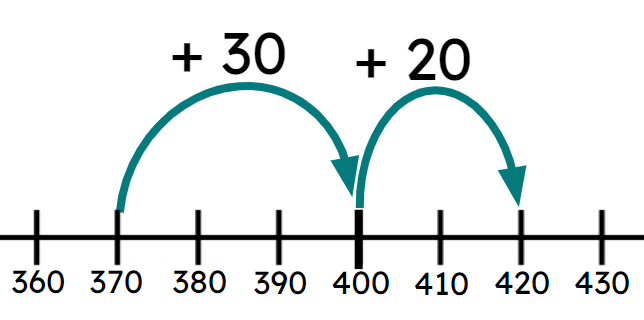
Q5.Use the number line to complete the calculation. 370 + = 420
Use the number line to complete the calculation. 370 + = 420
Q6.Use the number line to complete the calculation. 550 − = 480
Use the number line to complete the calculation. 550 − = 480

