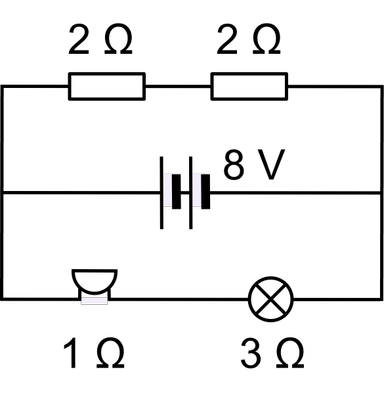
Analysing parallel circuits
I can use the rules for current and potential difference and the equation I = V ÷ R to analyse parallel circuits.


- Year 10
- AQA
Analysing parallel circuits
I can use the rules for current and potential difference and the equation I = V ÷ R to analyse parallel circuits.
Lesson details
Key learning points
- Current can be calculated using the equation: current = p.d. ÷ resistance (I = V ÷ R).
- The rules of current and p.d. for a parallel circuit can be applied to find some missing values of current and p.d.
- The equation I = V ÷ R can be rearranged so that either p.d. or R is the subject of the equation.
- If any two values in the equation I = V ÷ R are known, the third can be calculated.
- If only one value in I = V ÷ R is shown for a component, circuit rules need to be applied to the rest of the circuit.
Keywords
Current - the rate of flow of charge in a circuit
Branch - a separate series loop in a parallel circuit
Resistance - a property of materials that makes it harder for current to flow
Potential difference (p.d.) - a measure of how 'hard' an electric field can push charge
Parallel - a type of circuit in which there are two or more separate branches
Common misconception
To solve circuit problems you need only to put numbers into equations.
Talk through circuits with pupils before analysing them in order to develop an intrinsic understanding of how circuits work; research shows this improves pupils’ problem solving ability for electric circuits.


Licence
Lesson video
Loading...
Prior knowledge starter quiz
6 Questions
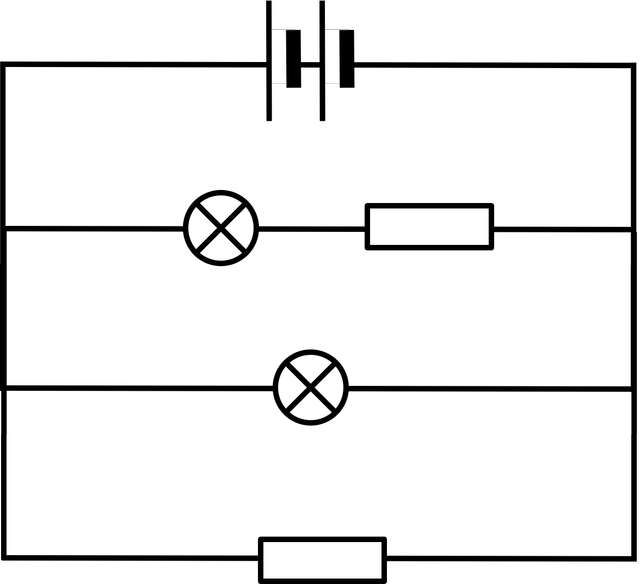
Q1.How many parallel branches does the circuit shown have?

Q2.A series circuit contains a battery and one lamp. A second, identical lamp is added, in parallel with the first lamp. Which of the following statements is correct?
Q3.A series circuit contains a battery and one lamp. A second, identical lamp is added, in parallel with the first lamp. Which of the following statements is correct?
Q4.A series circuit contains a battery and one lamp. A second, identical lamp is added, in parallel with the first lamp. Which of the following statements is correct?
Q5.What potential difference is needed to make a current of 2.0 A flow through a 10 Ω resistor?
Q6.A lamp in a circuit has a potential difference 1.5 V across it and a current 3.0 A flowing through it. What is the resistance of the lamp?
Assessment exit quiz
6 Questions
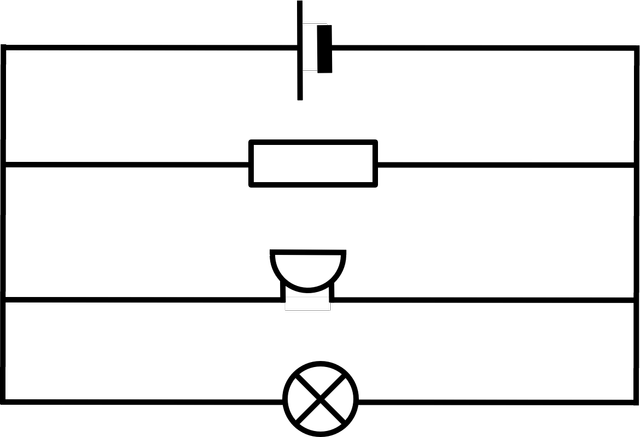
Q1.The diagram shows a circuit with parallel branches. Which of the following quantities must be the same for every branch?
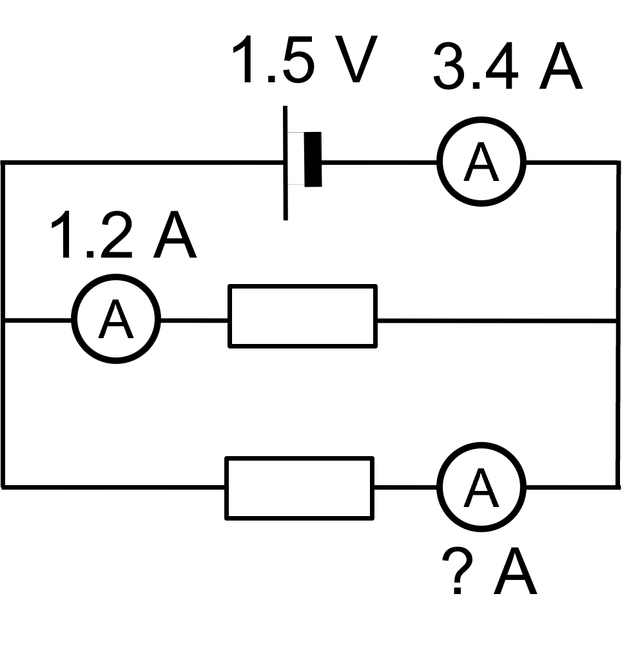
Q2.What is the missing current in the parallel circuit shown?
Q3.In the circuit shown, the two resistors are identical and the p.d. across the battery is 6 V. The potential difference across the resistor on the left is V.
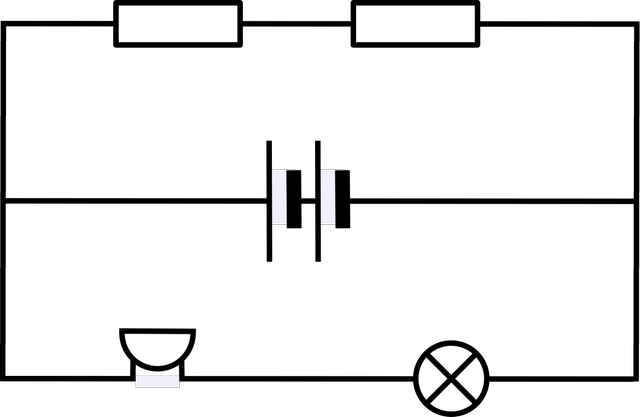
Q4.In the circuit shown, the potential difference across the resistor is V.
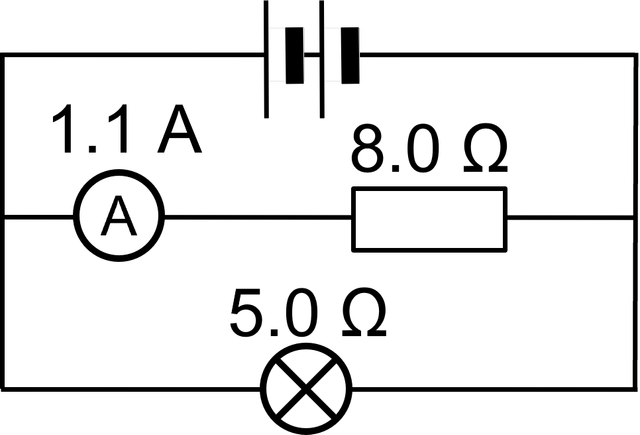
Q5.What is the resistance of the resistor in the circuit shown?
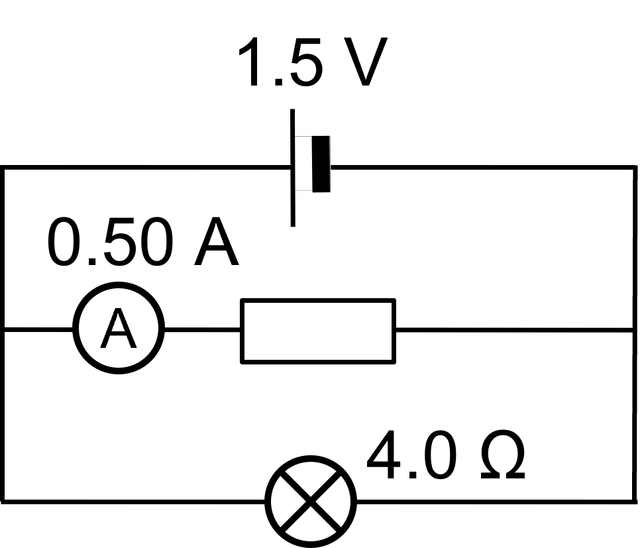
Q6.In the circuit shown, the potential difference across the lamp is V.