New
New
Applying constructions to loci problems
I can apply the rules for constructing angle and line bisectors to loci problems.


Lesson 11 of 13
New
New
- Year 11
Applying constructions to loci problems
I can apply the rules for constructing angle and line bisectors to loci problems.
Lesson details
Key learning points
- The perpendicular bisector of a line segment divides the line segment into two equal parts
- The perpendicular bisector is the same distance from each end point of the line segment
- If you only had the two end points, the perpendicular bisector would still be the same distance from each point
- The bisector of an angle divides the angle into two equal parts.
Keywords
Bisect - To bisect means to cut or divide an object into two equal parts.
Loci - A locus is a set of points that satisfy a given set of conditions. Multiple sets of points are referred to as loci.
Equidistant - Points A and B are equidistant from a third point C if the distance AC is equal to the distance BC.
Common misconception
Pupils may believe that there is only one point which is equidistant from two points.
Highlight that forming any isosceles triangle will mean that that the point is equidistant from both points.
If space allows, you may want to consider getting the pupils to place themselves equidistant from two 'cones' or two walls. Alternatively the use of counters can allow pupils to really consider the points in which satisfy the condition.

Teacher tip

Equipment
Ruler, pair of compasses, pencil

Licence
This content is © Oak National Academy Limited (2025), licensed on Open Government Licence version 3.0 except where otherwise stated. See Oak's terms & conditions (Collection 2).
Lesson video
Loading...
Prior knowledge starter quiz
6 Questions
Q1.A __________ is a set of points that satisfy a given set of conditions.
A __________ is a set of points that satisfy a given set of conditions.
arc
circle
line

ray
Q2.Which diagram shows the locus of points 3 metres or less from point A?
Which diagram shows the locus of points 3 metres or less from point A?
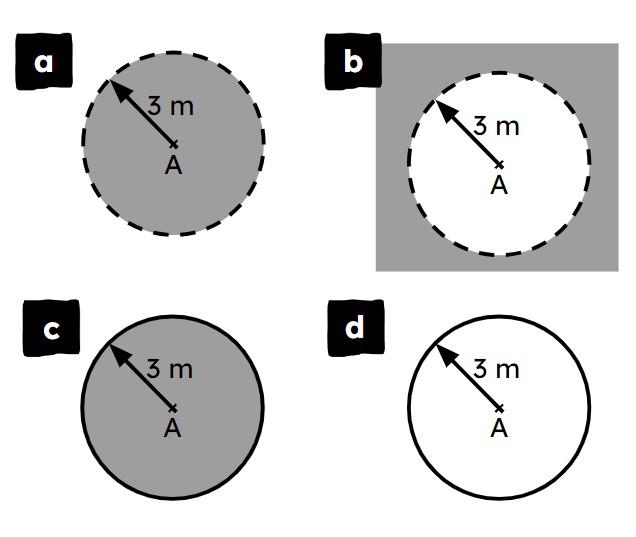
Diagram a
Diagram b
Diagram d
Q3.Which diagram shows the locus of points more than 3 metres from point A?
Which diagram shows the locus of points more than 3 metres from point A?
Diagram a
Diagram c
Diagram d
Q4.Which diagram shows the locus of points 6 cm from the line segment AB?
Which diagram shows the locus of points 6 cm from the line segment AB?
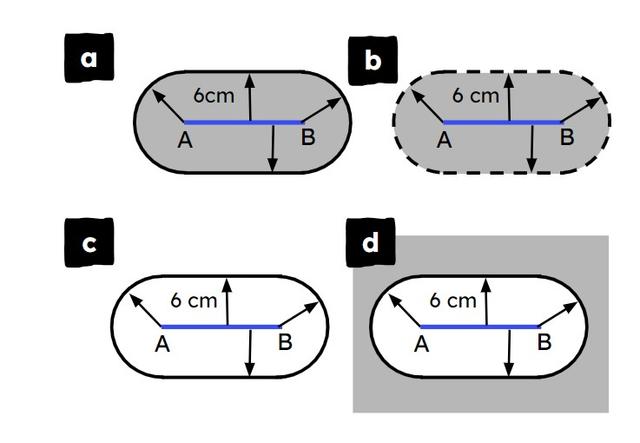
Diagram a
Diagram b
Diagram d
Q5.Which diagram shows the locus of points less than 6 cm from the line segment AB?
Which diagram shows the locus of points less than 6 cm from the line segment AB?
Diagram a
Diagram b
Diagram c
Q6.Alex stands somewhere in his garden. Alex is less than 5 m from the house and more than 6 m from the tap. He is within 3 m of the tree. Alex is standing in region .
Alex stands somewhere in his garden. Alex is less than 5 m from the house and more than 6 m from the tap. He is within 3 m of the tree. Alex is standing in region .
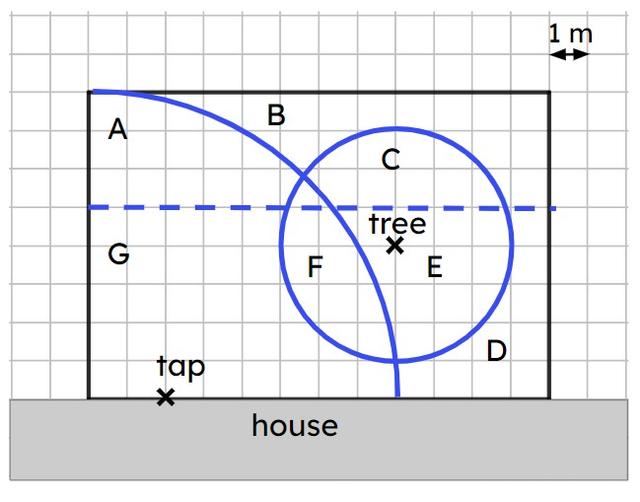
Assessment exit quiz
6 Questions
Q1.Which diagram shows a perpendicular bisector?
Which diagram shows a perpendicular bisector?
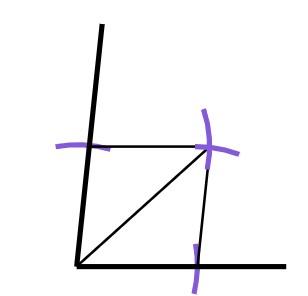
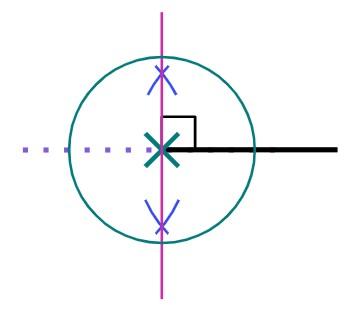
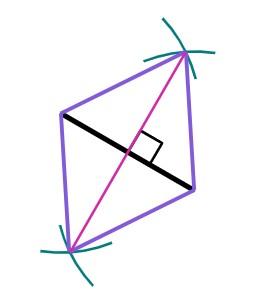
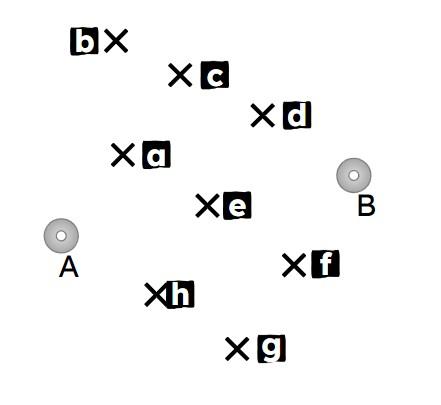
Q2.Alex places two cones, A and B, on the ground. Which of these points are equidistant from A and B?
Alex places two cones, A and B, on the ground. Which of these points are equidistant from A and B?
a
f
h
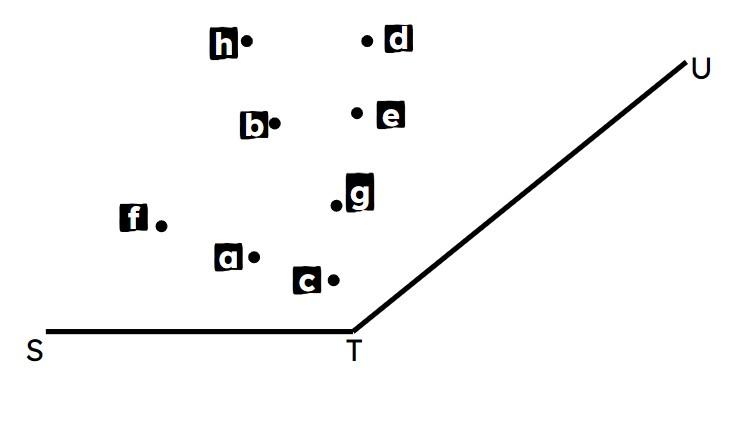
Q3.Which of these points are closer to TU than they are to ST?
Which of these points are closer to TU than they are to ST?
b
c
f
Q4.Jacob wants to find all the points that are the same distance from LM as they are from MN. What construction should he use?
Jacob wants to find all the points that are the same distance from LM as they are from MN. What construction should he use?
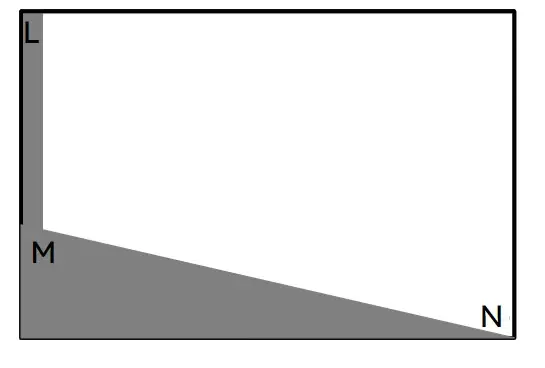
The arc of a circle centred on M.
The perpendicular bisector of LM
The perpendicular bisector of MN
The perpendicular bisectors of MN and LM
Q5.Which region is illustrated on this diagram?
Which region is illustrated on this diagram?
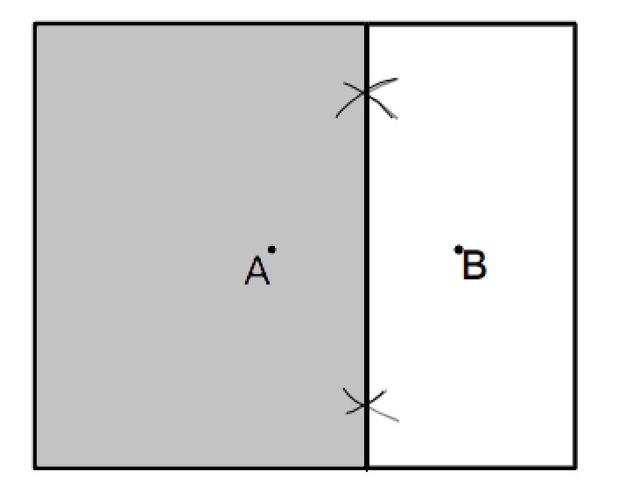
The region of points that are closer to A than to B.
The region of points that are closer to B than to A.
The region of points that are equidistant from A and B or closer to B than to B.
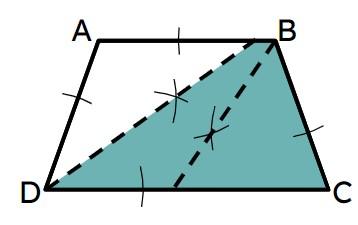
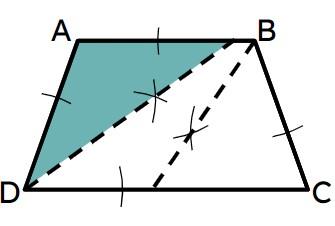
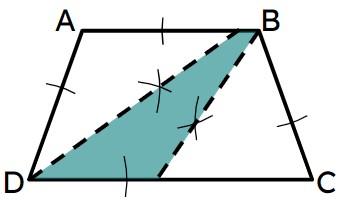
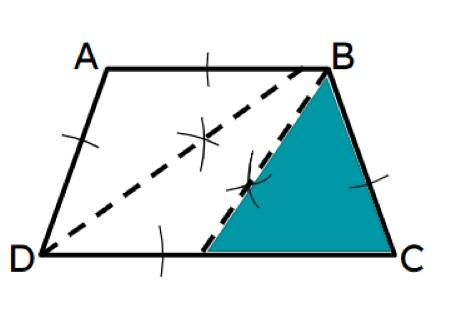
Q6.Select the region which matches this description: closer to AB than BC and closer to CD than AD .
Select the region which matches this description: closer to AB than BC and closer to CD than AD .