


Biological molecules
I can describe carbohydrates, proteins and lipids as biological molecules and what they are made of.


- Year 10
- OCR
Biological molecules
I can describe carbohydrates, proteins and lipids as biological molecules and what they are made of.
Lesson details
Key learning points
- Organisms are made of carbohydrates, proteins and lipids (including fats), plus water and minerals.
- Carbohydrates, proteins and lipids are used to build cell structures including membranes and organelles.
- Carbohydrates are polymers made of sugars.
- Proteins are polymers made of amino acids.
- Lipids are molecules made of fatty acids and glycerol.
Keywords
Polymer - A polymer is a molecule made of many repeated units.
Sugar - Sugars are the units used to build large carbohydrate molecules.
Amino acid - Amino acids are the units used to build protein molecules.
Fatty acid - A fatty acid is one of two units used to build lipid molecules.
Glycerol - Glycerol is one of two units used to build lipid molecules.
Common misconception
Confusion often arises over which monomers are used to build which polymers.
The lesson clearly explores carbohydrates, proteins and lipids as separate sections and covers the monomers and the polymers they form with care and repetition.


Equipment

Licence
Lesson video
Loading...
Prior knowledge starter quiz
6 Questions
Q1.Which of these foods are a good source of carbohydrates?
Q2.Match the food group to its use in the body.

Q3.What is the name of the process used by plants to make glucose?

Q4.True or false? Glucose is a sugar.
Q5.What two fuels are needed for aerobic respiration?
Q6.Which biological molecules are made from fatty acids and glycerol?
Assessment exit quiz
6 Questions
Q1.What three elements do carbohydrates contain?
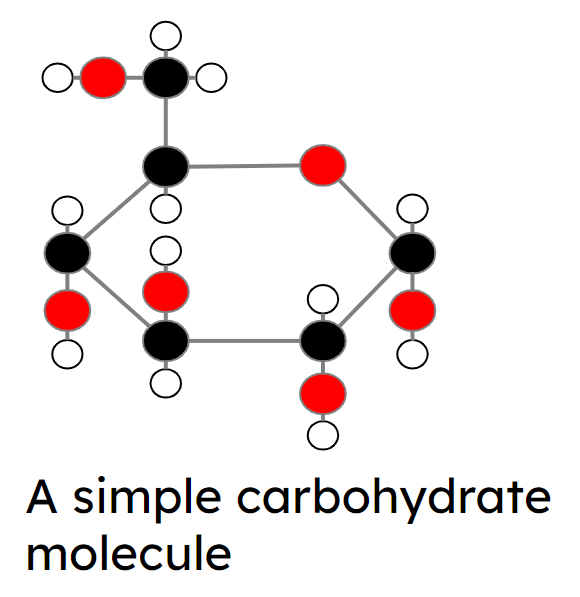
Q2.Which of the following are polysaccharides?
Q3.Which statements about proteins are not true?
Q4.Which of these is a use for lipids in an organism?

Q5.Organisms are made of carbohydrates, proteins, lipids, and minerals.
Q6.Match the word to its description.
