New
New
Calculate missing dimensions in rectangles and compound rectilinear shapes
I can calculate missing dimensions in rectangles and compound rectilinear shapes.


Lesson 8 of 10
New
New
- Year 5
Calculate missing dimensions in rectangles and compound rectilinear shapes
I can calculate missing dimensions in rectangles and compound rectilinear shapes.
Lesson details
Key learning points
- Division is used to calculate a missing dimension when the area and the other dimension are known.
- Inverse operations are used to calculate missing dimensions when areas are known.
- Compare different methods to decompose shapes and decide which is the most efficient.
Keywords
Compound - A compound shape is made up of two or more shapes.
Dimension - A dimension is a measurement of length in one direction. Width and height are examples of the dimensions of 2D shapes.
Common misconception
Applying known facts and strategies to solve problems involving division. Being able to break down a problem into steps when it comes to compound shapes.
Provide opportunities to discuss approaches and highlight the efficient strategies and approaches. Acknowledge that there is more than one way to solve a problem whilst focusing on efficient and effective strategies.
Make time to discuss problems with pupils and for pupils to talk to each other about the shapes. Draw attention to the strategies and approaches featured in the lesson. Model the thinking and steps needed when tackling missing dimensions in compound shapes so that pupils can apply it in their work.

Teacher tip

Licence
This content is © Oak National Academy Limited (2025), licensed on Open Government Licence version 3.0 except where otherwise stated. See Oak's terms & conditions (Collection 2).
Lesson video
Loading...
Prior knowledge starter quiz
6 Questions
Q1. x 7 = 56
x 7 = 56

Q2.96 = x 8
96 = x 8
Q3.Which of these compound rectilinear shapes have a total area of 60 m²?
Which of these compound rectilinear shapes have a total area of 60 m²?
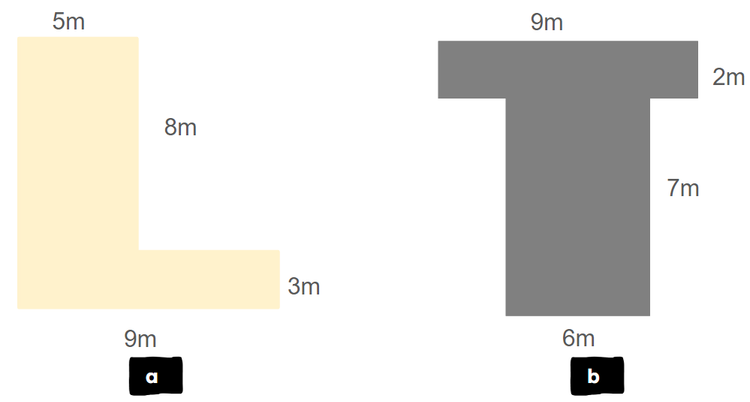
a
Q4.Which calculation would you use to calculate the area with the information you have been given?
Which calculation would you use to calculate the area with the information you have been given?
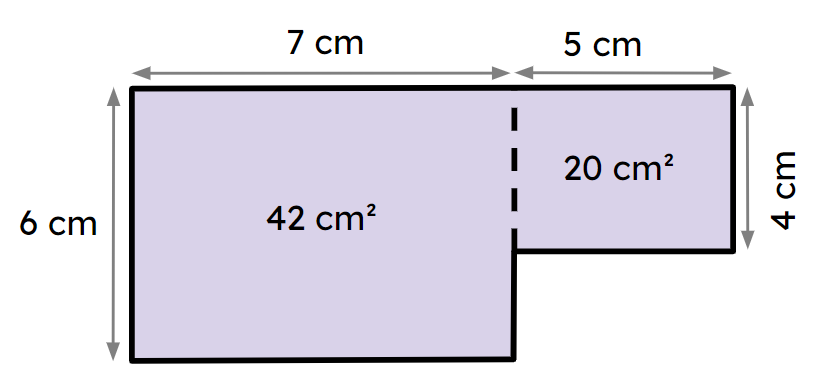
72 cm² − 10 cm² = 62 cm²
48 cm² + 14 cm² = 62 cm²
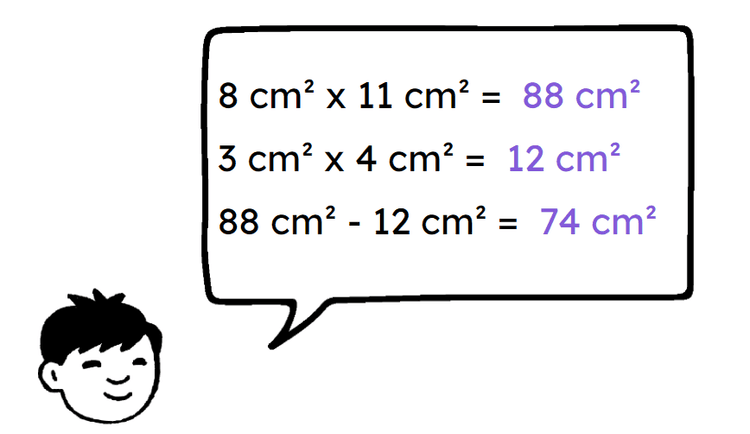
Q5.Jun worked out the area of a compound shape. Which of these shapes was he calculating the area of?
Jun worked out the area of a compound shape. Which of these shapes was he calculating the area of?
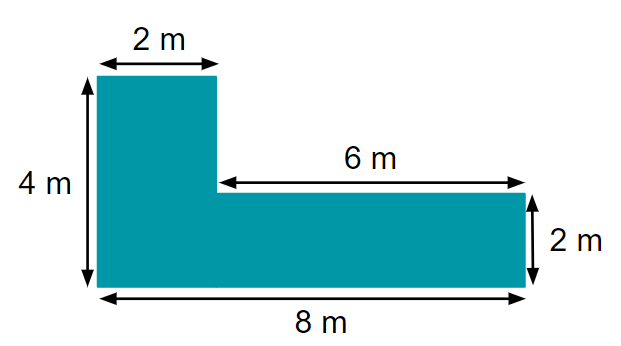
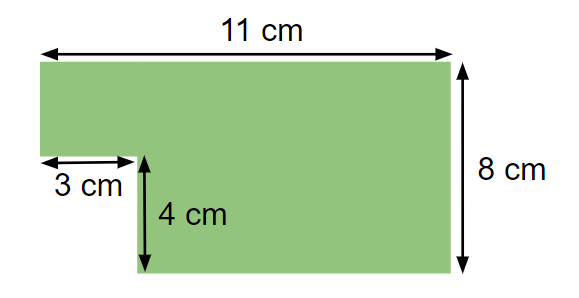
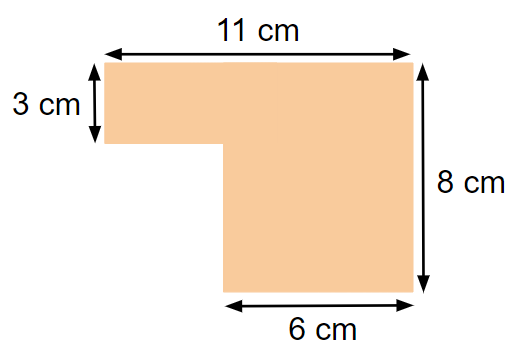
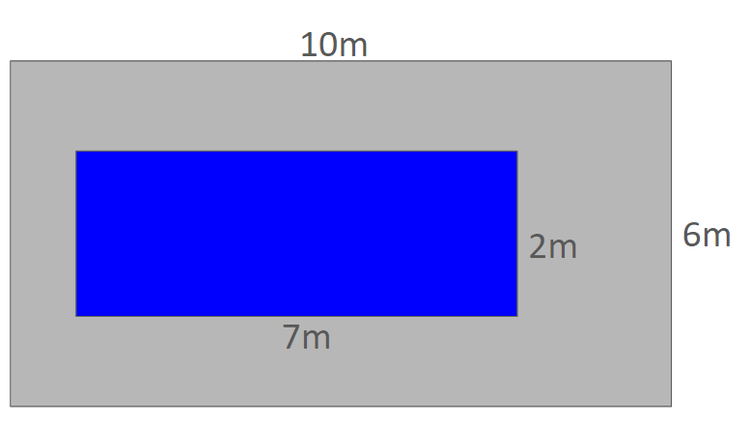
Q6.What is the area of the grey path around the pond?
What is the area of the grey path around the pond?
Assessment exit quiz
6 Questions
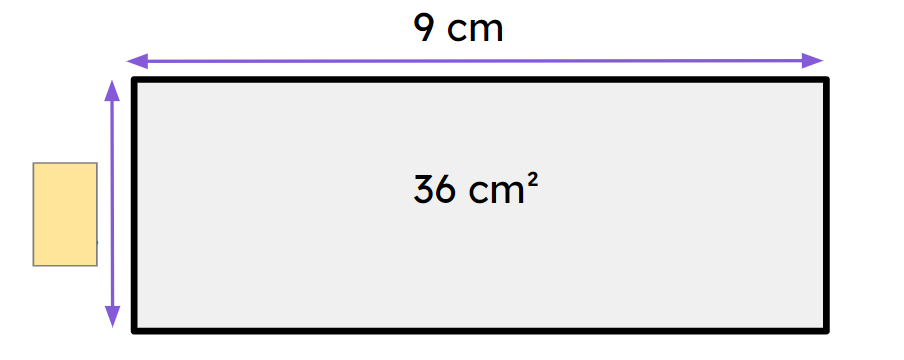
Q1.What is the missing dimension
What is the missing dimension
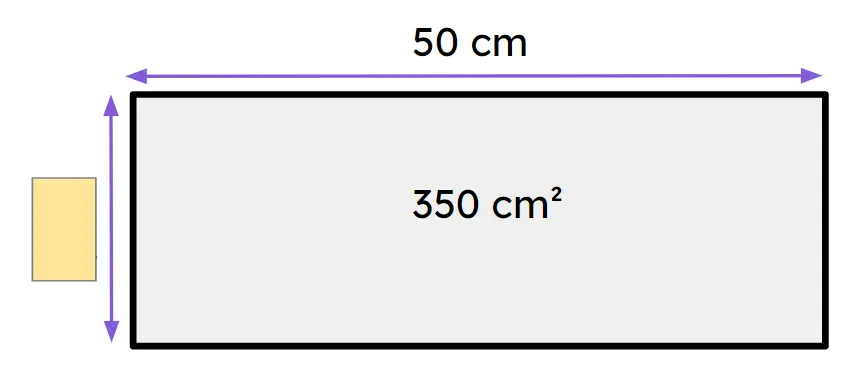
Q2.What is the missing dimension?
What is the missing dimension?
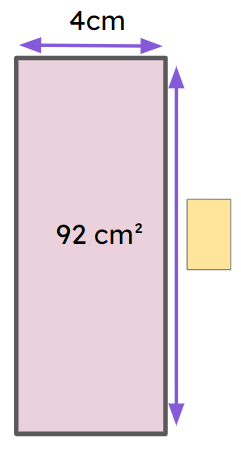
Q3.What is the missing dimension?
What is the missing dimension?
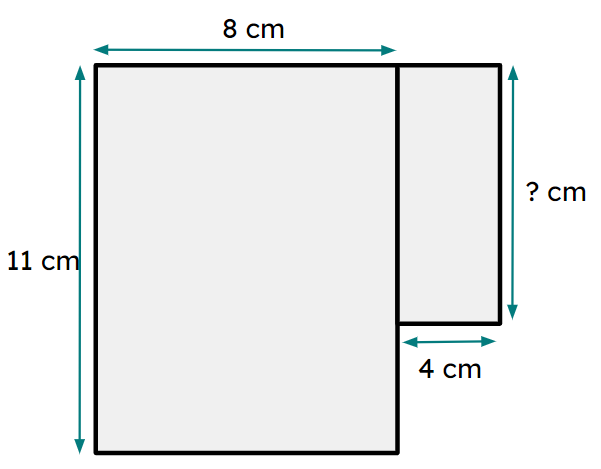
Q4.The area of this compound shape is 116 cm². What is the missing dimension?
The area of this compound shape is 116 cm². What is the missing dimension?
6 cm
8 cm
5 cm
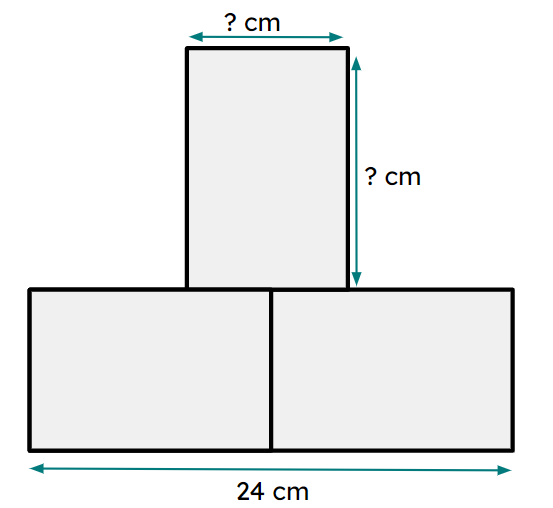
Q5.Here is a shape made from three identical rectangles. The area of the shape is 180 cm². What are the missing dimensions?
Here is a shape made from three identical rectangles. The area of the shape is 180 cm². What are the missing dimensions?
12 cm and 6 cm
11 cm and 5 cm
11 cm and 6 cm
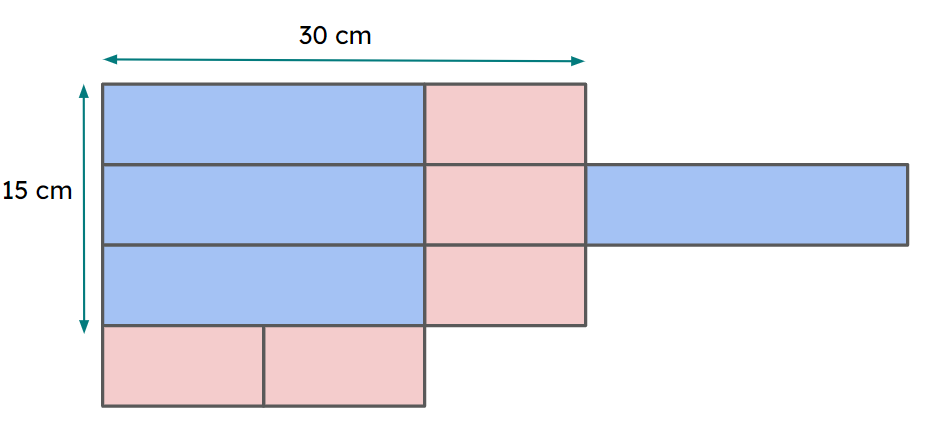
Q6.The larger blue rectangles are double the area of the smaller red rectangles. Calculate the area of a small red rectangle.
The larger blue rectangles are double the area of the smaller red rectangles. Calculate the area of a small red rectangle.