


New
New
Changes of state: energy and evaporation
I can describe and explain what happens when a substance changes state and how evaporation occurs.


Lesson 7 of 7
New
New
- Year 7
Changes of state: energy and evaporation
I can describe and explain what happens when a substance changes state and how evaporation occurs.
Lesson details
Key learning points
- States of matter can have differing amounts of energy.
- Solid states have the least energy, gas states have the most energy.
- A substance in its liquid state can evaporate at temperatures below its boiling point.
- The hotter the water, the more quickly it evaporates.
- Water evaporates at temperatures that are lower than 100℃.
Keywords
Energy - Particles gain or lose energy when a substance changes state.
Evaporation - When a particle of a substance in the liquid state at the surface, has enough energy to change to the gas state and mix with air.
Evaporation rate - The evaporation rate is a measure of how quickly a substance evaporates.
Alcohol - Ethanol is a type of alcohol that has a higher evaporation rate than water.
Common misconception
Evaporation only occurs above the boiling point of a substance.
Give examples of substances other than water.
Give a demonstration of 'spilled' acetone based nail varnish remover 'vs' water. Alternatively use alcohol based hand gel on the back of a hand to show evaporation.

Teacher tip

Licence
This content is © Oak National Academy Limited (2026), licensed on Open Government Licence version 3.0 except where otherwise stated. See Oak's terms & conditions (Collection 2).
Lesson video
Loading...
Prior knowledge starter quiz
6 Questions
Q1.Which state of matter has no fixed shape, but a definite volume and can flow?
Which state of matter has no fixed shape, but a definite volume and can flow?


b, solid
c, gas
Q2.The point is the temperature at which a liquid turns into a gas.
The point is the temperature at which a liquid turns into a gas.
Q3.Which state has the weakest forces of attraction between the particles?
Which state has the weakest forces of attraction between the particles?
solid
liquid
Q4.Which state of matter undergoes a change in volume when compressed?
Which state of matter undergoes a change in volume when compressed?
solid
liquid
Q5.The two beakers below, with the same volume of water in each, were left in a room. Select all the true statements about Beaker A.
The two beakers below, with the same volume of water in each, were left in a room. Select all the true statements about Beaker A.

Dries up first.
Wider than the other beaker.
The water is spread out over a greater area.
Q6.It is winter. The bird bath in the school garden needs refilling. Some primary children discuss whether evaporation could be the reason that the bird bath is empty. Which reason is correct?
It is winter. The bird bath in the school garden needs refilling. Some primary children discuss whether evaporation could be the reason that the bird bath is empty. Which reason is correct?

The sun is not powerful enough to dry up the the bird bath in the winter.
The sun evaporates the water in the summer but cannot in winter.
There are still sunny days in the winter which can dry up the bird bath.
Assessment exit quiz
6 Questions
Q1.Order the states of matter from lowest to highest energy.
Order the states of matter from lowest to highest energy.
Q2.Water can evaporate at temperatures lower than 100℃.
Water can evaporate at temperatures lower than 100℃.
False
Q3.What happens to the energy of a substance when it changes from a gas to a liquid?
What happens to the energy of a substance when it changes from a gas to a liquid?
It increases.
It remains the same.
Q4.When changing from the solid to liquid to gas state, is required to overcome forces of attraction between particles.
When changing from the solid to liquid to gas state, is required to overcome forces of attraction between particles.
Q5.Which two substances are commonly used in thermometers and can change state at fairly low temperatures?
Which two substances are commonly used in thermometers and can change state at fairly low temperatures?
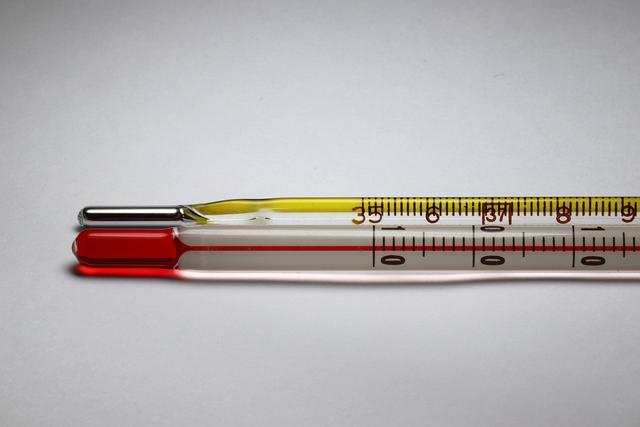
water
salt solution
Q6.Some students are revising the differences between boiling and evaporating, and they mix up their revision cards. Select all the statements below that are about evaporation.
Some students are revising the differences between boiling and evaporating, and they mix up their revision cards. Select all the statements below that are about evaporation.
Cooking pasta in a pot of water that is producing a lot of bubbles of gas.
Forming a gas from a liquid, but a specific temperature needs to be reached.
