


Changing the speed of a parachute
I can clearly describe how drag forces affect the motion of falling objects.


- Year 8
Changing the speed of a parachute
I can clearly describe how drag forces affect the motion of falling objects.
Lesson details
Key learning points
- The gravitational force on a falling object is constant.
- The drag force on a falling obejct depends on its speed and shape.
- Objects falling through the air will reach a terminal velocity when the drag and gravitational forces are equal.
- The terminal velocity can be changed by changing the drag force (e.g. with a parachute).
Keywords
Gravitational force - The gravitational force on something pulls it downwards, towards Earth.
Drag force - When an object moves through a fluid there is a drag force that opposes the movement.
Resultant force - A resultant force is the overall effect of a set of forces on an object, taking their directions into account.
Parachute - A parachute is used to increase the size of drag forces. This slows down the object it is attached to.
Terminal velocity - An object reaches a terminal velocity when the drag and gravitational forces are equal.
Common misconception
Video of skydiving may lead pupils to think opening a parachute makes a skydiver 'shoot upwards'.
Explain that this 'upwards motion' is relative motion to a cameraman. Discuss what a sudden upwards motion would do to a falling skydiver.


Content guidance
- Risk assessment required - equipment

Supervision
Adult supervision required

Licence
Lesson video
Loading...
Prior knowledge starter quiz
6 Questions
Q1.Which two pieces of apparatus could be used to take the measurements needed to find the speed of a falling model parachute?
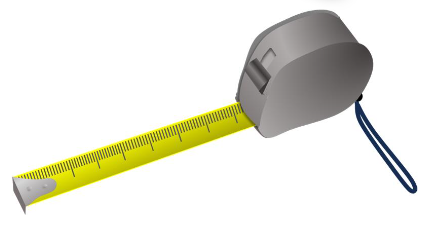


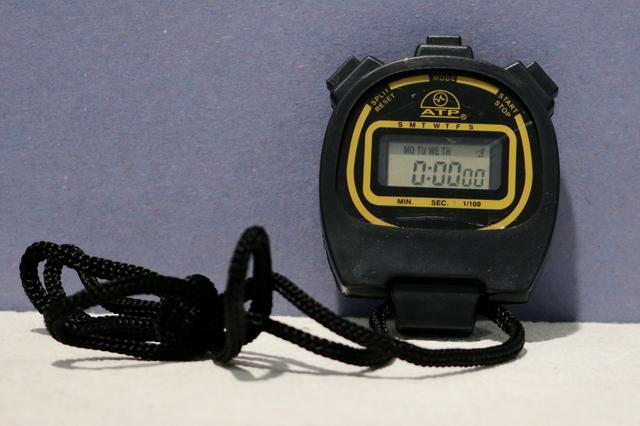
Q2.Which of these forces act on a skydiver as they fall downwards?
Q3.When does a falling object reach a steady speed?
Q4.A student measures how long a parachute takes to fall a distance of 2.0 m five separate times. Their readings are 1.5 s , 1.2 s, 1.4 s, 1.3 s and 1.4 s. Calculate the average fall time.
Q5.A set of model parachutes with different surface areas were dropped through a distance of 1.5 m. Starting with the fastest, sort the parachutes in order of average fall speed.
Q6.A model parachute falls through a distance of 1.8 m in a time of 2.4 s. Calculate the average speed of the parachute during the fall. Give the correct unit.
Assessment exit quiz
6 Questions
Q1.Match the key words to the explanations.

Q2.Which of these describes what happens to the forces on a skydiver as they are speeding up?
Q3.A skydiver has a gravitational force of 700 N acting on them and a drag force of 600 N. What happens to the motion of the skydiver?
Q4.The parachutes all have the same weight. Which will have the largest fall speed when dropped?

