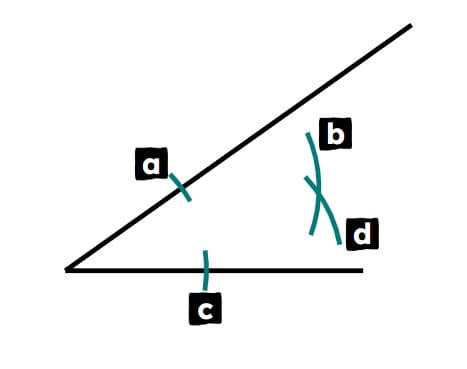
Checking and securing understanding of bisecting an angle
I can use the properties of a rhombus to construct an angle bisector.


- Year 11
Checking and securing understanding of bisecting an angle
I can use the properties of a rhombus to construct an angle bisector.
Lesson details
Key learning points
- A rhombus can be constructed from two congruent isosceles triangles
- The diagonals of a rhombus bisect the angles
- It is possible to construct an angle bisector without drawing the rhombus
- The angle could be the interior angle of a shape
Keywords
Bisect - To bisect means to cut or divide an object into two equal parts.
Rhombus - A rhombus is a parallelogram where all sides are the same length.
Congruent - If one shape can fit exactly on top of another using rotation, reflection or translation, then the shapes are congruent.
Common misconception
"My construction didn't accurately bisect the angle"
Check that your compasses construct a full circle, and do not slip (and create a spiral-shape). Tighten the screw on your compasses, if possible. Then, if only using construction arcs that look confusing, you can construct full circles to help.


Equipment
Pair of compasses, protractor and ruler

Licence
Lesson video
Loading...
Prior knowledge starter quiz
6 Questions
Q1.A perpendicular bisector of the line PQ is a line that is at an angle of ° to PQ. It cuts PQ exactly in half.

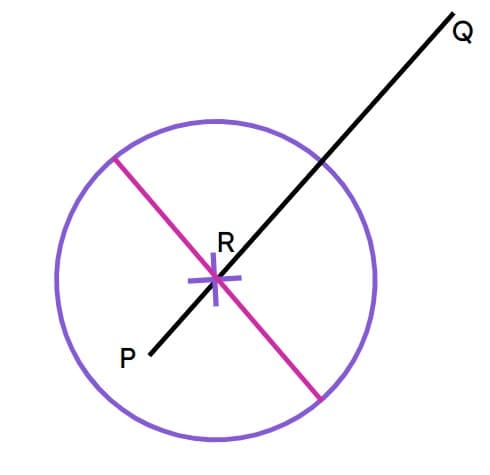
Q2.Izzy has incorrectly constructed a perpendicular for PQ through R. What is wrong with Izzy's construction?
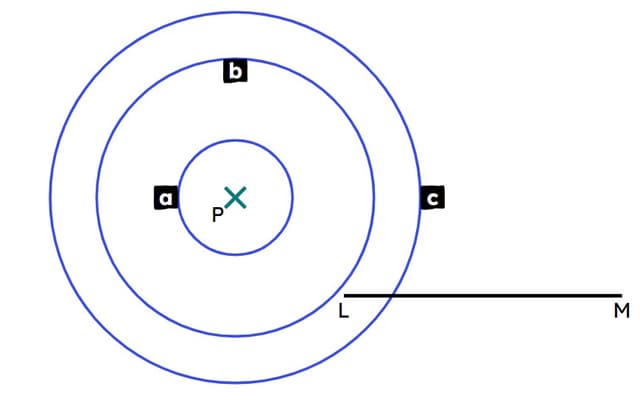
Q3.Which of these circles does not help in the construction of the perpendicular to LM through point P?
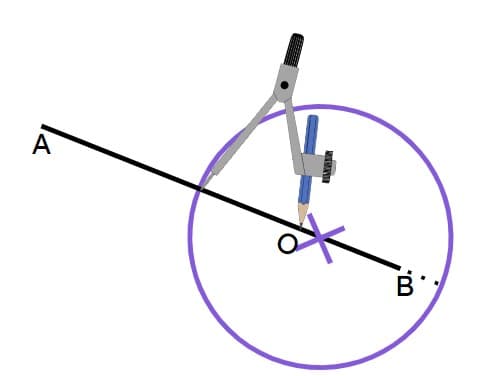
Q4.Laura has partially completed a construction for a perpendicular of AB through O. What is incorrect about Laura’s pair of compasses?
Q5.The diagram shows the perpendicular through Z to the line segment SR. The radius of the circle is cm.
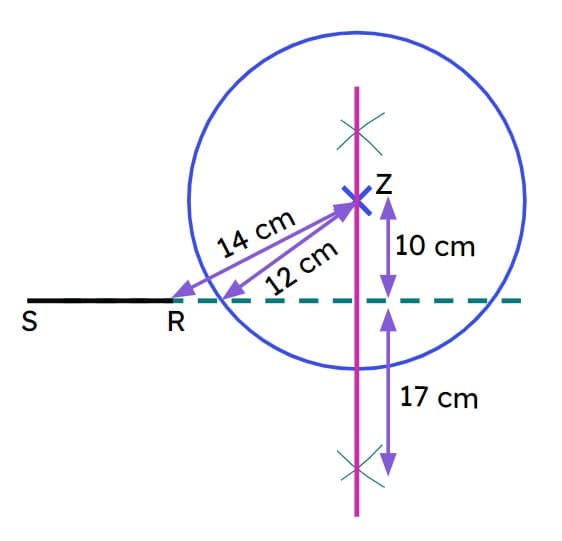
Q6.The diagram shows the perpendicular through Z to the line segment SR. The shortest distance from Z to the original line segment SR is cm.
Assessment exit quiz
6 Questions
Q1.Aisha constructs the bisector of an angle of 72°. Aisha has made angles of °.
Q2.The diagram shows two congruent isosceles triangles put together to form a rhombus. Match each angle to its size.
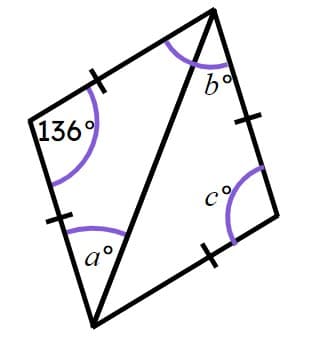
$$a$$° - 22°
$$b$$° - 44°
$$c$$° - 136°
Not a marked angle - 64°
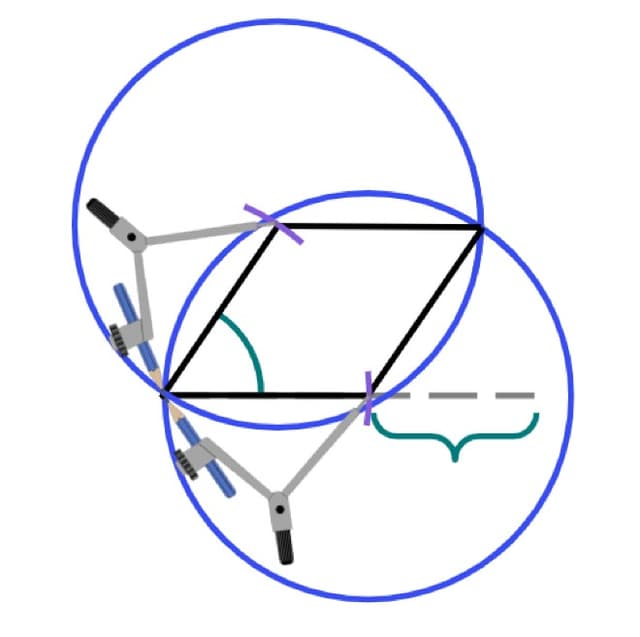
Q3.Starting with the first step, put these steps in order to construct a rhombus given the legs of an angle.
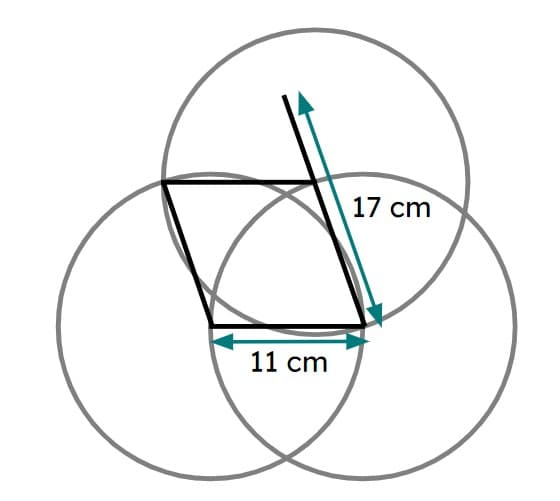
Q4.Jun wants to construct a rhombus using an angle with leg lengths of 11 cm and 17 cm. The maximum radius of each circle in the construction of this rhombus is cm.
Q5.Alex begins construction of a rhombus from this angle. The final vertex of the rhombus is at point .
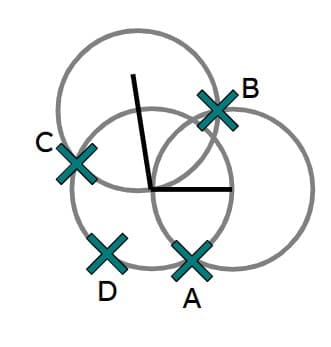
Q6.Sam is constructing an angle bisector. Here are the construction marks. Which two arcs did Sam draw first?