Checking and securing understanding of surface area of other prisms
I can efficiently calculate the surface area of other prisms.


- Year 11
Checking and securing understanding of surface area of other prisms
I can efficiently calculate the surface area of other prisms.
Lesson details
Key learning points
- The surface area of a prism is the sum of the area of all the faces.
- The net of a prism can help find the surface area of a prism but can be time consuming.
- Using known area facts the area of all the faces can be found and summed.
- It is important to find the surface area systematically and efficiently.
Keywords
Prism - A prism is a polyhedron with a base that is a polygon and a parallel opposite face that is identical. The corresponding edges of the two polygons are joined by parallelograms.
Surface area - The surface area is the total area of all the surfaces of a closed 3D shape. The surfaces include all faces and any curved surfaces.
Net - The net of a 3D object is a 2D representation of its surfaces that can be folded up into the 3D object.
Common misconception
Pupils can miss out some faces of the prism when calculating the surface area.
Encourage pupils to sketch out the net of the prism and label it clearly, to ensure that they include all faces in their calculation of the surface area. This will allow their answer to be checked more easily.


Licence
Lesson video
Loading...
Prior knowledge starter quiz
6 Questions
Q1.Select the units that could be used for the surface area of a cuboid.
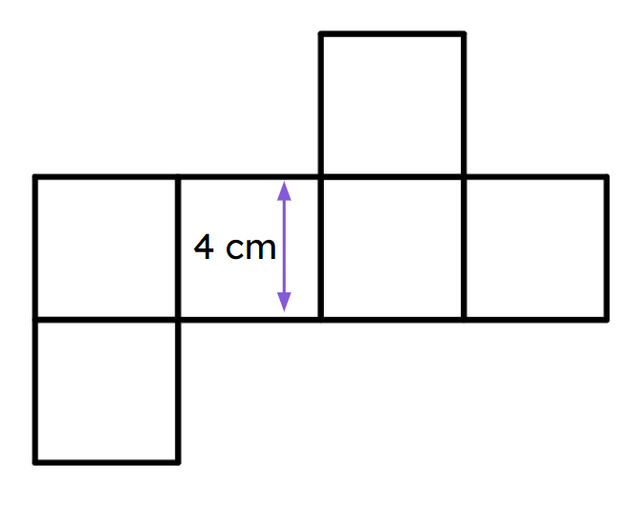
Q2.Here is a net of a cube. Which calculations correctly give the surface area of the cube?
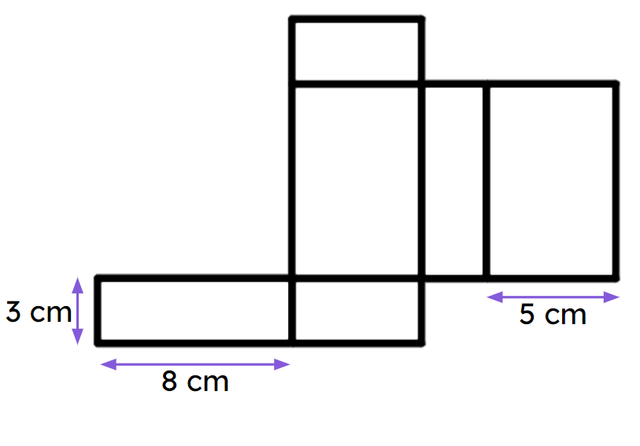
Q3.Here is a net of a cuboid. What is the surface area of the cuboid?
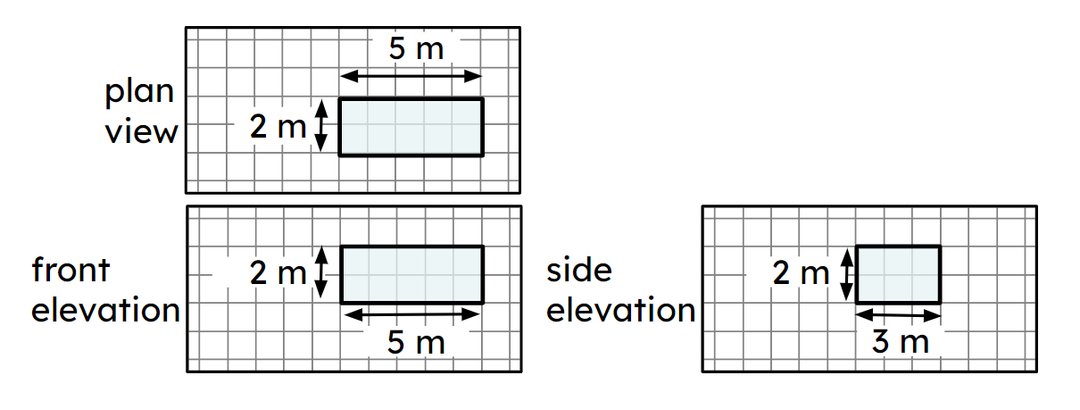
Q4.The diagram shows the plan view and front and side elevations of a cuboid. The surface area of the cuboid is m².
Q5.The diagram shows an isometric drawing of a cuboid. The surface area of the cuboid is m².
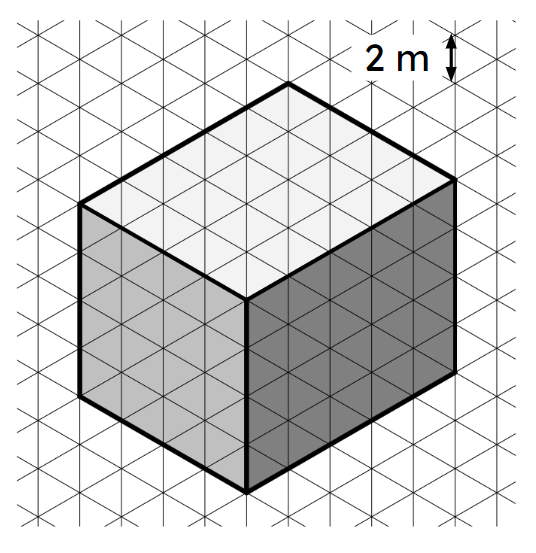
Q6.Starting with the cuboid with the smallest surface area, put these cuboids in order of surface area size.
Assessment exit quiz
6 Questions
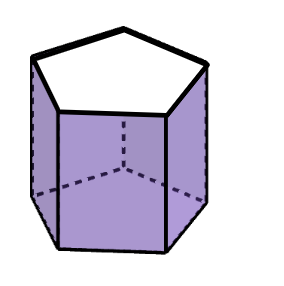
Q1.This prism has two congruent regular pentagonal faces and congruent rectangular faces.
Q2.Jun takes some measurements from a cube. Match each measurement to its correct value.

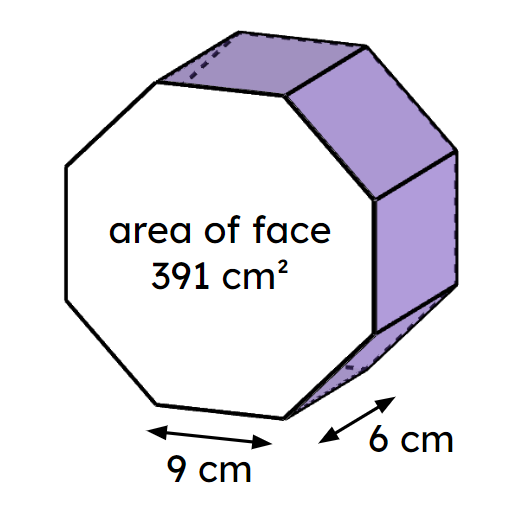
Q3.The surface area of this octagonal prism is cm².
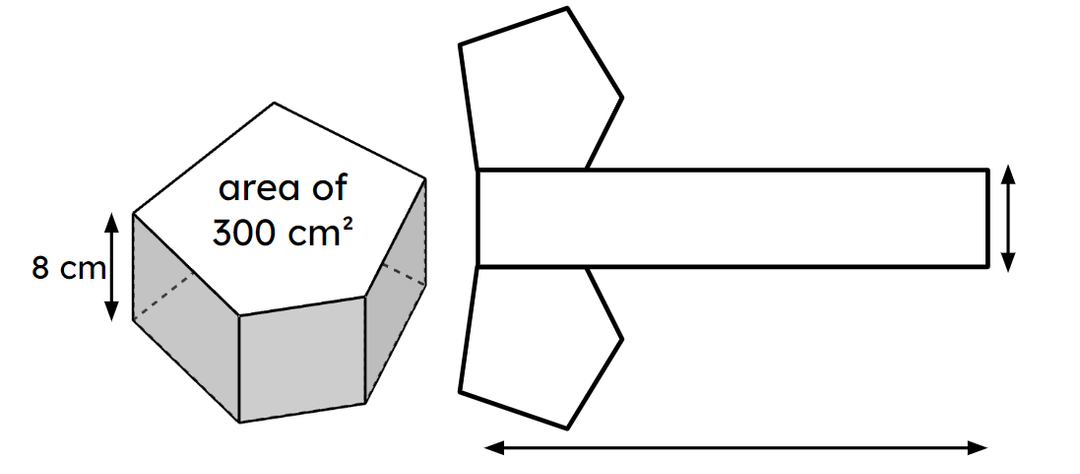
Q4.The diagram shows a prism unfolded into its net. The perimeter of the cross-sectional face is 80 cm. Which of these statements are correct?
Q5.The diagram shows the net of a triangular prism. The depth of the prism is 2 cm. The surface area of the prism that can be formed from this net is cm².
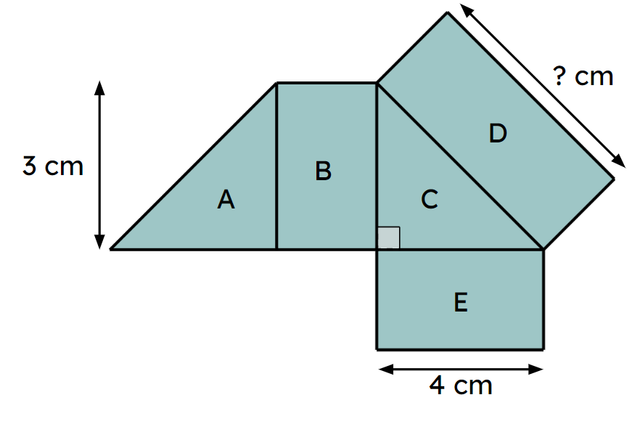
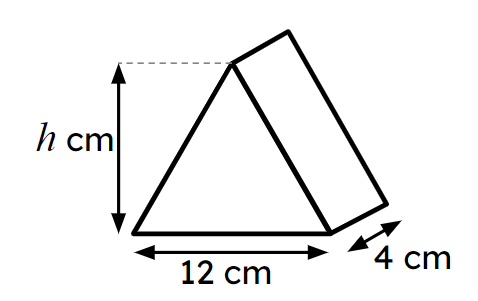
Q6.The cross-section of this prism is an equilateral triangle. The surface area of this triangular prism is cm². Give your answer correct to 3 significant figures.