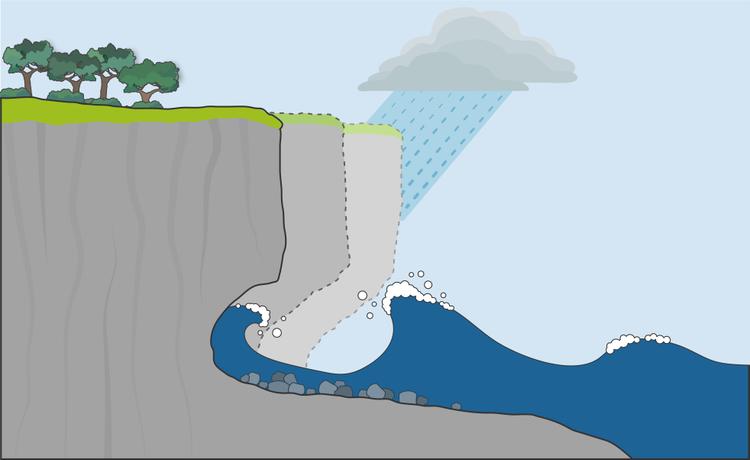
Coastal erosion landforms
I can describe the characteristics and explain the formation of landforms resulting from coastal erosion.


- Year 10
- AQA
Coastal erosion landforms
I can describe the characteristics and explain the formation of landforms resulting from coastal erosion.
Lesson details
Key learning points
- Caves, arches and stacks have distinct characteristics and formation.
- Cliffs and wave cut platforms have distinct characteristics and formation.
Keywords
Hydraulic power - waves compress air into cracks in the rock, putting pressure on it and causing it to break over time
Erosion - the wearing away of rock along the coastline
Retreat - the process by which a coastline, cliff, or other landforms move inland due to erosion
Common misconception
Caves, arches, stacks and stumps form very quickly and at the same time.
Coastal landforms form over time through erosion and weathering, progressing from caves to arches, which collapse into stacks, and eventually erode into stumps, show gradual and differential erosion processes that shape the landscape.


Equipment

Licence
Lesson video
Loading...
Prior knowledge starter quiz
6 Questions
Q1.What is the main difference between constructive and destructive waves?

Q2.What is fetch?
Q3.Which of the following is an example of biological weathering?
Q4.What is a concordant coastline?
Q5.How are bays and headlands typically formed?
Q6.Which statement best defines hydraulic power?
Assessment exit quiz
4 Questions
Q1.Correctly order the statements to show the formation of a wave cut platform.