


Comparing the life cycles of amphibians and insects
I can describe the differences in the life cycles of amphibians and insects.


- Year 5
Comparing the life cycles of amphibians and insects
I can describe the differences in the life cycles of amphibians and insects.
Lesson details
Key learning points
- Different life cycles can be compared to find similarities and differences
- Amphibians and insects have some similarities and some differences in their life cycles
- Differences in life cycles can be communicated using different types of scientific diagrams
Keywords
Life cycle - A life cycle is the way in which a living thing changes as it ages.
Amphibian - An amphibian is a cold-blooded animal that has moist skin, lays eggs and can live on land and in water.
Insect - An insect is an invertebrate animal that has antennae, six legs and a body divided into segments.
Similarity - A similarity is something two objects have in common.
Difference - A difference between two objects or things is something that is not similar or the same about them.
Common misconception
Pupils may think that metamorphosis of an animal is the result of evolution.
Explain that metamorphosis is the change in form of a single animal; it’s still the same animal after metamorphosis.


Equipment
None needed

Licence
Lesson video
Loading...
Prior knowledge starter quiz
6 Questions
Q1.The stages an animal goes through as it ages is called its life .
Q2.What is the scientific term for an animal in the final stage of its life cycle?
Q3.Which of these words means an animal making more animals?
Q4.Match the animal type to its classification.

Q5.Amphibians lay jelly-like , called spawn, in the water.
Q6.Which of these is not a characteristic of insects?
Assessment exit quiz
6 Questions
Q1.Match the animal to its life cycle.
Q2.We can use scientific diagrams to compare and differences.
Q3.Which of these diagrams would we use to compare the similarities and differences of two things?


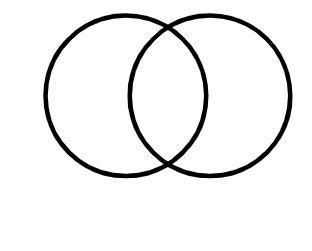
Q4.What information goes in the middle of a Venn diagram, where the circles overlap?
