


New
New
Creating a pattern using a square grid
I can use a square grid to create a repeated pattern.


Lesson 3 of 6
New
New
- Year 3
Creating a pattern using a square grid
I can use a square grid to create a repeated pattern.
Lesson details
Key learning points
- Grids are used in many types of art and design, such as mosaics, textiles, and digital art.
- A square grid helps create structured and repeating patterns by organising shapes and lines.
- Patterns can be made by repeating, rotating, or reflecting shapes.
- Sketching and planning within a grid helps to create accurate and consistent patterns.
Keywords
Reflection symmetry - one half of a shape is the reflection of the other half
Repeat/ repeating - to make or do again
Rotate/ rotating - turning around a centre
Line - a mark made by a moving point, such as a pencil or brush
Common misconception
Pupils may think that patterns do not need a grid to be structured.
While freehand patterns exist, grids help maintain consistency.
Encourage students to see the grid as a helpful tool, not a restriction.

Teacher tip

Equipment
Grid, mark-making tools such as black ink pens, colouring pencils, ruler, mirrors.

Licence
This content is © Oak National Academy Limited (2025), licensed on Open Government Licence version 3.0 except where otherwise stated. See Oak's terms & conditions (Collection 2).
Lesson video
Loading...
Prior knowledge starter quiz
6 Questions
Q1.Who is Yayoi Kusama, and what type of patterns is she known for?
Who is Yayoi Kusama, and what type of patterns is she known for?
She creates realistic portraits.
She paints landscapes.
Q2.Which artist is known for creating optical illusion art?
Which artist is known for creating optical illusion art?
Becky Allen
Anila Quayyum Agha
Q3.What is a key feature of patterns that make them interesting?
What is a key feature of patterns that make them interesting?
They can be completely random.
They are always made with bright colours.
Q4.What should you remember when creating your own unique pattern?
What should you remember when creating your own unique pattern?
You have to copy another artist exactly.
Patterns should always be symmetrical.
Q5.What type of pattern is often found in nature?
What type of pattern is often found in nature?
only geometric patterns
patterns that are only made of lines
Q6.Where might you have seen a pattern?
Where might you have seen a pattern?
in nature
in fashion
in architecture
in everyday objects
Assessment exit quiz
6 Questions
Q1.What is a grid?
What is a grid?
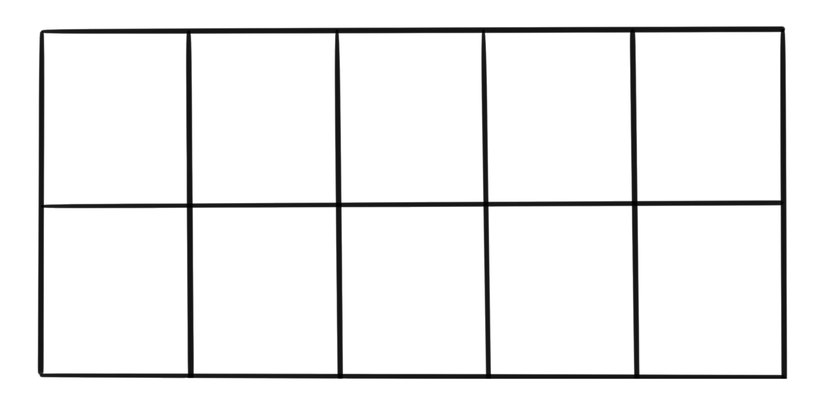
a collection of random shapes
a type of paint
Q2.Reflection symmetry means one half of a shape is a image of the other half.
Reflection symmetry means one half of a shape is a image of the other half.
Q3.Match the keyword with its definition.
Match the keyword with its definition.

Q4.Which of these can be used to create a repeating pattern?
Which of these can be used to create a repeating pattern?
random scribbles
only straight lines
Q5.To create a pattern on a grid, you can use symmetry, where shapes are rotated around a central point.
To create a pattern on a grid, you can use symmetry, where shapes are rotated around a central point.
Q6.Grids are only used in digital art.
Grids are only used in digital art.
True
