Choose exam board for KS4 Computer Science (GCSE)
Choose exam board for KS4 English
Choose exam board for KS4 French
Choose exam board for KS4 Geography
Choose exam board for KS4 German
Choose exam board for KS4 History
Choose tier for KS4 Maths
Choose exam board for KS4 Music
Choose exam board for KS4 Physical education (GCSE)
Choose exam board for KS4 Religious education (GCSE)
Choose exam board for KS4 Spanish
      New
      New

      Describe and name 3d shapes – prisms and pyramids

      I can recognise and name pyramids and prisms and describe their properties.

      Lesson 8 of 10
      New
      New
      • Year 2

      Describe and name 3d shapes – prisms and pyramids

      I can recognise and name pyramids and prisms and describe their properties.

      Lesson details

      Key learning points

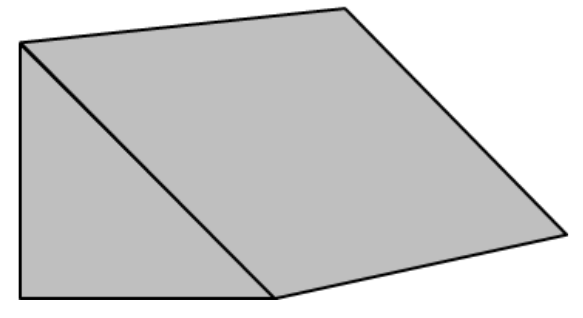
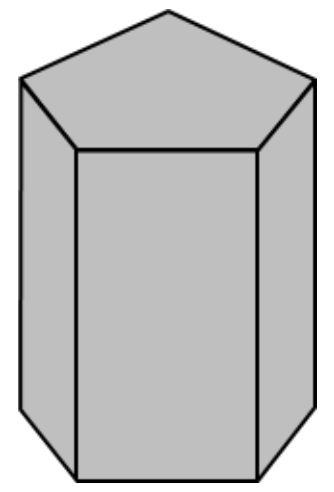
      1. A prism is a 3D shape that has identical opposite polygon faces at each end which are joined by rectangular faces.
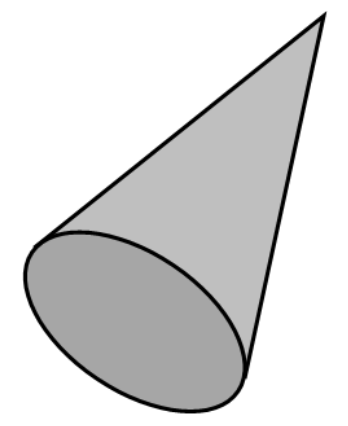
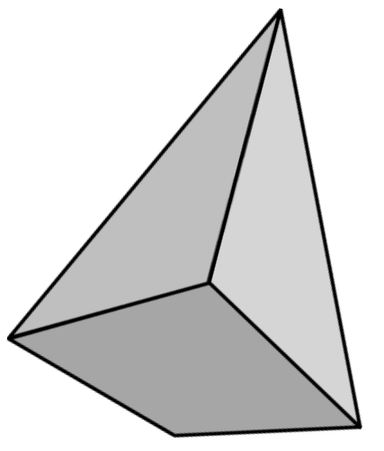
      2. A pyramid is a 3D shape that has a base and an apex at the opposite end to the base.
      3. A prism always has two opposite, identical polygon faces. A prism can be named after its identical polygon faces.
      4. A pyramid has a polygon as its base, which is the face opposite the apex. A pyramid can be named after its base.

      Keywords

      • Prism - A 3D shape that has two opposite, identical polygon faces, joined by rectangular faces.

      • Pyramid - A 3D shape that has a base and an apex at the opposite end to the base, joined by triangular faces.

      Common misconception

      Children may find it difficult to name the shape of the faces that cannot be seen in drawings of 3D shapes.

      Provide 3D shapes for children to handle alongside the drawings. Encourage them to visualise the shape rotating to help them identify and describe each face of the shape.

      Provide opportunities for children to compare two pyramids or prisms by talking about what is the same and what is different.
      Teacher tip

      Licence

      This content is © Oak National Academy Limited (2025), licensed on Open Government Licence version 3.0 except where otherwise stated. See Oak's terms & conditions (Collection 2).

      Lesson video

      Loading...

      Prior knowledge starter quiz

      6 Questions

      Q1.
      Match the 3D shapes to their descriptions.
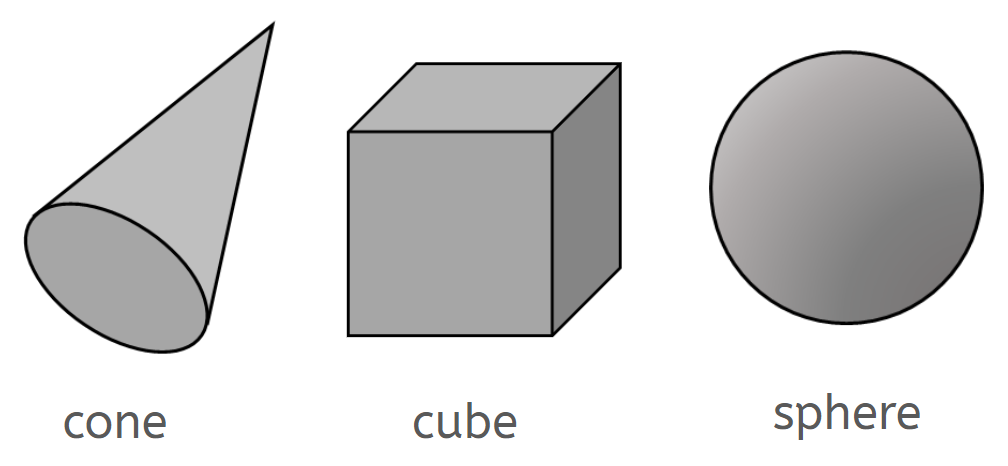
      An image in a quiz
      Correct Answer:A cone has,one circular face and one vertex

      one circular face and one vertex

      Correct Answer:A cube has,six square faces

      six square faces

      Correct Answer:A sphere has,no faces and no vertices

      no faces and no vertices

      Q2.
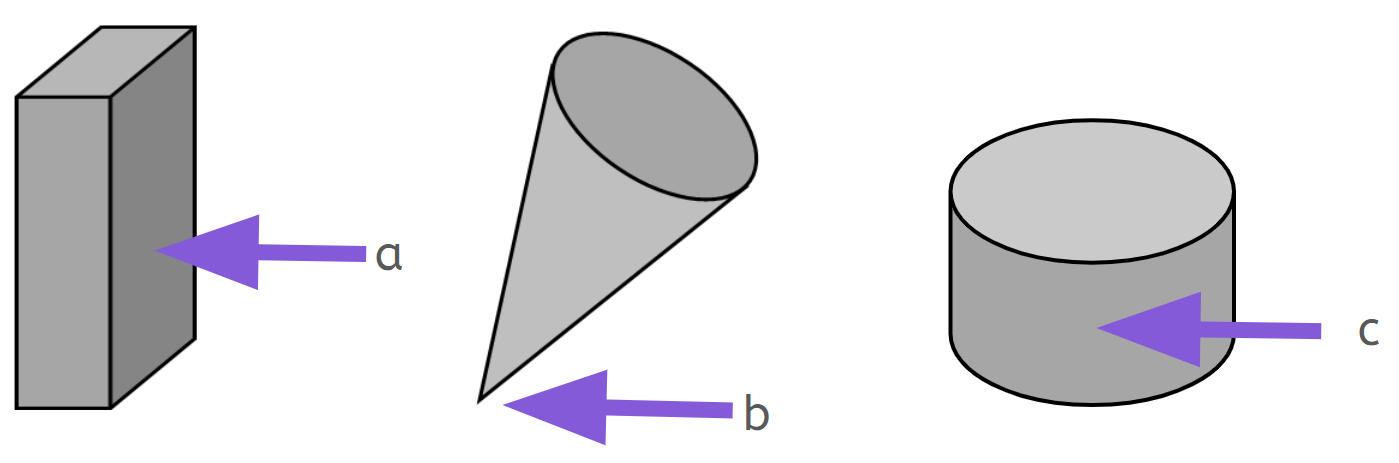
      Label the parts of these 3D shapes.

      An image in a quiz
      Correct Answer:a,a face

      a face

      Correct Answer:b,a vertex

      a vertex

      Correct Answer:c,a curved surface

      a curved surface

      Q3.
      Match the parts of the sentences together correctly.

      Correct Answer:A flat surface of a 3D shape,is a face.

      is a face.

      Correct Answer:A corner of a 3D shape where edges meet ,is a vertex.

      is a vertex.

      Correct Answer:A line where two faces meet,is an edge.

      is an edge.

      Q4.
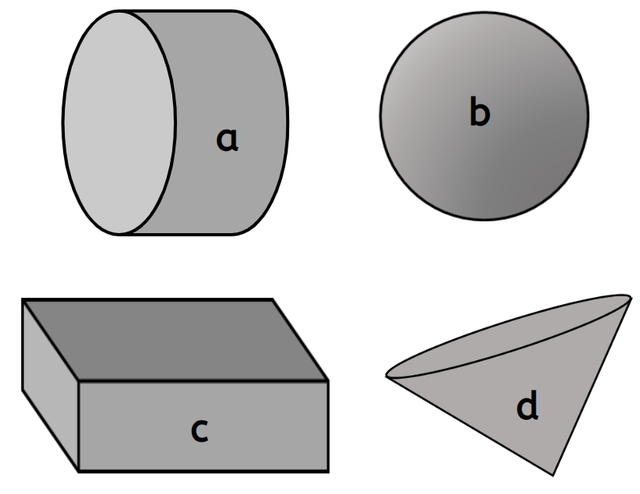
      Match the 3D shapes to their names.

      An image in a quiz
      Correct Answer:a,cylinder

      cylinder

      Correct Answer:b,sphere

      sphere

      Correct Answer:c,cuboid

      cuboid

      Correct Answer:d,cone

      cone

      Q5.
      Match the 3D shapes to their properties.
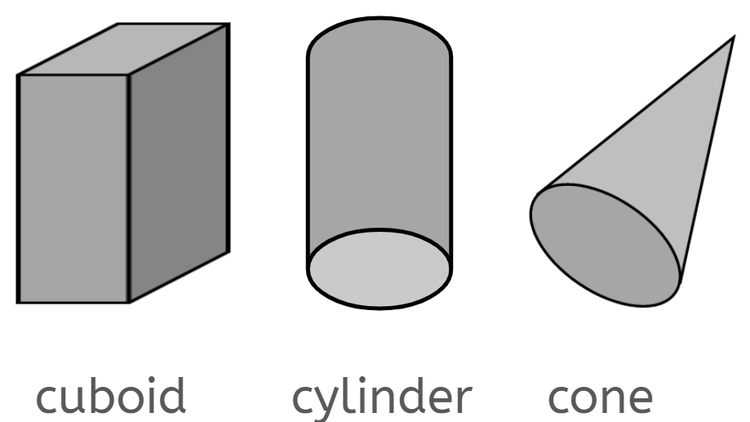
      An image in a quiz
      Correct Answer:cuboid,6 rectangular faces, 8 vertices and 12 edges

      6 rectangular faces, 8 vertices and 12 edges

      Correct Answer:cylinder,two circular faces, no vertices and no edges

      two circular faces, no vertices and no edges

      Correct Answer:cone,one circular face and one vertex

      one circular face and one vertex

      Q6.
      Which of these properties describes a cube?
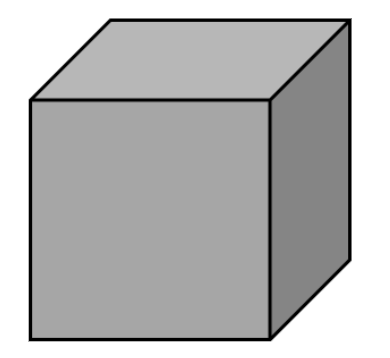
      An image in a quiz
      Correct answer: 6 square faces
      3 square faces
      Correct answer: 8 vertices
      7 vertices

      Assessment exit quiz

      6 Questions

      Q1.
      What is the same about these two pyramids?
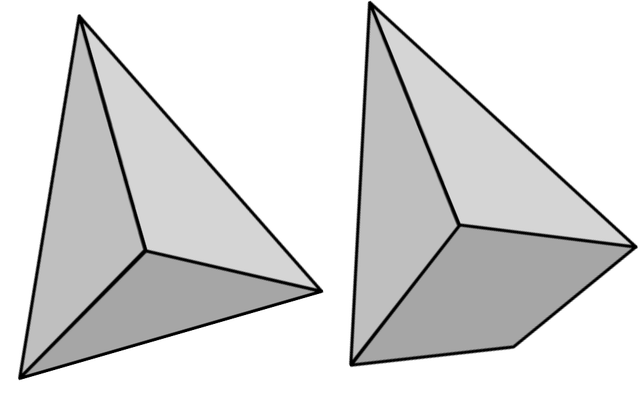
      An image in a quiz
      Correct answer: Both have triangular faces.
      Correct answer: Both have vertices.
      Correct answer: Both have faces that are flat.
      Both have a square face.

      Q2.
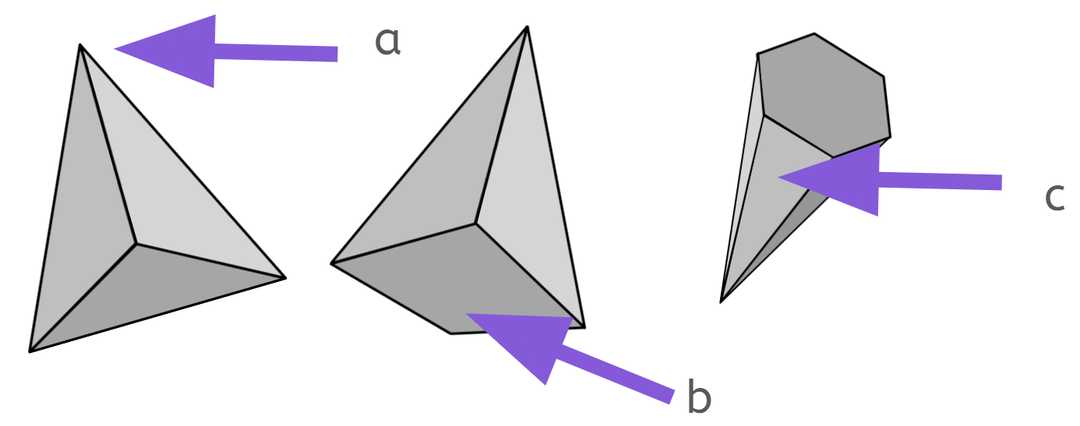
      Label the parts of these 3D shapes.

      An image in a quiz
      Correct Answer:a,apex

      apex

      Correct Answer:b,base

      base

      Correct Answer:c,triangular face

      triangular face

      Q3.
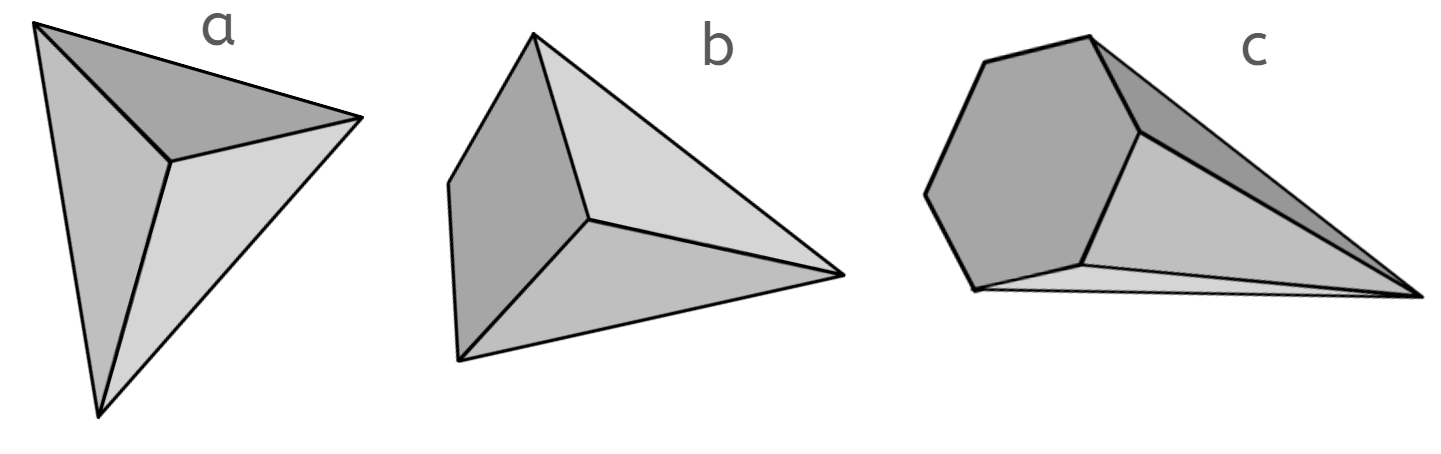
      Match each pyramid to its name.

      An image in a quiz
      Correct Answer:a,triangular-based pyramid

      triangular-based pyramid

      Correct Answer:b,square-based pyramid

      square-based pyramid

      Correct Answer:c,hexagonal-based pyramid

      hexagonal-based pyramid

      Q4.
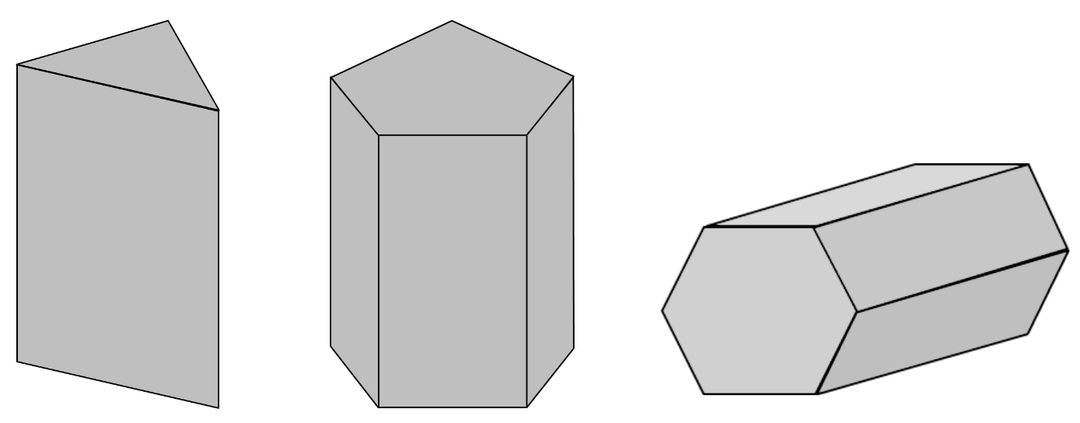
      Each of these shapes is a prism. What is the same for all prisms?
      An image in a quiz
      Correct answer: They each have two opposite faces that are identical.
      They each have an apex.
      Correct answer: They each have two opposite faces that are joined by rectangular faces.

      Q5.
      Which of the shapes are prisms?

      Correct Answer: An image in a quiz
      An image in a quiz
      An image in a quiz
      Correct Answer: An image in a quiz
      An image in a quiz
      An image in a quiz

      Q6.
      Match the properties to the correct 3D shape name.

      Correct Answer:pyramid,has some triangular faces that meet at an apex

      has some triangular faces that meet at an apex

      Correct Answer:prism,has two opposite, identical polygon faces

      has two opposite, identical polygon faces

      Lesson appears in

      UnitMaths / Shape: discuss and compare 2D and 3D shapes