


New
New
Describing a reflection
I can understand the minimum information required to describe a reflection


Lesson 10 of 18
New
New
- Year 7
Describing a reflection
I can understand the minimum information required to describe a reflection
Lesson details
Key learning points
- The image is a reflection of the object.
- A line of reflection can be thought of as a mirror line.
- The line of reflection can be vertical, horizontal or diagonal.
Keywords
Line of reflection - The line of reflection is the line about which an object is reflected. The object and image are equidistant from the line of reflection.
Equidistant - Points A and B are equidistant from a third point C if the distance AC is equal to the distance BC.
Common misconception
Line segments connecting corresponding points on an image and object can intersect each other.
Corresponding point line segments after a reflection never intersect. If they do, then corresponding points have not been paired correctly.
Lines of reflection will be more succinctly described in the future when they cover topics involving equations of horizontal and vertical lines - for now, defining the line of reflection using two coordinates is effective at keeping the lines unique.

Teacher tip

Equipment

Licence
This content is © Oak National Academy Limited (2025), licensed on Open Government Licence version 3.0 except where otherwise stated. See Oak's terms & conditions (Collection 2).
Lesson video
Loading...
Prior knowledge starter quiz
6 Questions
Q1.Which of these sentences use the word "sense" correctly?
Which of these sentences use the word "sense" correctly?

Correct answer: The sense of a word stays the same after a rotation because I can still read it
The sense of a word stays the same after a rotation because I can still read it
The sense of a word changes when I enlarge it because the letters get bigger
The sense of a word stays the same after reflection as I can read it in a mirror
Correct answer: The sense of a word changes if the letters are rewritten backwards
The sense of a word changes if the letters are rewritten backwards
Q2.In which of these images has the sense changed compared to the object?
In which of these images has the sense changed compared to the object?
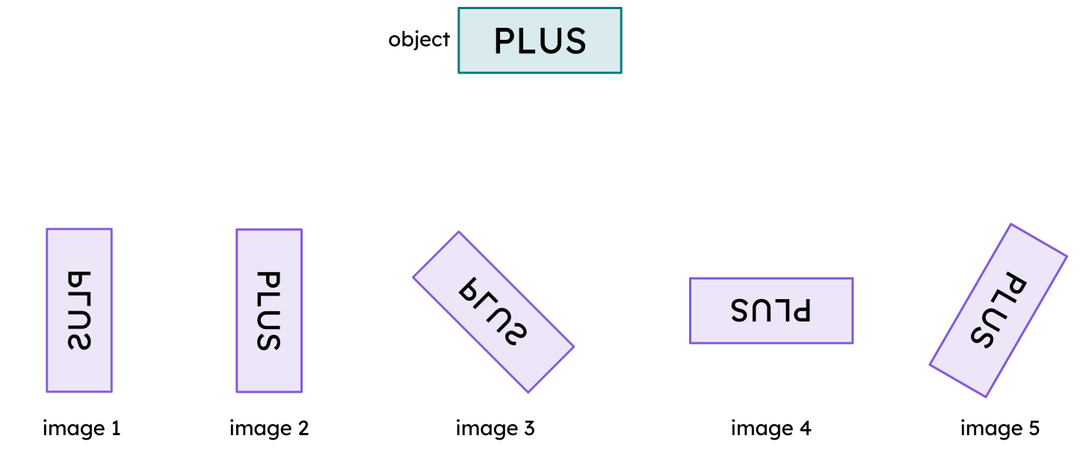
Correct answer: image 1
image 1
image 2
Correct answer: image 3
image 3
image 4
image 5
Q3.Write down a transformation that changes the "sense" of an object.
Write down a transformation that changes the "sense" of an object.
Correct Answer: reflection, reflect, Reflection
reflection, reflect, Reflection
Q4.When an object is reflected, the size of its angles are invariant. This means the angles remain .
When an object is reflected, the size of its angles are invariant. This means the angles remain .
Correct Answer: the same, same, exactly the same, unchanged, invariant
the same, same, exactly the same, unchanged, invariant
Q5.Complete this sentence: "When an object is reflected, the orientation of the object _______ ."
Complete this sentence: "When an object is reflected, the orientation of the object _______ ."
is invariant
sometimes changes
Correct answer: always changes
always changes
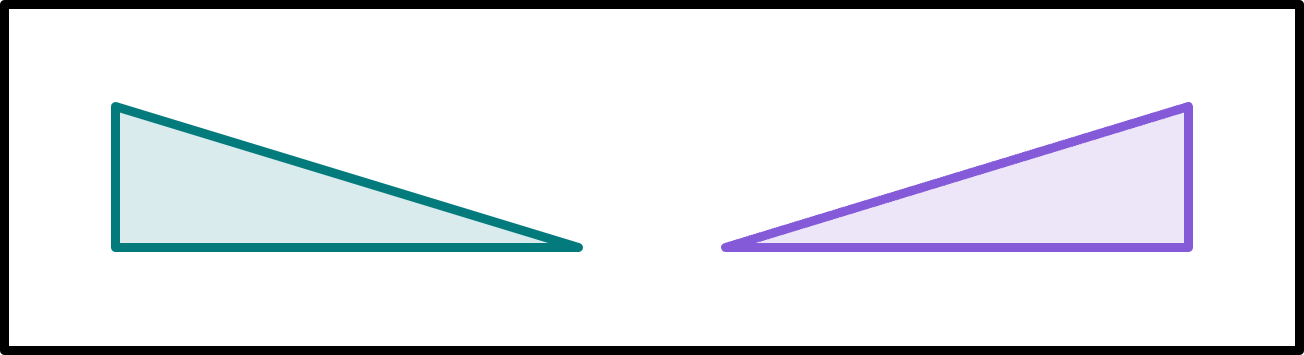
Q6.Which of these diagrams shows a reflection?
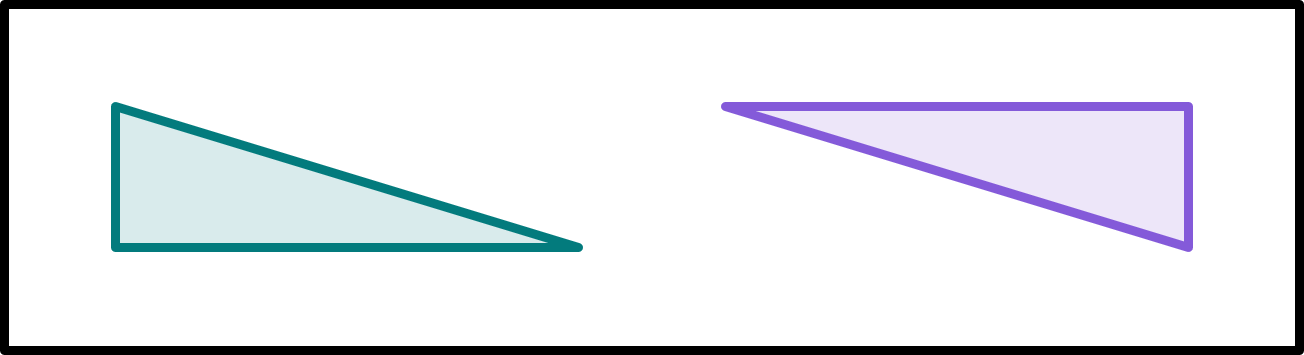
Which of these diagrams shows a reflection?
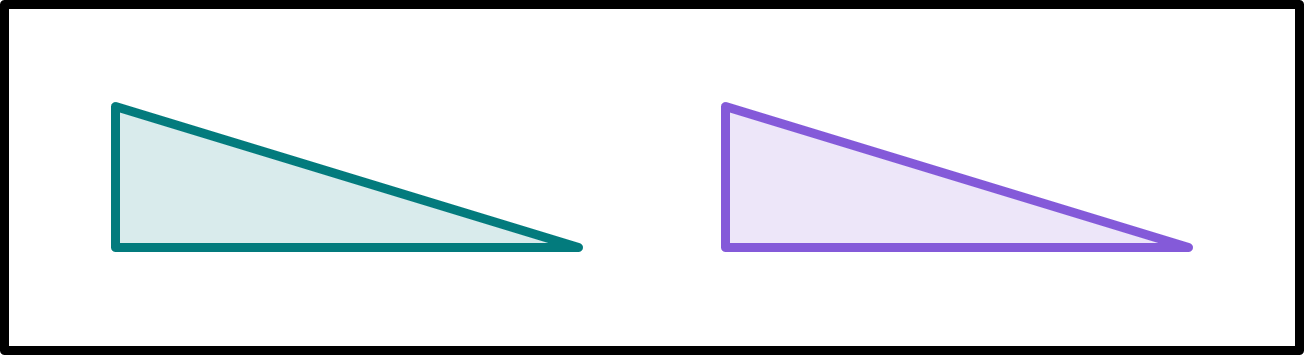
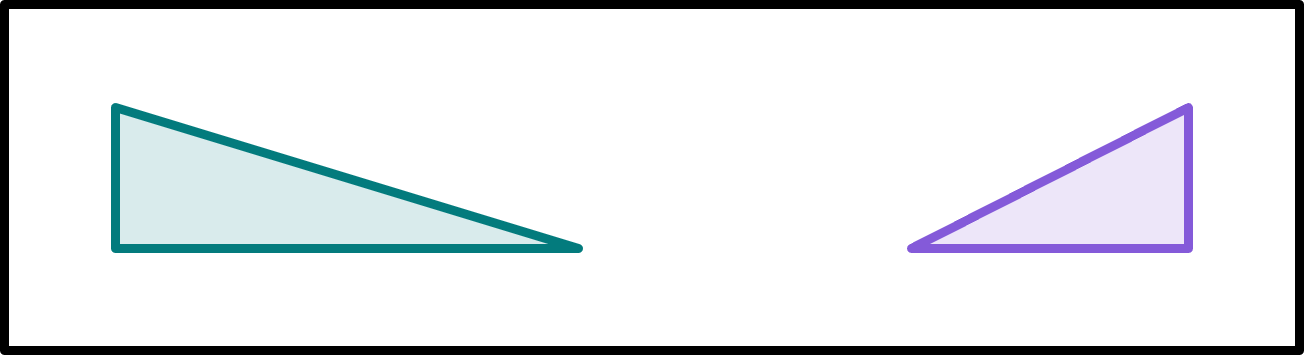
Correct Answer: An image in a quiz
Assessment exit quiz
6 Questions
Q1.What is the purpose of a "line of reflection"?
What is the purpose of a "line of reflection"?
It cuts the object in half to become an image.
It is in the middle of a shape.
Correct answer: It defines the position of the reflected image.
It defines the position of the reflected image.
It defines the size of the reflected image.
It defines the rotation of the reflected image.
Q2.What does the word "equidistant" mean?
What does the word "equidistant" mean?
Correct answer: Two or more things that are an equal distance away from a reference point.
Two or more things that are an equal distance away from a reference point.
When two points on an object are a distance away from the image.
When two corresponding points are parallel to the $$x$$-axis or $$y$$-axis.
Correct answer: When two corresponding points are an equal distance from the line of reflection.
When two corresponding points are an equal distance from the line of reflection.
Q3.Which pieces of information are needed to fully describe a reflection?
Which pieces of information are needed to fully describe a reflection?
Correct answer: state that it's a reflection
state that it's a reflection
show the orientation of each of its vertices
describe how its sense will change
Correct answer: state if it's a horizontal, vertical, or diagonal reflection
state if it's a horizontal, vertical, or diagonal reflection
Correct answer: describe the location of the line of reflection
describe the location of the line of reflection
Q4.Which of these coordinates are suitable for defining the location of the line of reflection for this reflection?
Which of these coordinates are suitable for defining the location of the line of reflection for this reflection?
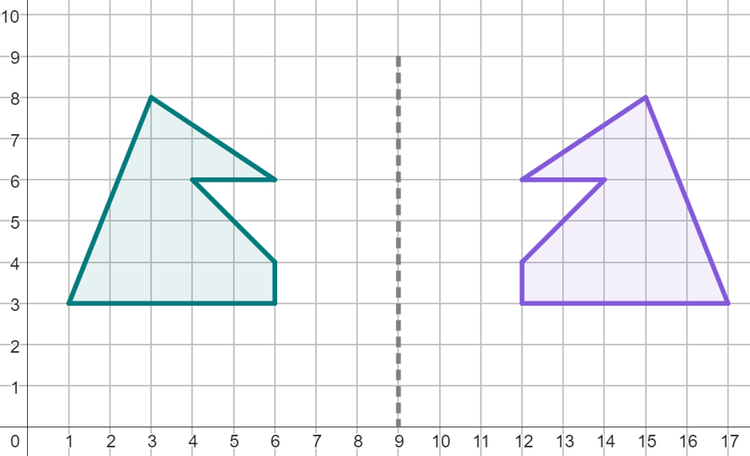
(0, 9)
Correct answer: (9, 3)
(9, 3)
(6, 3)
Correct answer: (9, 10)
(9, 10)
(12, 6)
Q5.Complete this sentence for the following description of a reflection: "A __________ reflection with line of reflection passing through the coordinates (8, 6) and (13, 6)"
Complete this sentence for the following description of a reflection: "A __________ reflection with line of reflection passing through the coordinates (8, 6) and (13, 6)"
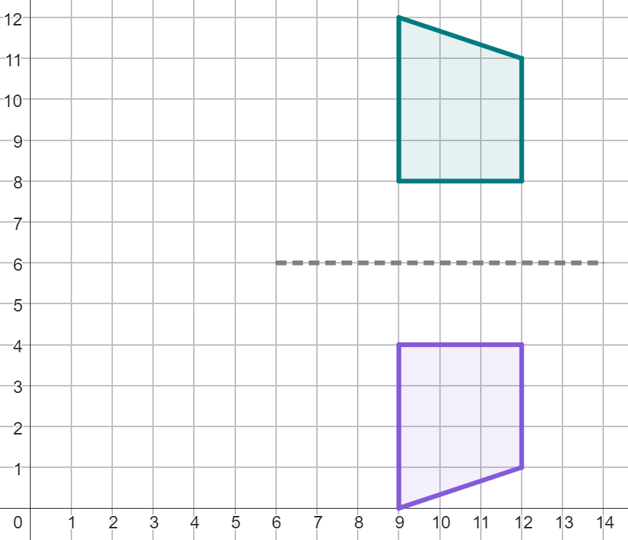
horizontal
Correct answer: vertical
vertical
diagonal
Q6.The object is reflected in the line of reflection shown. Which point would be the correct location of the reflection of vertex A?
The object is reflected in the line of reflection shown. Which point would be the correct location of the reflection of vertex A?
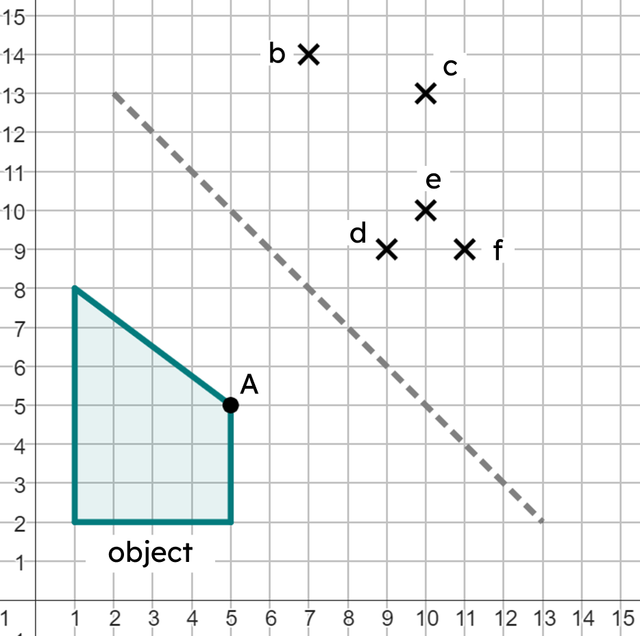
b
c
d
Correct answer: e
e
f
