


Different types of soils (non-statutory)
I can identify similarities and differences between different types of soil.


- Year 3
Different types of soils (non-statutory)
I can identify similarities and differences between different types of soil.
Lesson details
Key learning points
- Different types of soils have different properties.
- How and where soils are formed will affect their properties, such as colour and size of particles.
- Soils can be compared using observation skills, with a hand lens or a microscope.
- Common types of soils, based on their texture, are sandy, silt, clay and loam.
- Knowing soil type can help you choose the right plants for your garden and keep them healthy.
Keywords
Properties - The describing words we use for a material are called its properties.
Particles - Particles are very minute parts of a material or substance.
Texture - The texture of an object or material is the way it feels to the touch.
Digital microscope - A digital microscope shows magnified images of objects on a screen.
Loam - Loam is high-quality soil that is a mixture of clay, sand, silt and decaying plant material.
Common misconception
All soils are the same, they are just earth.
Through exploring different soil types and their properties with the digital microscope, children will realise that soils differ depending on where and how they are formed.


Equipment
Different soil samples, hand lenses and digital microscope if possible.

Content guidance
- Risk assessment required - equipment
- Exploration of objects

Supervision
Adult supervision required

Licence
Lesson video
Loading...
Prior knowledge starter quiz
6 Questions
Q1.Soil comes from the .
Q2.Soil is formed ...
Q3.Soil is made from which of these things?
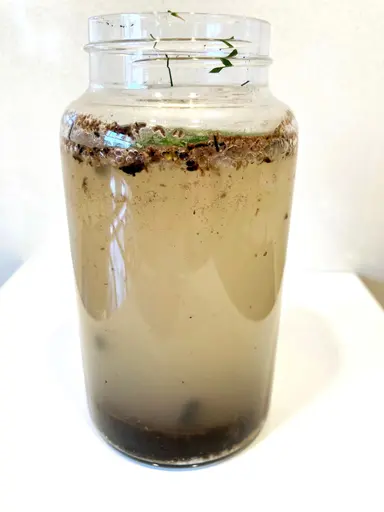
Q4.Look at the image of soil and water in a jar. Order the layers from what would settle at the top of jar to the bottom.
Q5.How long does it take new soil to be made in the ground?
Q6.Why is soil so important?
Assessment exit quiz
6 Questions
Q1.Different types of soil have different sized particles, textures and colours which we call their .
Q2.Tick the statements that explain why different soils have different properties.
Q3.Which of these pieces of equipment would help you compare the properties of different soil samples more closely?
Q4.Which of these describe properties of soil?
Q5.Knowing type can help you choose the right plants for your garden and keep them healthy.
Q6.Match the name of the soil to its correct description to complete the sentences.

