


Discovery and uses of carbon nanostructures
I can describe the scientific discovery process and relate the uses of nanostructures to their properties, structure and bonding.


- Year 10
- AQA
Discovery and uses of carbon nanostructures
I can describe the scientific discovery process and relate the uses of nanostructures to their properties, structure and bonding.
Lesson details
Key learning points
- Scientists discovered and isolated fullerenes accidentally, which led to exciting new possibilities in chemistry.
- Research into the allotropes of carbon is an important part of chemistry's history, earning multiple Nobel Prizes.
- Graphene is so thin that it's nearly transparent, allowing most light to pass through.
- Fullerenes, nanotubes, and graphene have a wide range of real-world uses in fields like electronics and medicine.
- Scientific discoveries have the power to change the world, even if their significance takes time to be fully understood.
Keywords
Fullerene - A molecular allotrope of carbon. Each atom is covalently bonded to three others, forming nanoparticles with hollow spheres or tubes.
Graphene - An allotrope of carbon consisting of a sheet that is one-atom-thick. Each atom is covalently bonded to three others arranged in hexagonal rings.
Nanotube - A cylindrical fullerene, essentially a tube of graphene. A nanoparticle known for its strength and electrical conductivity.
Common misconception
Students may think that all carbon allotrope discoveries were recent and that these materials are primarily used in cutting-edge, futuristic applications.
Emphasise the timeline of discoveries (graphite > fullerenes > nanotubes > graphene), highlighting theoretical predictions preceding isolation. Discuss current uses (e.g. nanotubes in sporting equipment) alongside potential future breakthroughs.


Licence
Lesson video
Loading...
Prior knowledge starter quiz
6 Questions
Q1.Match the following terms to their definition.

Q2.Which of the following represents a nanometre (nm)?
Q3.Put the following numbers into order of increasing size, starting with the smallest.
Q4.Which of the following are examples of physical properties of materials?
Q5.Which of the following can be used to describe graphite?
Q6.How many covalent bonds can a carbon atom form?
Assessment exit quiz
6 Questions
Q1.Fullerenes and graphene are allotropes of which element?
Q2.Which of the following images shows the structure of graphene?


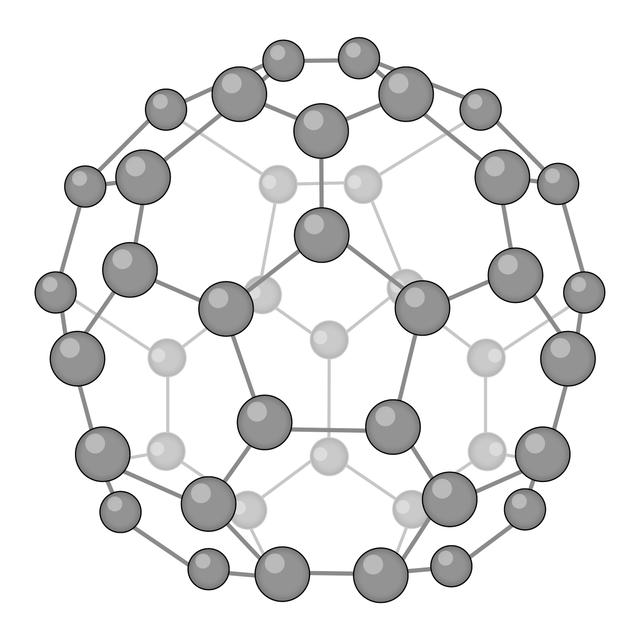

Q3.Match the following keywords to their definitions.
