Earthquakes and tsunamis: Honshu, Japan, 2011
I can describe and explain the causes and consequences of the earthquake in Honshu, Japan, 2011.


- Year 6
Earthquakes and tsunamis: Honshu, Japan, 2011
I can describe and explain the causes and consequences of the earthquake in Honshu, Japan, 2011.
Lesson details
Key learning points
- The earthquake was the fifth most powerful earthquake of all time.
- The epicentre was on the sea bed, 70km east of the Honshu coast.
- The resulting tsunami wave was 40 metres high and came inland for 10km.
- More than 350,000 buildings collapsed or were damaged and over 15,000 people died.
Keywords
Tsunami - Tsunamis are huge waves caused by earthquakes or volcanic eruptions under the sea.
Pacific plate - The Pacific plate is the largest tectonic plate. It is situated between North and South America to the east, and Australia and New Zealand to the west.
North American plate - The North American plate is the tectonic plate that includes most of North America.
Impact - To have an impact is to have an effect on someone or something.
Common misconception
Tsunamis are random events caused by severe weather.
Tsunamis are not random events but are caused by tectonic plate movement underneath the ocean.


Content guidance
- Depiction or discussion of violence or suffering

Supervision
Adult supervision required

Licence
Lesson video
Loading...
Prior knowledge starter quiz
6 Questions
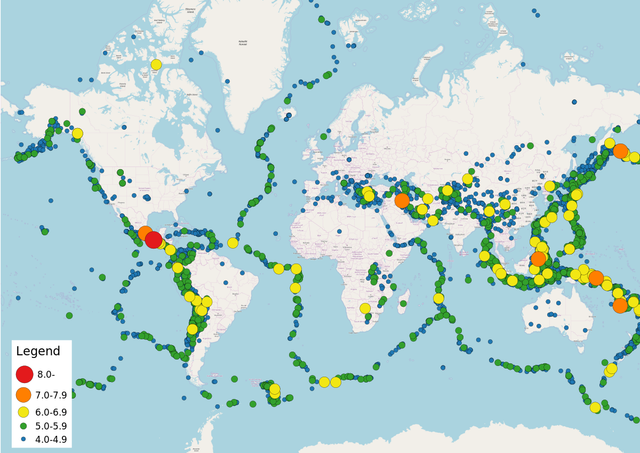
Q1.What do the coloured dots in this map represent?

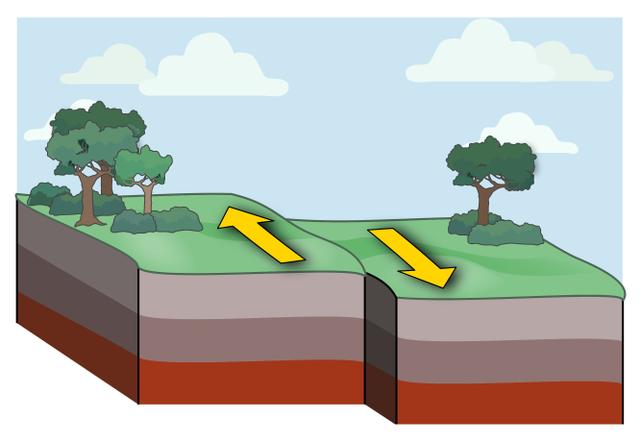
Q2.What is happening in this diagram?
Q3.What is the strength of an earthquake called?
Q4.Use the picture below to identify where earthquakes occur.
Q5.Scientists now use the scale to measure Earthquakes.
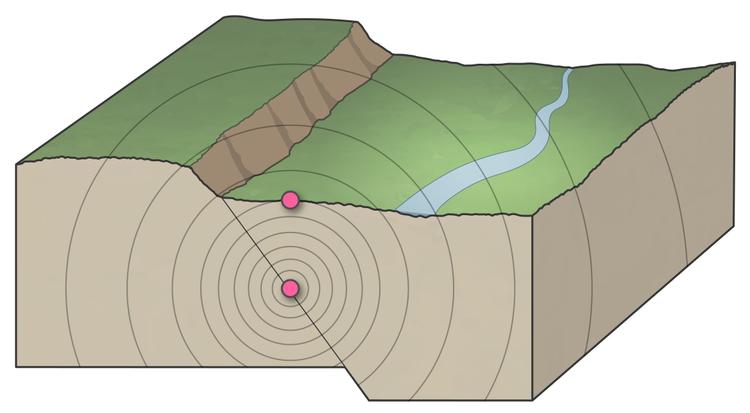
Q6.The is the point on Earth's surface directly above the focus.