Electric current
I can describe how a cell causes current in a circuit and explain the movement of electrons.


- Year 8
Electric current
I can describe how a cell causes current in a circuit and explain the movement of electrons.
Lesson details
Key learning points
- One end of a battery has a positive charge and one end has a negative charge, because of chemical reactions inside it.
- A battery pushes electric charge (electrons) one way round a complete circuit.
- There are electric charges in all atoms of the wires and components in a circuit, even when it is not turned on.
- When a circuit is turned on, electrons everywhere in the circuit start moving at the same time.
- Individual electrons move round a circuit slowly, at a speed of just a few millimetres each second.
Keywords
Electrical cell - An electrical cell is a component that uses a chemical reaction to make electric charge flow in a circuit.
Charge - Objects can have an electrical charge that is positive or negative. If there is no charge, they are neutral.
Electrons - Electrons are the charges in conductors that flow to cause an electric current.
Electric current - Electric current is the flow of electric charge in a circuit.
Common misconception
Many pupils imagine electric current to emerge from a battery or a power supply and to move around a circuit in a sequential way. This leads to a consumption model of electricity.
Give pupils opportunities to test different incorrect models (e.g. the unipolar and clashing current model,s as well as the consumption model).


Equipment

Licence
Lesson video
Loading...
Prior knowledge starter quiz
6 Questions
Q1.In which circuit will the bulb light?
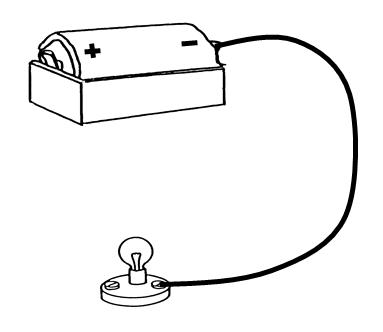
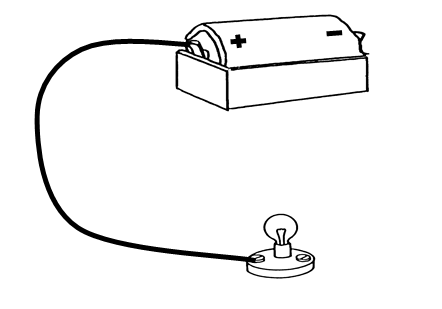

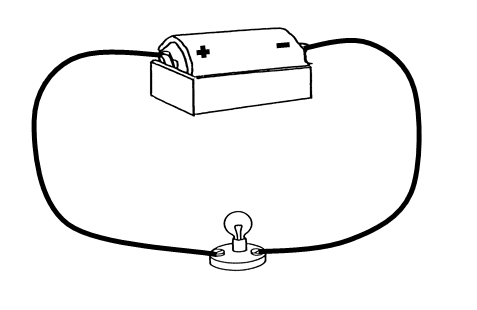
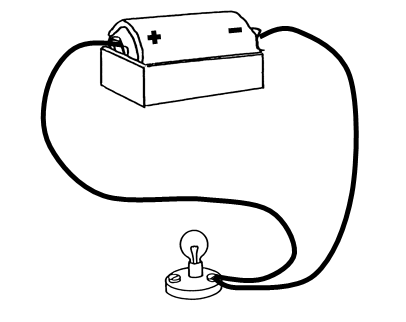
Q2.A motor is connected to a cell and spins. Which of the following would cause the motor to spin faster?
Q3.What mistake has been made in this circuit diagram?
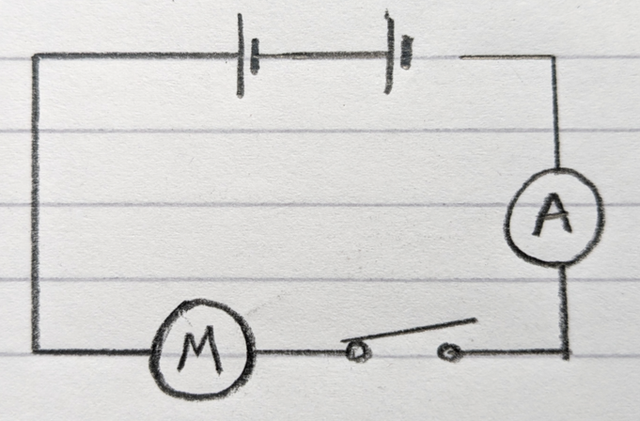
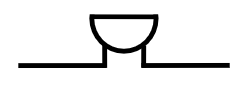
Q4.Which component is represented by the circuit symbol shown?