


Electrical resistance
I can compare the electrical resistance of different components using measurements of current.


- Year 9
Electrical resistance
I can compare the electrical resistance of different components using measurements of current.
Lesson details
Key learning points
- An ammeter measures current in amps (A).
- Resistance is a measure of how difficult it is for a current to flow.
- Resistance is measured in ohms (Ω).
- In a fair test, only the independent variable is changed so that no other variables affect the results.
- The variables that are deliberately kept the same are called control variables.
Keywords
Resistance - Resistance is a measure of how difficult it is for a current to flow through a component or a circuit.
Ohm (Ω) - The unit of resistance is the ohm (Ω).
Ammeter - An ammeter is a device that measures the current flowing through a circuit.
Amp (A) - The unit of current is the amp (A), which is short for amperes.
Control variable - A control variable is one that must be kept the same when other variables are being tested to ensure that the test is fair.
Common misconception
Current is used up (consumed) by electrical components.
Use the rope–loop model to model how the battery (hands) force current (rope) around the circuit against the resistance of components (hands squeezing the rope).


Equipment
A collection of components with suitable resistances, resistors, 1.5 V and 6.5 V bulbs, pencils with both ends sharpened, leads, crocodile clips, 1.5 V cells and ammeters.

Content guidance
- Risk assessment required - equipment

Supervision
Adult supervision required

Licence
Lesson video
Loading...
Prior knowledge starter quiz
6 Questions
Q1.Which of the following is not a good conductor of electricity?

Q2.Which of the following is the term given to materials that do not conduct electricity?
Q3.Which of the following components is represented by the circuit symbol shown?

Q4.Which of the following components is represented by the circuit symbol shown?
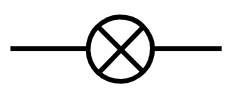
Q5.Which of the following components is not represented by the circuit symbols shown?

Q6.Which of the following will happen if you add more lamps in series to a series circuit with one lamp?
Assessment exit quiz
6 Questions
Q1.Which of the following is the correct unit for a measurement from an ammeter?
Q2.Which of the following is the correct unit for resistance?
Q3.Why does a resistor, such as the one shown, have coloured stripes on it?

Q4.An identical resistor is added in series to the circuit shown.
Which of the following will happen?

Q5.When the circuit shown is switched on, in which of the following orders will the lamps light up?

Q6.Which of the following statements correctly describes the brightness of the lamps in the circuit shown?
Assume the lamps are identical.
