New
New
Explain how many '500s' and '250s', 1,000 is composed of
I can explain how many 500s and 250s 1,000 is composed of.


Lesson 4 of 5
New
New
- Year 4
Explain how many '500s' and '250s', 1,000 is composed of
I can explain how many 500s and 250s 1,000 is composed of.
Lesson details
Key learning points
- There are two 500s in 1,000
- There are four 250s in 1,000
- Knowing how many 500s and 250s 1,000 is composed of helps to interpret scales and measures.
Keywords
Compose - The composition of the whole is the way in which it is made.
Multiples - The result of multiplying a number by another whole number.
Division - Equal divisions refer to equal spacing on a number line or scale.
Common misconception
Pupils unable to connect scale divisions with knowledge of composition of 1,000
Spend time developing confidence in counting in multiples of 500 and 250 to 1,000 before making explicit links between this and scales and measures. Use 'The whole is 1,000 and we have divided it into ___ parts of ___' when doing this.
Encourage children to use and apply known facts when calculating from scales and graphs rather than referring to counting on. Although not counting on in ones, children have a range of strategies to calculate the sum and difference that will prove more efficient than counting on.

Teacher tip

Licence
This content is © Oak National Academy Limited (2025), licensed on Open Government Licence version 3.0 except where otherwise stated. See Oak's terms & conditions (Collection 2).
Lesson video
Loading...
Prior knowledge starter quiz
6 Questions
Q1.Sofia partitions 100 into two equal parts. Both parts have an equal value. What is the value of each part?
Sofia partitions 100 into two equal parts. Both parts have an equal value. What is the value of each part?


Q2.Which of the following could complete the sentence? If I know 10 ÷ 2 = 5, then I know that ___ ÷ ___ = ___
Which of the following could complete the sentence? If I know 10 ÷ 2 = 5, then I know that ___ ÷ ___ = ___
10 x 2 = 20
10 + 2 = 12
100 x 2 = 200
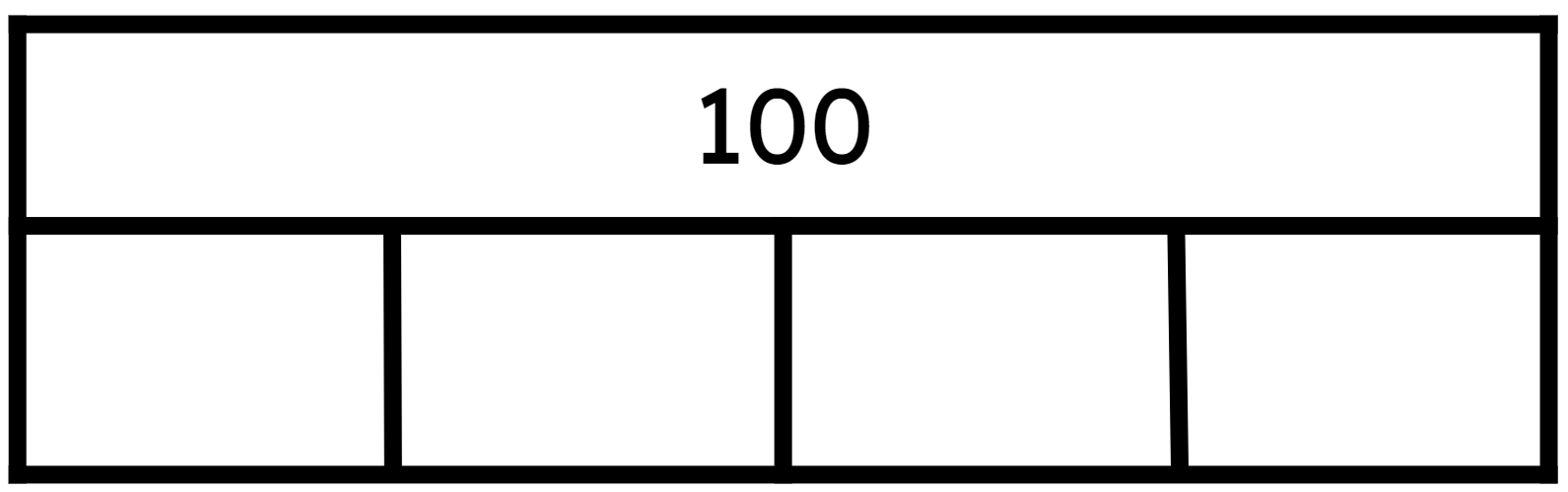
Q3.Izzy partitions 100 into four equal parts. All parts have an equal value. What is the value of each part?
Izzy partitions 100 into four equal parts. All parts have an equal value. What is the value of each part?
Q4.100 - 25 =
100 - 25 =
Q5.What is the missing number in the sequence?
What is the missing number in the sequence?

200
500
50
Q6.What is the missing number in the sequence?
What is the missing number in the sequence?

200
150
50
Assessment exit quiz
6 Questions
Q1.Sofia partitions 1,000 into two equal parts. Both parts have an equal value. What is the value of each part?
Sofia partitions 1,000 into two equal parts. Both parts have an equal value. What is the value of each part?
Q2.Izzy partitions 1,000 into four equal parts. All parts have an equal value. What is the value of each part?
Izzy partitions 1,000 into four equal parts. All parts have an equal value. What is the value of each part?
Q3.What is the missing number in the sequence?
What is the missing number in the sequence?

Q4.What is the missing number in the sequence?
What is the missing number in the sequence?

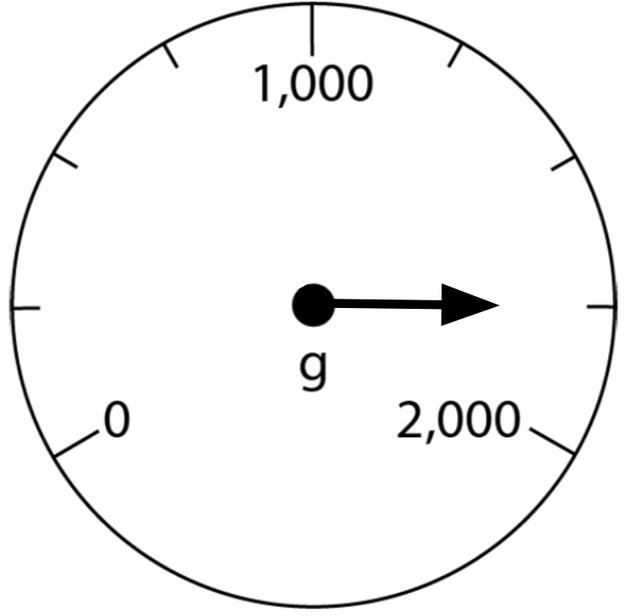
Q5.What is the mass shown on this scale? g
What is the mass shown on this scale? g
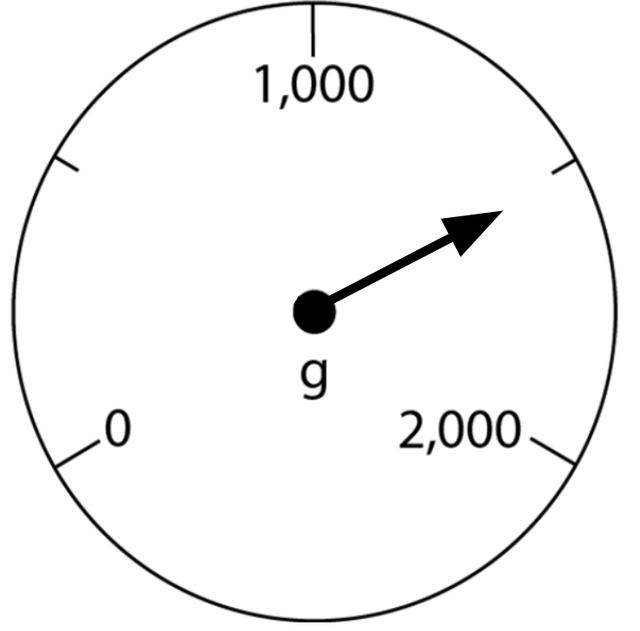
Q6.What is the mass shown on this scale? g
What is the mass shown on this scale? g