


Explain how the remainder relates to the divisor in a division equation
I can explain how the remainder relates to the divisor in a division equation.


- Year 4
Explain how the remainder relates to the divisor in a division equation
I can explain how the remainder relates to the divisor in a division equation.
Lesson details
Key learning points
- In a division equation or problem, the remainder is always less than the divisor.
- We can decide if a division equation is incorrect by comparing the size of the remainder to the size of the divisor.
Keywords
Dividend - The dividend is the whole amount to be divided into groups or divided into equal parts. It is what we are dividing.
Divisor - The divisor is the number in each group or the number of equal parts that the whole is divided into or between. It is what we are dividing by.
Remainder - A remainder is the amount left over after division when the dividend does not divide exactly by the divisor.
Common misconception
Rather than using the largest multiple less than or equal to the dividend, children may identify the closest multiple (one that is too high) or one that is less than the dividend but is too low.
Add further examples using counters to explore patterns where one more is added to draw attention to the size of the remainder compared to the divisor. Draw number lines alongside these so children begin to also visualise in a more abstract way.


Licence
Lesson video
Loading...
Prior knowledge starter quiz
6 Questions
Q1.Match the parts of the sentence correctly.

Q2.What is the largest multiple of 7 that is less than or equal to 44?
Q3.Look at this equation. 62 ÷ 5 = The largest multiple of 5 that is less than or equal to 62 is
Q4.71 sweets are divided between 9 bags. Which multiplication fact will help you to solve this problem?
Q5.Use the given multiples to find the answer to the equation.
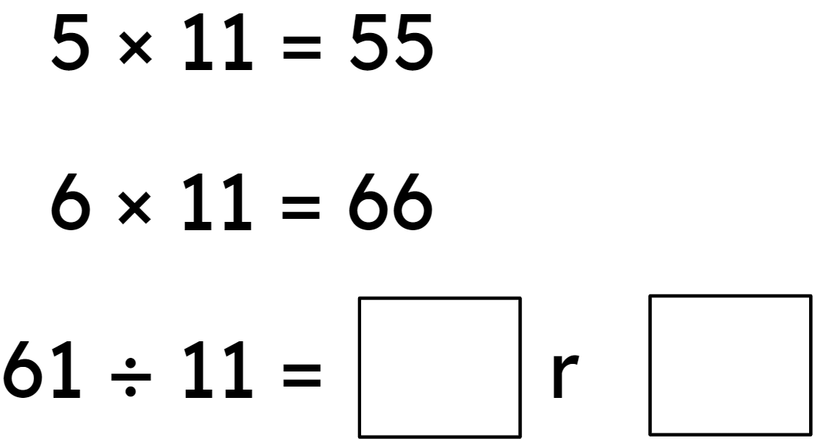
Q6.Find the largest missing multiple to answer this equation. 90 ÷ 8 = ___
Assessment exit quiz
6 Questions
Q1.True or false. A remainder in a division equation is always less than the divisor.
Q2.Which of these representations shows 26 ÷ 4?
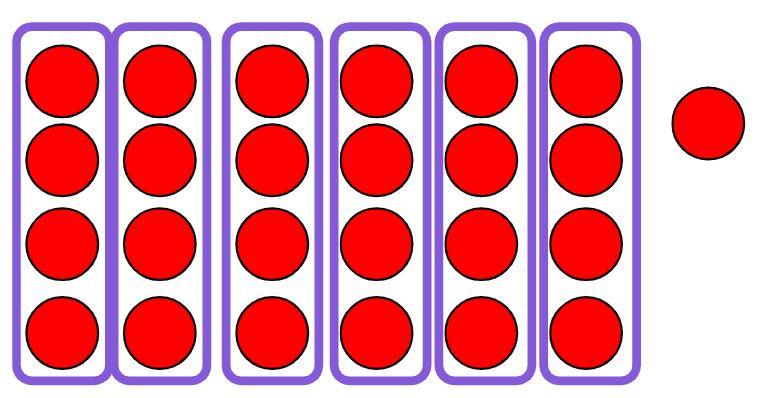
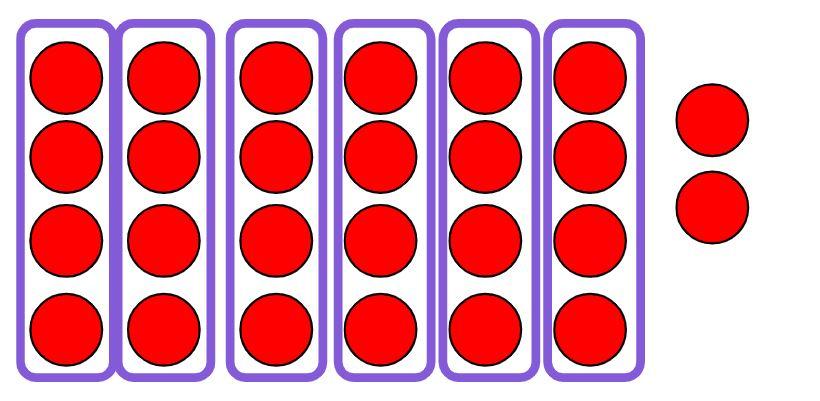
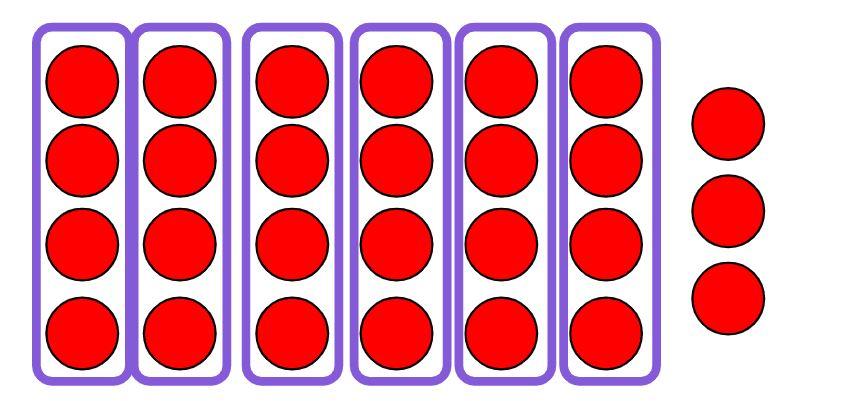
Q3.Which equation does this number line represent?
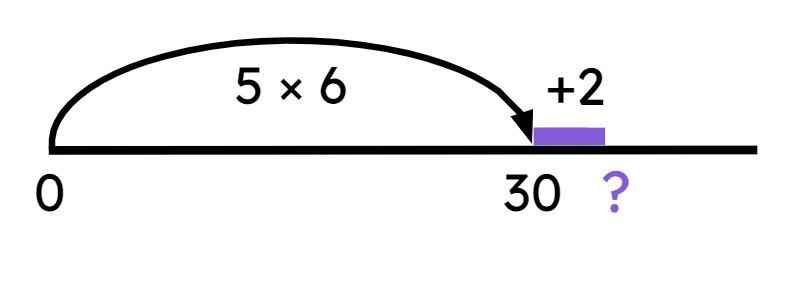
Q4.Which equation represents this image correctly?
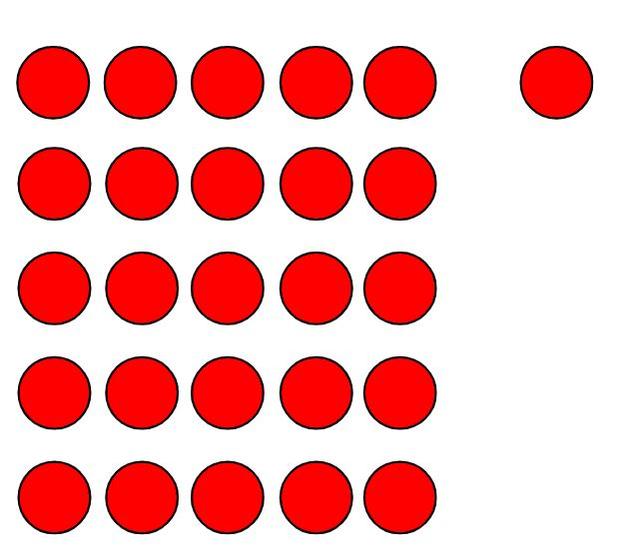
Q5.Match each division expression to the result of it.
