New
New
Explain how to balance an equation with two unknowns
I can explain how to balance an equation with two unknowns.


Lesson 9 of 10
New
New
- Year 6
Explain how to balance an equation with two unknowns
I can explain how to balance an equation with two unknowns.
Lesson details
Key learning points
- The same sum rule can be used to balance equations.
- The same difference rule can be used to balance equations.
- Understanding of the structure of addition and subtraction can be used to balance equations.
Keywords
Difference - The result of subtracting one number from another number is known as the difference.
Subtrahend - The value used to subtract from the whole is known as the subtrahend.
Common misconception
Pupils use a trial and improvement approach to solve these problems only.
At first, pupils may put numbers into the equation to see what happens each time. Encourage pupils to move beyond this to notice what happens to each example. Pupils should aim to use the relationships between addends or subtrahends to help them.
You could utilise mass as a context to help pupils consider balancing these equations. This may allow pupils to consider the magnitude of how much is needed to be added to each side of the equation in order for the equations to balance.

Teacher tip

Equipment

Licence
This content is © Oak National Academy Limited (2025), licensed on Open Government Licence version 3.0 except where otherwise stated. See Oak's terms & conditions (Collection 2).
Lesson video
Loading...
Prior knowledge starter quiz
6 Questions
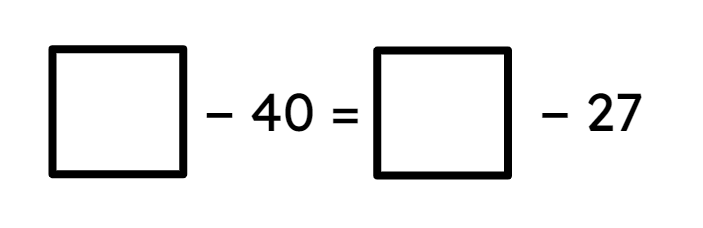
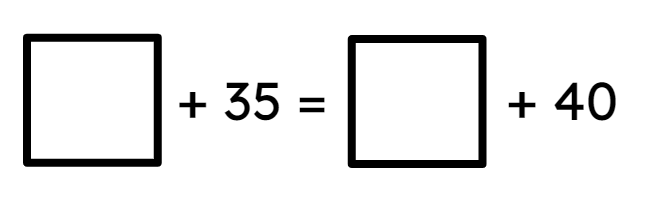
Q1.Match the pairs of missing unknown numbers to find possible solutions.
Match the pairs of missing unknown numbers to find possible solutions.

Q2.If one of the unknowns is 60, what would the other unknown be?
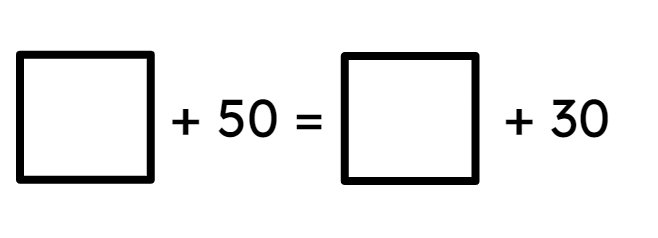
If one of the unknowns is 60, what would the other unknown be?
Q3.Laura has some triangles and squares. She chooses some of the shapes and when she counts the number of sides, she finds that the total is 48
How many of each shape could she have?
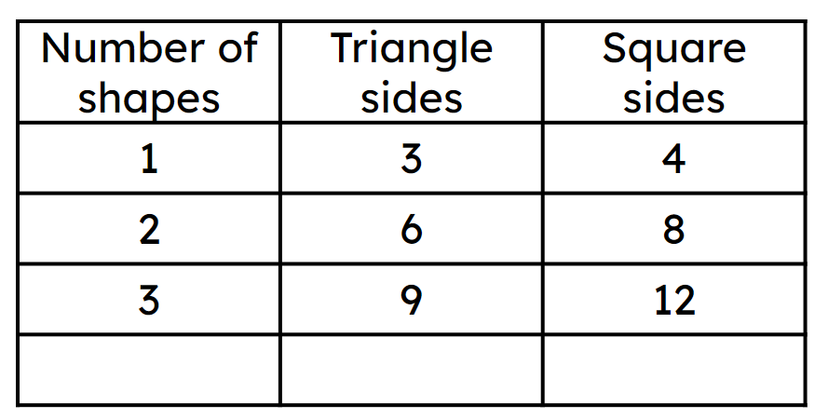
Laura has some triangles and squares. She chooses some of the shapes and when she counts the number of sides, she finds that the total is 48
How many of each shape could she have?
9 squares and 4 triangles
7 triangles and 7 squares
Q4.Laura has some squares and pentagons. She chooses some of the shapes and when she counts the number of sides, she finds that the total is 48
How many of each shape could she have?
Laura has some squares and pentagons. She chooses some of the shapes and when she counts the number of sides, she finds that the total is 48
How many of each shape could she have?
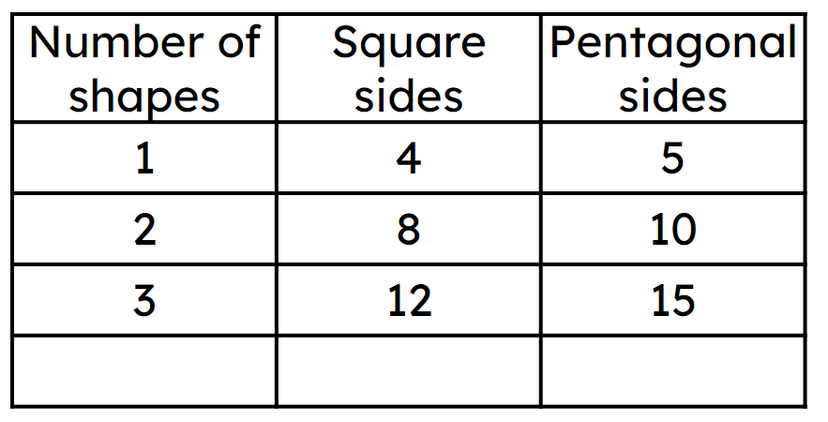
8 squares and 4 pentagons
6 pentagons and 6 squares
Q5.I use two different lengths of wood to make a fence 7 m long. One length of wood is 70 cm and the other is 105 cm.
If two 105 cm planks were used, how many of length 70 cm were used? planks
I use two different lengths of wood to make a fence 7 m long. One length of wood is 70 cm and the other is 105 cm.
If two 105 cm planks were used, how many of length 70 cm were used? planks
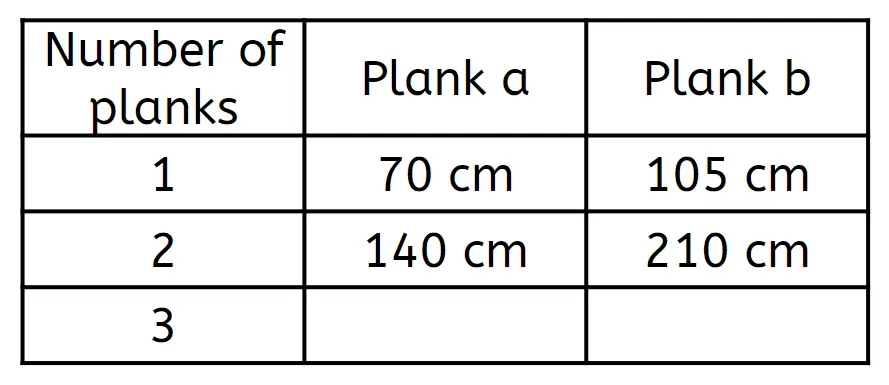
Q6.Jun spends 8 hours in maths and science lessons. A maths lesson is 55 minutes,a science lesson is 65 minutes. Jun had the same number of maths and science lessons. How many of each lesson did he have?
Jun spends 8 hours in maths and science lessons. A maths lesson is 55 minutes,a science lesson is 65 minutes. Jun had the same number of maths and science lessons. How many of each lesson did he have?
Assessment exit quiz
6 Questions
Q1.In this problem, the difference between the known addends is 20 Match the expressions correctly.
In this problem, the difference between the known addends is 20 Match the expressions correctly.
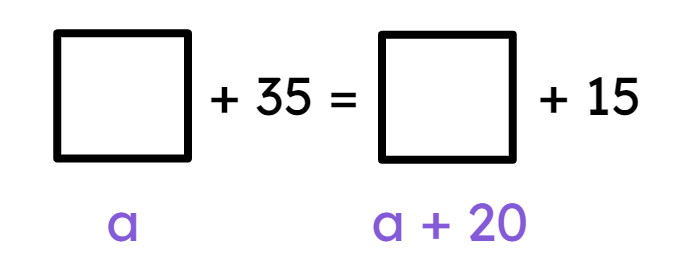
Q2.If we call the first missing addend a, match the expressions correctly.
If we call the first missing addend a, match the expressions correctly.
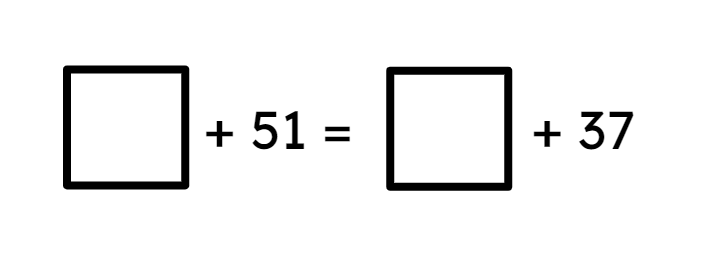
Q3.If we call the first missing addend a, what is the second addend when a = 10?
If we call the first missing addend a, what is the second addend when a = 10?
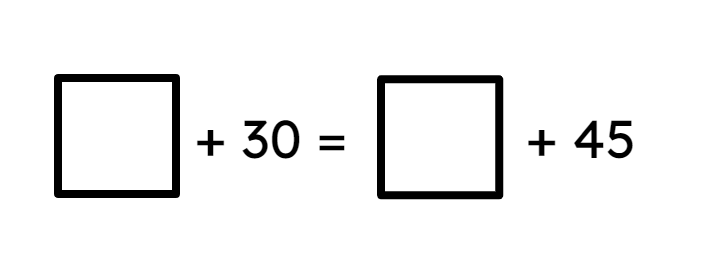
Q4.Match the value of the first missing number with the correct value of the second missing number.
Match the value of the first missing number with the correct value of the second missing number.
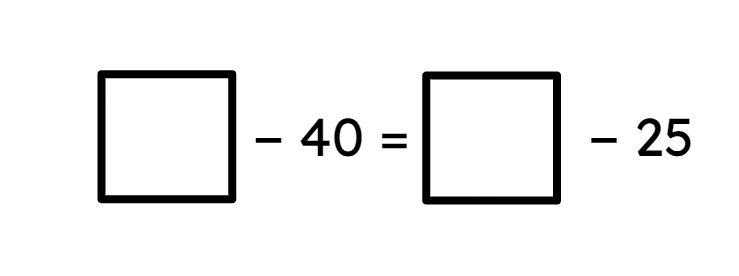
Q5.Match the value of the second missing number with the correct value of the first missing number.
Match the value of the second missing number with the correct value of the first missing number.
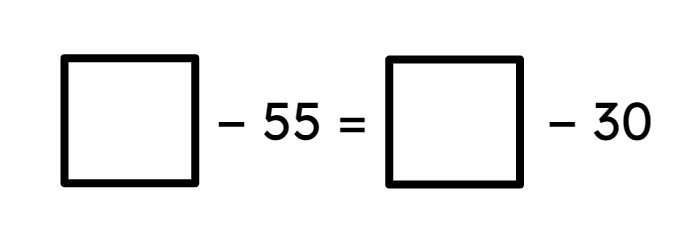
Q6.If the value of the first missing number is a, what is the value of the second missing number when a = 68?
If the value of the first missing number is a, what is the value of the second missing number when a = 68?