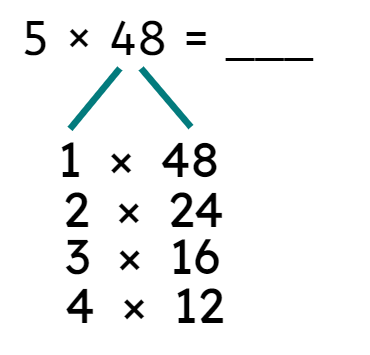
Explain the reasons for changing two-factor multiplication calculations to three-factor calculations
I can explain the reasons for changing two-factor multiplication calculations to three-factor calculations.


- Year 5
Explain the reasons for changing two-factor multiplication calculations to three-factor calculations
I can explain the reasons for changing two-factor multiplication calculations to three-factor calculations.
Lesson details
Key learning points
- Times table facts can simplify multiplication calculations using the factors of a number to make the calculation easier.
Keywords
Array - An array is when items are arranged in rows and/or columns.
Factor - Factors are whole numbers which exactly divide another whole number.
Associative - The associative law states that it doesn't matter how you group or pair values (i.e. which we calculate first), the result is still the same. It applies to addition and multiplication.
Efficient - Working efficiently means finding a way to solve a problem quickly whilst also maintaining accuracy.
Common misconception
Pupils think that the factor that must become the product of two factors is always the largest factor.
Ensure pupils are provided with a range of opportunities to break down factors, identifying where it does make a calculation easier, and also where it doesn't make the calculation easier.


Equipment

Licence
Lesson video
Loading...
Prior knowledge starter quiz
6 Questions
Q1.What is the product of 6 and 25?

Q2.What is the missing factor 7 × = 84
Q3.Which pair of factors would you multiply together first to create the most efficient calculation? 17 × 40 × 5 =
Q4.Which equation is easiest to calculate?
Q5.There are two rabbits and each rabbit eats 50 g of food a day. How much will the rabbits have eaten in total after 14 days? g
Q6.There are 4 children in the family. They all drink a 250 ml carton of milk each at breakfast. How much milk is drunk in total each week? ml
Assessment exit quiz
6 Questions
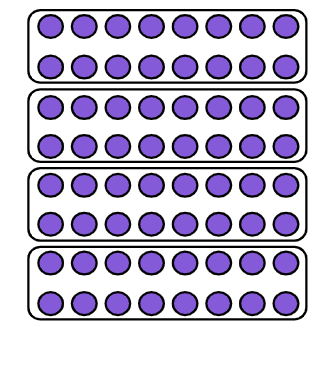
Q1.Which statement is correct about this array?
Q2.Tick all the statements or expressions that are true about the representation.
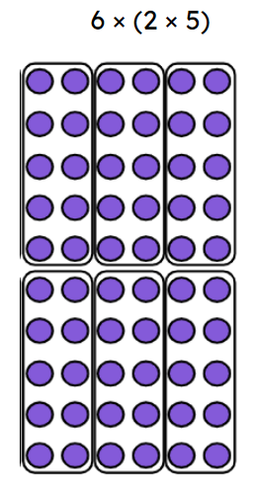
Q3.Tick the array that has been divided correctly into 3 factors.
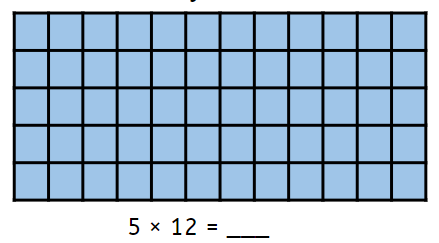
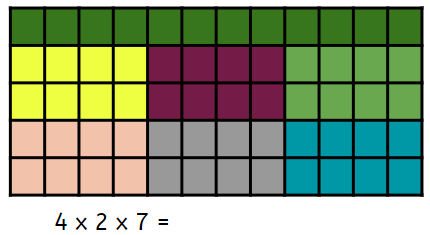
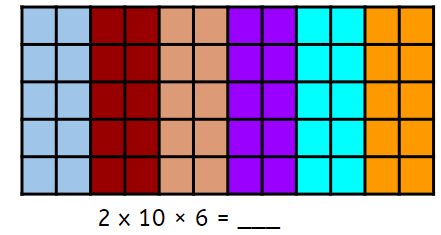
Q4.Which pair of factors would you choose for this calculation to calculate most efficiently?