


Explain the use of the commutative and associative laws when multiplying three or more numbers
I can explain the use of the commutative and associative laws when multiplying three or more numbers.


- Year 5
Explain the use of the commutative and associative laws when multiplying three or more numbers
I can explain the use of the commutative and associative laws when multiplying three or more numbers.
Lesson details
Key learning points
- You can change the order of the factors or group them in different ways and the product remains the same.
- The commutative and associative laws can be used to make calculations more efficient.
Keywords
Commutative - The commutative law states that you can write the values of a calculation in a different order without changing the solution; the result is the same. It applies to addition and multiplication.
Associative - The associative law states that it doesn't matter how you group or pair values (i.e. which we calculate first), the result is still the same. It applies to addition and multiplication.
Common misconception
Pupils only ever calculate an equation from left to right.
Ensure pupils are given time to explore where the commutative law might be best used and where the associative law might be better used. Pupils should be expected to reason why they have chosen to adopt a strategy.


Equipment

Licence
Lesson video
Loading...
Prior knowledge starter quiz
6 Questions
Q1.What multiplication fact does this array represent?

Q2.What are the factors shown by this array?

Q3.Which of these are correct arrays for 36?
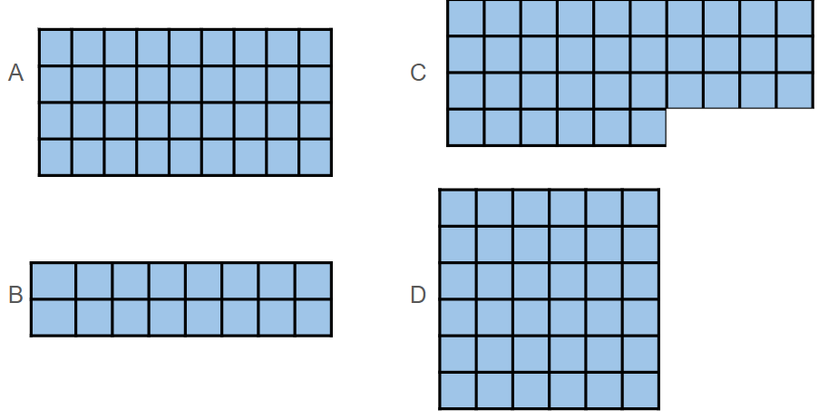
Q4.Complete the missing factor: 7 × = 56
Q5.Which of these are not factors of 40?
Q6.Which factor is missing from the factor bug?
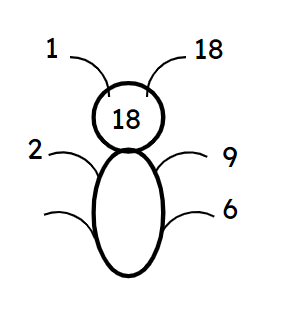
Assessment exit quiz
6 Questions
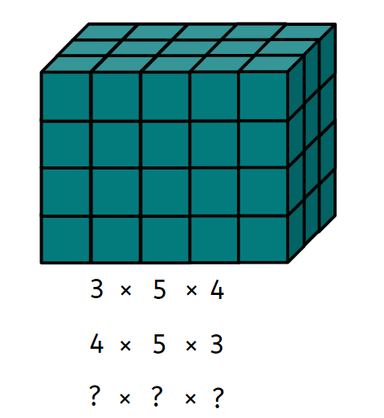
Q1.Look at the image. What does the number 3 represent in this expression? 2 × 3 × 4

Q2.One layer has three rows and four columns. There are two layers. What does the 3 represent?
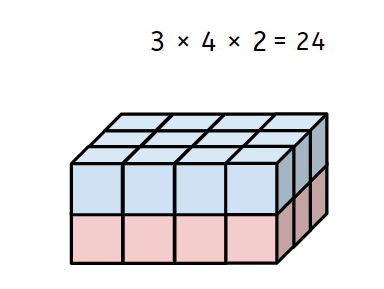
Q3.Select the equation that most accurately matches this representation.
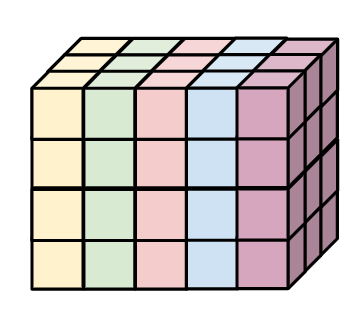
Q4.Select the missing equation?
Q5.Look at the equation. Which two numbers would you multiply together first? 3 × (4 × 6)
Q6.Match the statements.

