Falsche Ideen: 'es gibt' vs 'da ist/sind', jemanden, niemanden, relative clauses
I can use 'es gibt', 'da ist', and relative clauses to talk about cultural information and stereotypes.


- Year 10
- AQA
Falsche Ideen: 'es gibt' vs 'da ist/sind', jemanden, niemanden, relative clauses
I can use 'es gibt', 'da ist', and relative clauses to talk about cultural information and stereotypes.
Lesson details
Vocabulary and transcripts for this lessons
Key learning points
- 'Es gibt' means ‘there is’ and ‘there are’. It is a general statement that something exists.
- Use 'es ist' and 'da ist' to point out what there is in a specific place at a specific moment in time.
- Relative clauses add information about the noun in a main clause without starting another sentence.
- Use the indefinite pronouns 'jemand' (someone) and 'niemand' (no-one) instead of a noun.
Keywords
Es gibt - means 'there is' and is a general statement that something exists
Da ist - means 'there is' and points out what is in a specific place at a specific time
Relative clause - adds information about the noun in the main clause
Jemand - a pronoun meaning 'someone'
Niemand - a pronoun meaning 'no-one'
Common misconception
There is only one way to say 'there is' in German.
In German, we use 'es gibt' to talk about something more generally, and 'da ist' and 'da sind' to point out what there is in a specific place at a specific moment in time.


Equipment

Licence
Lesson video
Loading...
Some of our videos, including non-English language videos, do not have captions.
Prior knowledge starter quiz
6 Questions
Q1.Match these German words to the correct English translations.

Q2.What does 'es gibt' mean in English?
Q3.How would you say 'someone' in German?
Q4.How would you say 'no-one' in German?
Q5.Which sentence uses a relative clause?
Q6.Match these German words to the correct English translations.
Assessment exit quiz
6 Questions
Q1.Match these German words to the correct English translations.
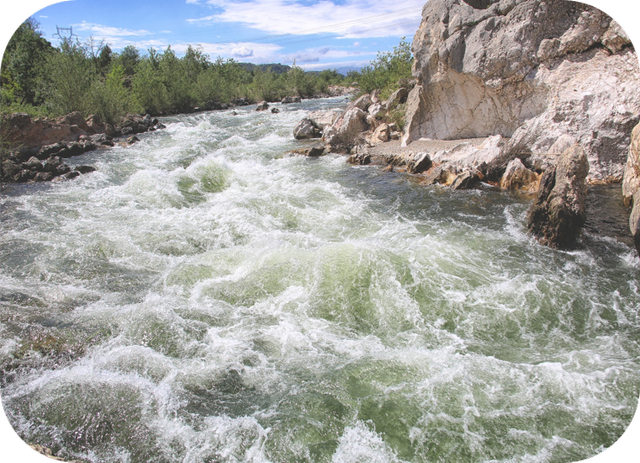
Q2.Complete the following sentence in German: ' ein Fluss auf dem Foto.'