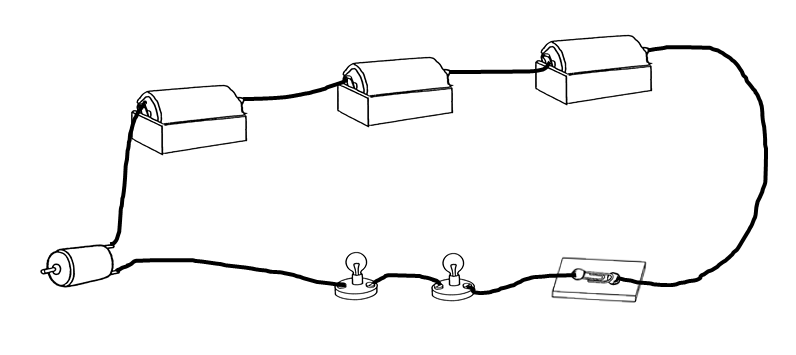
Fixing faulty circuits
I can describe how to build a simple test circuit, use it to check for faulty components, and find faults in a conducting circuit loop.


- Year 8
Fixing faulty circuits
I can describe how to build a simple test circuit, use it to check for faulty components, and find faults in a conducting circuit loop.
Lesson details
Key learning points
- The path current flows through a filament bulb can be traced, from one connection and through the filament to another.
- In a faulty filament bulb, the filament is broken and current cannot flow through it.
- A circuit is not complete if there are any gaps in the circuit, or hidden in faulty wires or components.
- A wire or component can be tested by putting it into a simple circuit with a battery and bulb.
- A circuit with one faulty component will work if a wire is used to bypass the faulty component.
Keywords
Filament - A filament is a thin metal wire inside some light bulbs that glows and emits light when heated.
Faulty component - A faulty component is one that is damaged or isn't conducting electricity properly.
Series circuit - A series circuit is an electric circuit with one complete loop from one end of a battery to the other end.
Complete circuit - A complete circuit is one where there are no gaps, so electricity is able to flow round the circuit.
Test circuit - A test circuit is used to check if a component (or other circuit) is allowing electricity to flow through.
Common misconception
Pupils need to understand that there has to be a closed loop of conducting material, from one end of the battery or power supply, through the device and back to the battery.
Pupils should test a faulty circuit in a systematic way, e.g. starting at one point in the circuit and moving from component to component in order, going clockwise or anti-clockwise from that point.


Equipment
See additional materials.

Content guidance
- Risk assessment required - equipment

Supervision
Adult supervision required

Licence
Lesson video
Loading...
Prior knowledge starter quiz
6 Questions
Q1.Which of these series circuits are correctly connected?
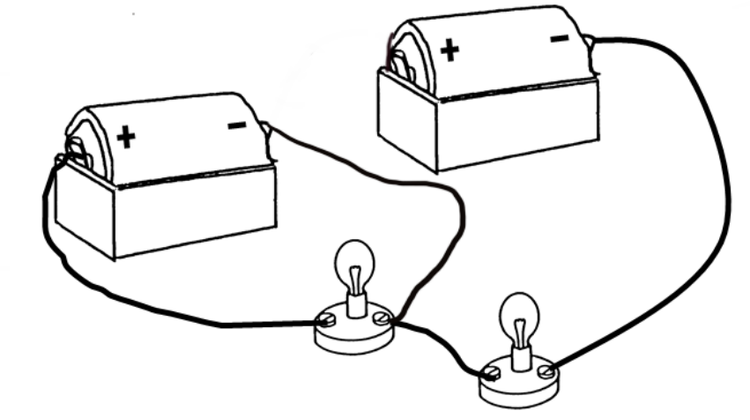
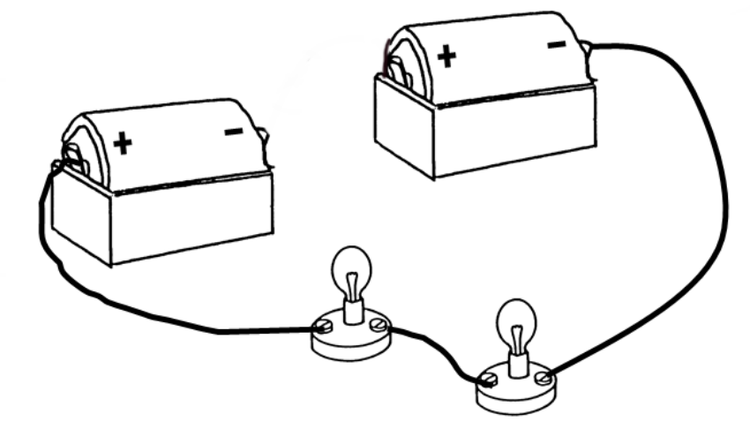
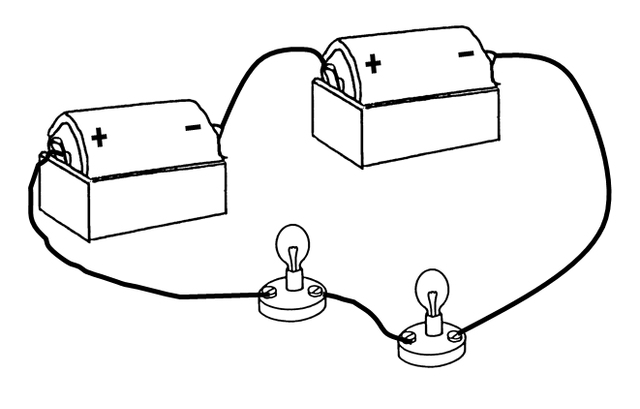
Q2.Which of these electrical components is designed to spin when electricity flows through it?
Q3.Which of the following used to represent electrical leads in a circuit diagram?
Q4.Which of the following electrical components has two metal contacts that open to stop electricity from flowing and close to allow it to pass through?
Q5.Sofia has drawn a circuit incorrectly. What mistake has she made?
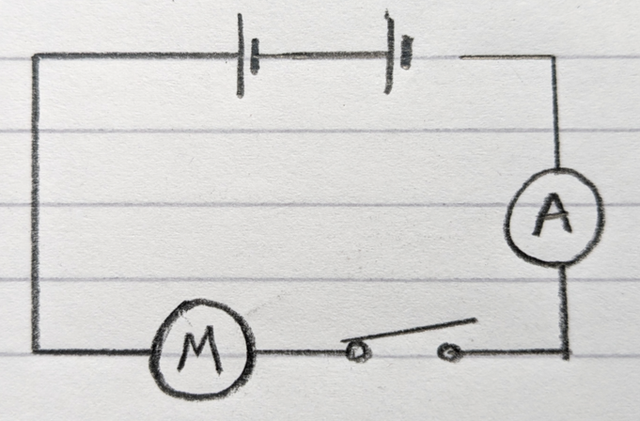
Q6.Match each component to its function.

Assessment exit quiz
6 Questions
Q1.Which of the following devices can be used to check if a component is working correctly?
Q2.Which of the following is needed to allow electricity to flow around a circuit?
Q3.What is the name of the thin wire, found in some types of bulb, that glows when electricity passes through it?
Q4.In this circuit, every component works as it should, until the bulb in one of the lamps blows. Which statement correctly predicts what will happen to the other components?