


New
New
Gravitational force and weight
I can describe and apply the relationship between mass and gravitational force.


Lesson 1 of 10
New
New
- Year 9
Gravitational force and weight
I can describe and apply the relationship between mass and gravitational force.
Lesson details
Key learning points
- The mass of an object is measured in kilograms.
- A force of about 10 N is needed to lift 1 kg on Earth.
- On Earth, a 1 kg mass pushes down on a surface with a force of about 10 N.
- There are 1000 g in 1 kg.
- Gravitational force, W = m × g
Keywords
Gravitational force - The force that acts on an object inside a gravitational field.
Mass - The amount of matter (material) in an object.
Gravitational field strength - The force per kilogram caused by a gravitational field.
Newton (N) - The unit for force.
Newtons per kilogram (N/kg) - The unit for gravitational field strength.
Common misconception
Pupils often mix up the terms for weight and mass and use weight when they mean mass and vice versa.
Teach pupils that a force lifts objects against the pull of gravity before introducing the term weight.
Discuss weight as the force the object is putting on the pupils hands when they lift something.

Teacher tip

Equipment

Licence
This content is © Oak National Academy Limited (2025), licensed on Open Government Licence version 3.0 except where otherwise stated. See Oak's terms & conditions (Collection 2).
Lesson video
Loading...
Prior knowledge starter quiz
6 Questions
Q1.How can a force acting on an object be shown on a diagram?
How can a force acting on an object be shown on a diagram?
An arrow pointing to where the force is acting on the object.
A straight line joining the object to the force.
Q2.Which of these forces pulls objects towards the centre of Earth?
Which of these forces pulls objects towards the centre of Earth?
tension
normal reaction force
electric force
magnetic force
Q3.How should a force arrow for the gravitational force acting on a football be drawn?
How should a force arrow for the gravitational force acting on a football be drawn?
Starting in the bottom of the football.
Starting in the top of the football.
Pointing upwards.
Q4.What property does this top pan balance measure?
What property does this top pan balance measure?
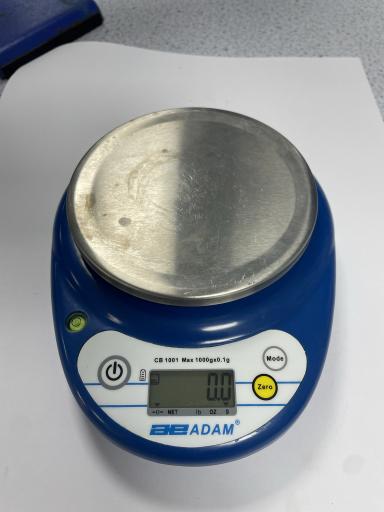
force in grams
weight in grams
mass in newtons
Q5.The figure shows a hand holding a small metal block. The metal block is not moving. Which statements are correct?
The figure shows a hand holding a small metal block. The metal block is not moving. Which statements are correct?
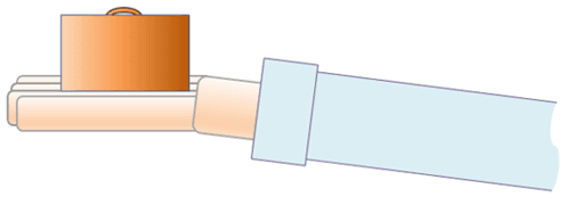
There are no forces acting on the metal block.
The metal block has no mass.
Q6.An astronaut is walking on the Moon carrying a hammer. What will happen to the hammer if they let go of it?
An astronaut is walking on the Moon carrying a hammer. What will happen to the hammer if they let go of it?
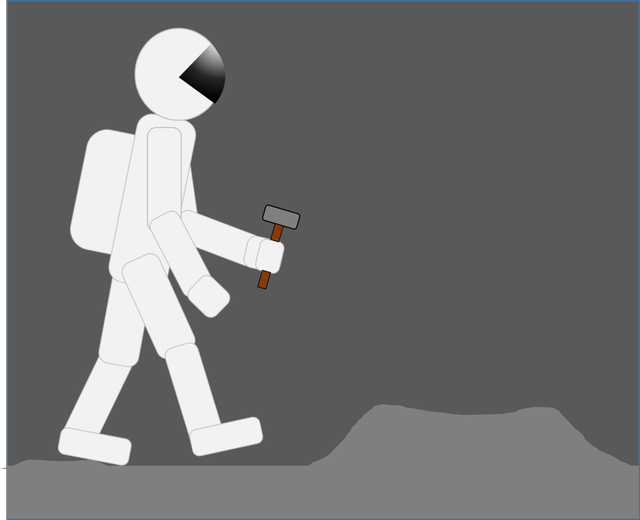
The hammer will float off upwards, getting faster and faster.
The hammer will float exactly where it was released.
The hammer will fall towards the Moon's surface at a constant speed.
Assessment exit quiz
6 Questions
Q1.Match the key words to their definitions:
Match the key words to their definitions:

Q2.Starting with the smallest, sort these in order of mass.
Starting with the smallest, sort these in order of mass.
Q3.An astronaut takes a flag pole from Earth to the Moon with them. Which of the following are true?
An astronaut takes a flag pole from Earth to the Moon with them. Which of the following are true?
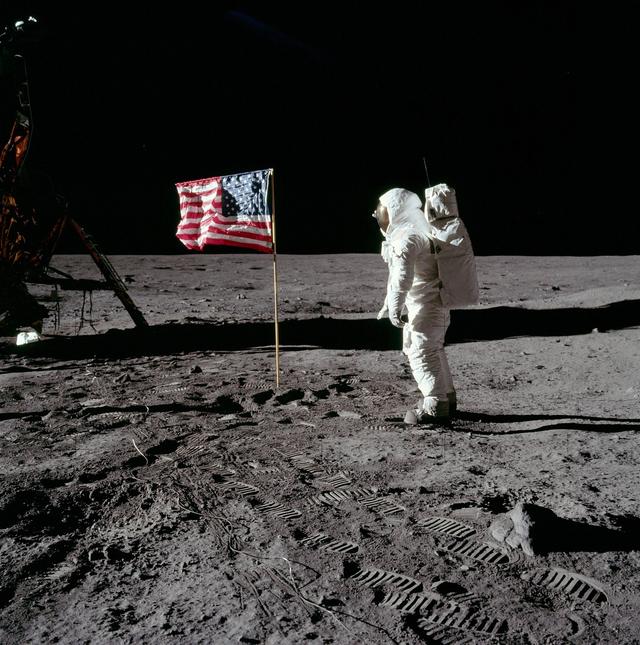
The mass of the flag pole decreases.
The mass of the flag pole increases.
The weight of the flag pole stays the same.
Q4.An alien weighs themselves on the surface of some of the moons in our solar system. Starting with the smallest, list the locations into the order of the weight recorded.
An alien weighs themselves on the surface of some of the moons in our solar system. Starting with the smallest, list the locations into the order of the weight recorded.
Q5.A space probe has a mass of 954 kg and is being sent to land on the moon Europa, which has a gravitational field strength of 1.31 N/kg. How much will it weigh on Europa?
A space probe has a mass of 954 kg and is being sent to land on the moon Europa, which has a gravitational field strength of 1.31 N/kg. How much will it weigh on Europa?
728 N
955 N
953 N
1.25 N
Q6.An astronaut with mass 652 kg lives on Mars. They weigh themselves and find that they weigh 2420 N. What is the gravitational field strength?
An astronaut with mass 652 kg lives on Mars. They weigh themselves and find that they weigh 2420 N. What is the gravitational field strength?
1.58 N/kg
0.27 N/kg
8.94 N/kg
0.37 N/kg
Q3 NASA
