


New
New
Heating and cooling
I can explain why some changes of state are exothermic and some are endothermic.


Lesson 1 of 6
New
New
- Year 8
Heating and cooling
I can explain why some changes of state are exothermic and some are endothermic.
Lesson details
Key learning points
- Heating transfers energy into a substance and can cause it to melt, evaporate or boil.
- Melting, evaporation and boiling are endothermic.
- As it cools, a substance transfers energy into the surroundings by heating and it may condense or freeze.
- Condensing and freezing are exothermic.
Keywords
Endothermic - When a substance transfers energy in from the surroundings, e.g. melting, boiling and evaporating.
Exothermic - When a substance transfers energy out to the surroundings by heating, e.g. condensing and freezing.
Common misconception
Energy can appear and disappear.
Remind students about the conservation of energy.
Show a demonstration of stearic acid cooling taking temperature at regular time intervals.

Teacher tip

Equipment

Licence
This content is © Oak National Academy Limited (2026), licensed on Open Government Licence version 3.0 except where otherwise stated. See Oak's terms & conditions (Collection 2).
Lesson video
Loading...
Prior knowledge starter quiz
6 Questions
Q1.What is the state of water at room temperature (about 20°C)?
What is the state of water at room temperature (about 20°C)?
Solid
Gas
Q2.Which of these is not a characteristic of a solid state substance?
Which of these is not a characteristic of a solid state substance?
Fixed shape
Cannot be compressed
Particles in fixed positions
Q3.Water will melt at ℃?
Water will melt at ℃?
Q4.In what state does water evaporate ?
In what state does water evaporate ?
Solid
Gas
Q5.What happens to the volume of a substance when it condenses?
What happens to the volume of a substance when it condenses?
Increases
Stays the same
Becomes zero
Q6.How does the energy of particles compare between a block of ice at -10°C and a glass of water at 20°C?
How does the energy of particles compare between a block of ice at -10°C and a glass of water at 20°C?
Higher in the block of ice
The same in both
Impossible to determine
Assessment exit quiz
6 Questions
Q1.What type of process is boiling?
What type of process is boiling?
Exothermic
Both
Neither
Q2.When energy is transferred out from a substance to its surroundings, this process is termed...
When energy is transferred out from a substance to its surroundings, this process is termed...
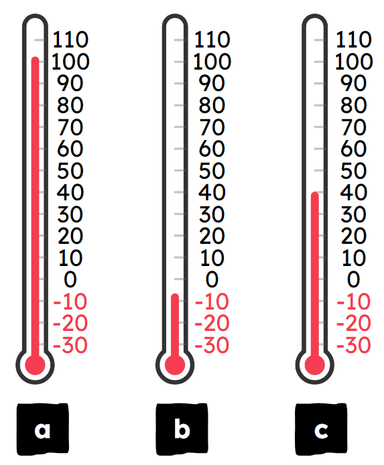
Q3.Which thermometer shows the temperature at which water is in the liquid state?
Which thermometer shows the temperature at which water is in the liquid state?
a
b
Q4.Evaporation is an endothermic process because energy is transferred from the surroundings into the substance.
Evaporation is an endothermic process because energy is transferred from the surroundings into the substance.
false
Q5.Match the statements below to what is happening in terms of energy, particle movement and particle arrangement as a substance is heated over time.
Match the statements below to what is happening in terms of energy, particle movement and particle arrangement as a substance is heated over time.


Q6.Starting in the liquid state, if a substance's particles increase in energy while its temperature remains constant, what change is happening? Give a one-word answer.
Starting in the liquid state, if a substance's particles increase in energy while its temperature remains constant, what change is happening? Give a one-word answer.
