


Living near volcanoes
I can describe and explain the impact of volcanic eruptions on people and understand why some people choose to live near volcanoes.


- Year 4
Living near volcanoes
I can describe and explain the impact of volcanic eruptions on people and understand why some people choose to live near volcanoes.
Lesson details
Key learning points
- One in twenty of the world’s population live close to an active volcano.
- Advantages include the cultivation of fertile soils, income from tourism, mineral extraction and geothermal energy.
- Disadvantages include the danger posed to people and communities from the eruption of lava, poisonous gases and ash.
Keywords
Minerals - Minerals are chemical substances that are formed naturally and are found in the ground or in rocks.
Geothermal energy - Geothermal energy comes from heat contained within Earth's crust.
Lahar - A lahar is a mudflow formed when volcanic ash mixes with water (rain or melted glacier ice).
Common misconception
It is difficult for pupils to appreciate that decisions people make are not always freely chosen.
To ensure pupils appreciate the significance of socio-economic factors (including income) that can limit people's choices.


Content guidance
- Depiction or discussion of violence or suffering

Supervision
Adult supervision required

Licence
Lesson video
Loading...
Prior knowledge starter quiz
6 Questions
Q1.What is a volcano?
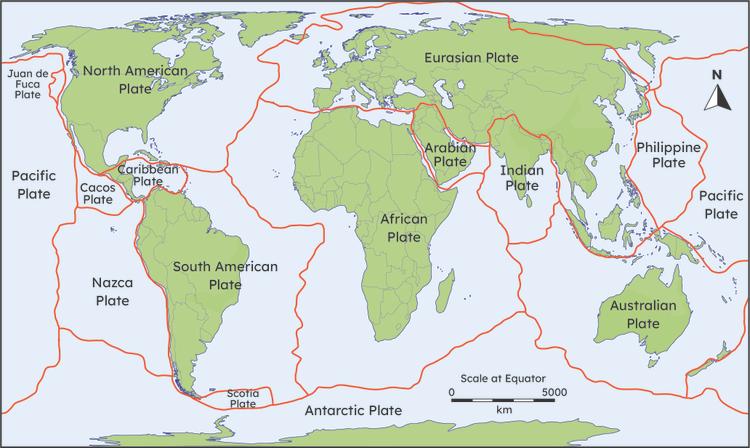
Q2.Huge pieces of Earth's crust, shown on this map, are called...
Q3.True or False: all volcanoes are dangerous
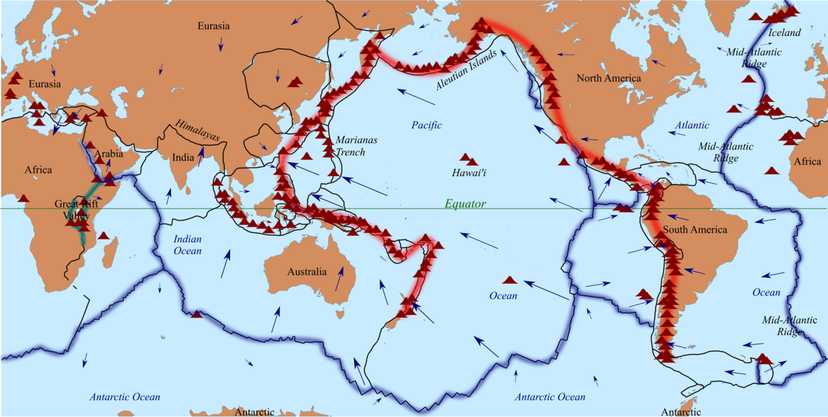
Q4.The red highlighted horse-shoe shaped line on this map is home to 75% of Earth's volcanoes. What is it called?
Q5.Volcanoes are formed when two tectonic plates come towards one another. What is the geographical term for this?
Q6.When a volcano explodes, the geographical name for this is a volcanic...
Assessment exit quiz
6 Questions
Q1.How many people live very close to an active volcano?
Q2.Volcanic ash is....
Q3.A mudflow formed when volcanic ash mixes with water (rain or melted glacier ice) is called...
Q4.What temperature can lava reach up to?
Q5.Graphite is a solid, black rock found in volcanoes. When volcanoes erupt, graphite crystallises under the extreme heat and pressure inside volcanic vents. This changes graphite into....
Q6.Match the advantage to the correct statement.

